Scottish Straight Cat Temperament: Curiosity, Company and Individual Choice
Explore Scottish Straight cat temperament, curiosity and contact while separating ancestry, appearance and health evidence from individual behavior.
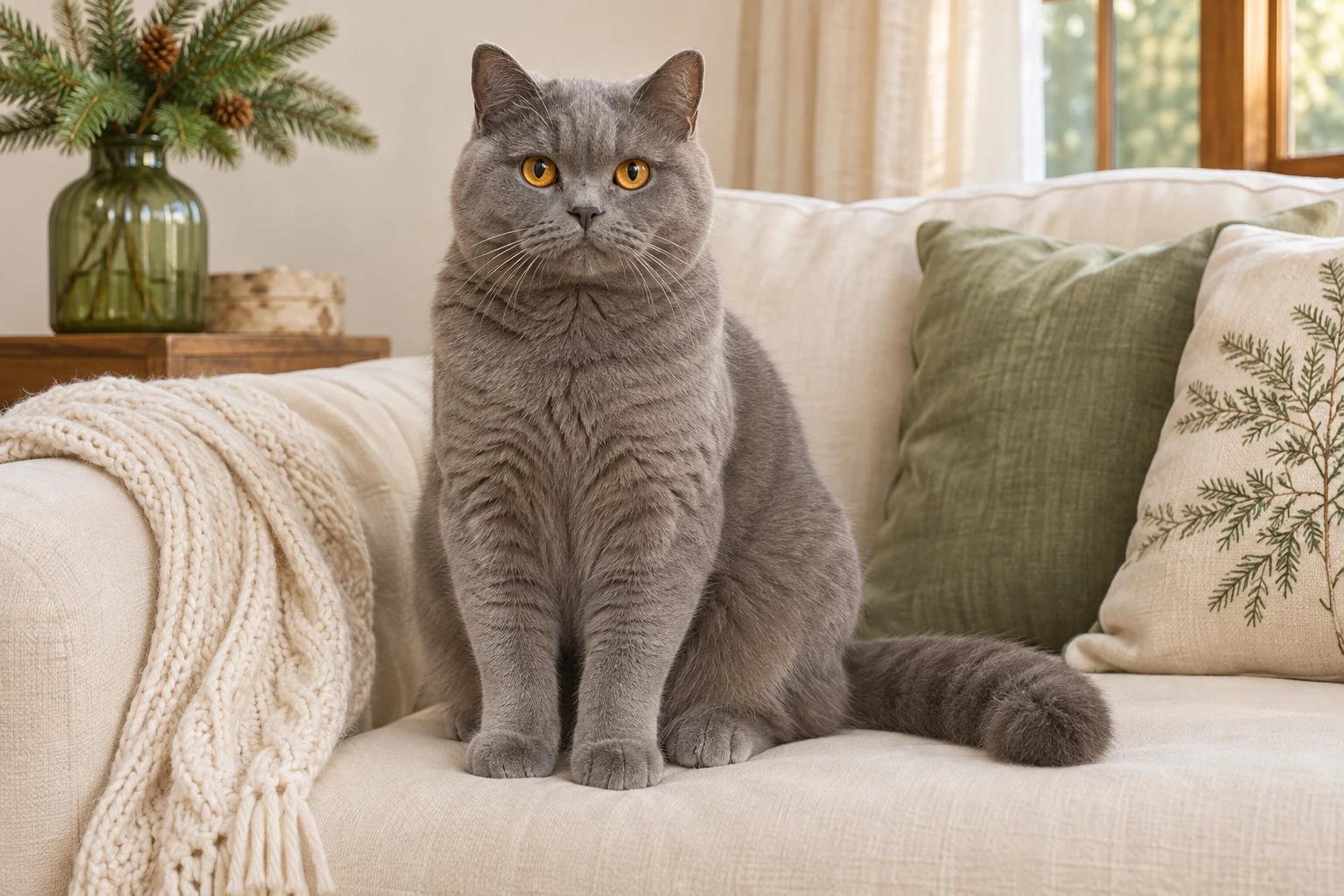
Scottish straight cat temperament is described in registry accounts as people-oriented and curious. Those broad tendencies can help you prepare questions, but they cannot tell you how a particular cat will greet a visitor or accept handling. Upright ears are a breed-group distinction, not a personality guarantee or a complete account of health.
This guide considers scottish straight cat personality through ordinary interaction. It stays separate from the existing ancestry-record article and does not automatically assign Fold-associated disease to an individual Straight or infer a medical conclusion from behavior.
Scottish straight cat temperament: ask what involvement looks like
TICA's Straight account describes inquisitive companions that may follow familiar people. The Scottish Straight profile retains an interest in company while stressing respectful handling and introductions. Ask about the animal's actual routine rather than deciding that social means available for contact at every moment.
A useful example might describe where the cat rests while a person works or what it does when a familiar game appears. Notice whether it chooses proximity, touch or activity; those are not identical preferences. Ask what happens when the interaction ends as well as how it begins.
During a meeting, allow time for observation without demanding a greeting. One approach or retreat is information about that setting, not a final verdict. The caregiver can help distinguish a familiar habit from a response to an unusual room or visitor.
Let contact have a clear ending
A cat enjoying nearby company may still prefer its feet on a stable surface. Do not interpret an affectionate reputation as permission to carry or restrain it. Offer familiar contact, pause and notice whether the animal chooses to remain.
If it leaves, let that departure be meaningful. Following from one resting place to another can make ordinary withdrawal difficult. Explain to visitors and children which areas stay undisturbed and what kinds of interaction are appropriate.
Adults should supervise contact and remain responsible for care. A cat should not have to tolerate every approach to prove that its temperament matches a registry description. Respecting a quiet refusal can be as important to the relationship as enjoying an enthusiastic greeting.
Encourage play without making it a breed test
The site recommends daily games and suitable puzzles rather than assuming a quieter animal needs no activity. Ask which opportunities the individual already uses and what equipment it understands. A cat choosing a simple game over a complicated device has not failed an intelligence test.
FelineVMA's indoor-cat guidance places activity alongside retreat, resources and positive contact. Look at the whole environment: can the animal investigate, rest and reach essentials without another pet repeatedly blocking the route?
Give the cat a way to end the opportunity. Do not keep restarting because someone else wants a turn or because a visit seems too uneventful. Familiar participation is more useful information than an activity prolonged to obtain a photograph.
Keep health evidence distinct from reputation
The current Straight profile cautions against diagnosing from ear appearance or ancestry alone. UC Davis describes a test for the specific Fold-associated variant. A confirmed negative result for that variant should not be turned into a Fold-disease label, but it also does not clear every possible health concern.
That distinction matters when behavior changes. If a familiar task, movement or contact becomes difficult, ask the veterinary team rather than deciding the cause at home. Do not assume that upright ears guarantee comfort or that a related breed name explains the problem.
Describe what happened in ordinary circumstances and avoid testing it repeatedly. An observation about a changed route or response to touch can begin a useful conversation without manipulating a limb or making the animal jump for evidence.
Introductions belong to the individuals
A social breed description cannot establish compatibility with a resident cat, dog or child. Ask about actual previous experience, including the setting and arrangements that supported it. One comfortable relationship does not promise the same result with every newcomer.
Prepare appropriate separation and resources and seek guidance on a gradual process. Protect retreat rather than allowing a pushier animal to decide when contact occurs. The cat should not have to defend essential access to prove that it can share a home.
Visitors need guidance too. Give them practical information about waiting, contact and resting places before they approach. A meeting managed without touching can still be useful when the animal prefers distance.
Include ordinary care in the personality discussion
Short and long coat varieties can involve different grooming responsibilities. Ask what handling is familiar and which tasks need help. Enjoying a cuddle at one time does not establish acceptance of an unfamiliar combing position at another.
If several people share care, keep observations consistent. Say that the cat left when a tool appeared rather than labeling it bad-tempered. Concrete descriptions help identify which setting or task needs review and keep a new concern from being dismissed as attitude.
Do not try to obtain a stronger response to make your account convincing. Ask the veterinary team how to proceed when comfort or handling is uncertain. This article recommends no treatment, medication or exercise plan.
Build a realistic expectation of companionship
Use the cat quiz to organize preferences about company, activity and hands-on care. Then bring those preferences to the actual animal's history. Ask what the caregiver most wants a new household to understand after the first week.
The existing Scottish Straight records article can help with documentary questions, but a folder cannot supply the relationship. Learn about contact preferences, familiar games, rest and support during absences.
An honest account may include limits or inconvenient tasks. That information is more useful than a promise of universal friendliness. A workable home gives the individual room to participate, withdraw and receive appropriate help without being required to perform a breed label.
Frequently asked questions
Are Scottish Straights always sociable with visitors?
No individual greeting is guaranteed. Registry descriptions are tendencies; ask about familiar and unfamiliar situations and allow the cat to choose its distance.
Does affection mean a cat enjoys lifting?
Not necessarily. Nearby company, petting and carrying are different experiences. Respect the individual's response and protect its ability to leave.
Should Fold-associated disease be assigned from ancestry alone?
No. Discuss the actual individual records and testing with a veterinarian. Do not assign the variant automatically or treat a negative result as complete health clearance.
Does a calm reputation remove the need for play?
No. Offer suitable opportunities and rest, with individual choice. Seek veterinary advice about a new loss of interest rather than assuming it is temperament.
Sources behind this article
- TICA: Scottish Straight ↗
- UC Davis VGL: Scottish Fold variant ↗
- FelineVMA: Indoor cats position statement ↗
Article source checked: November 20, 2026. Source checked 2026-11-20
Keep reading
Scottish Straight Cat Size: A Combined Reference, Not a Prediction
Read article →