Scottish Fold Cat Temperament: Affection Without Assumptions About Comfort
Understand Scottish Fold cat temperament without explaining away reduced activity, handling concerns or changes that need veterinary assessment.
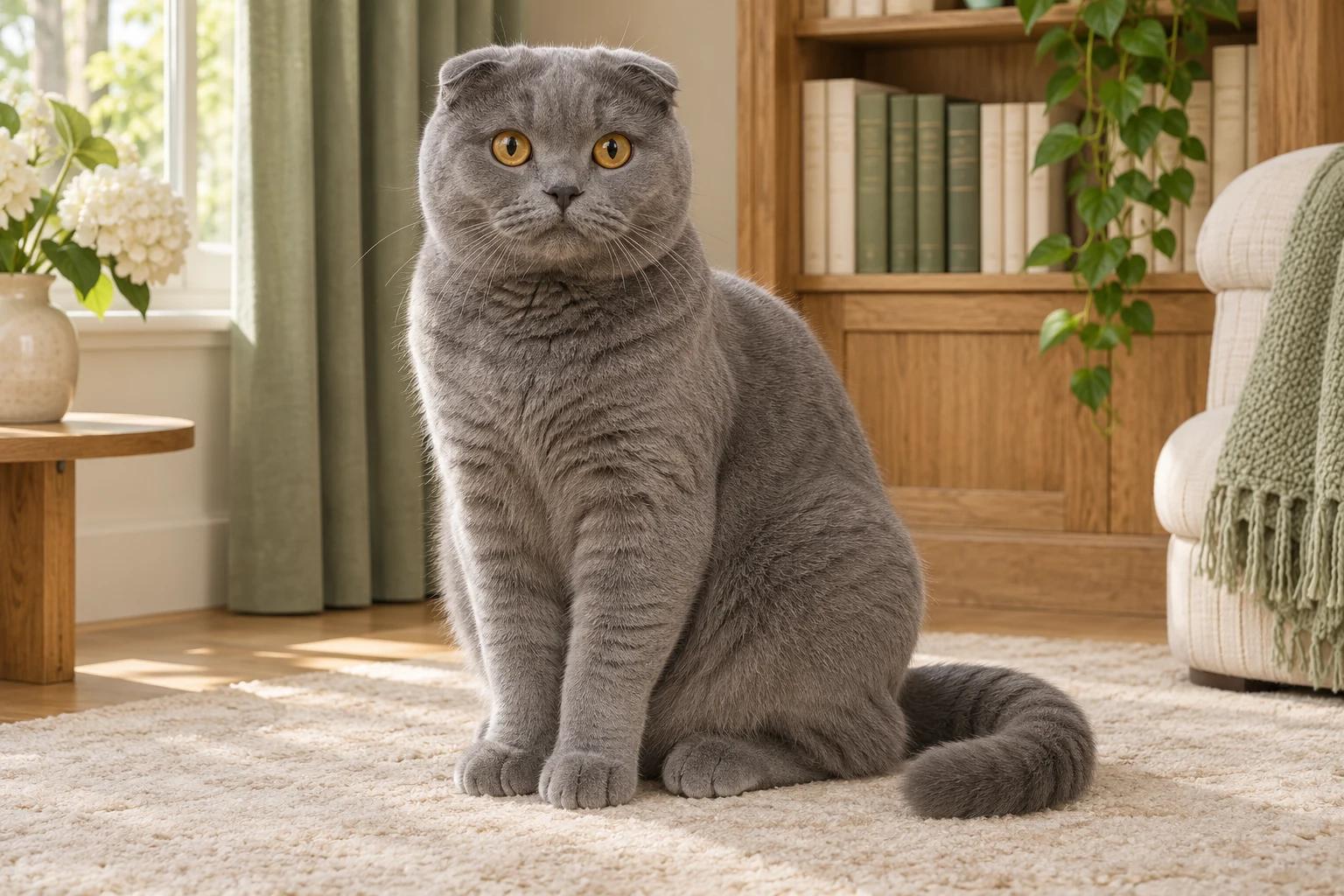
Scottish fold cat temperament is often described as affectionate and inquisitive. Those words can help start a conversation about companionship, but they must not be used to explain away reduced activity, difficult handling or a change in movement. The folded-ear trait has consequences beyond appearance, and an individual cat deserves assessment rather than a personality label when comfort is in question.
This guide considers scottish fold cat personality through ordinary contact and choice. It does not promote the trait, diagnose a condition from behavior or replace the existing guide about calling the vet when movement changes.
Scottish fold cat temperament: keep two questions separate
The first question is how the cat chooses company. The second is whether it is comfortable. A quiet animal can enjoy nearby contact, but quietness alone does not answer the second question. Do not combine those observations into an assumption that an undemanding cat has no unmet needs.
The Scottish Fold profile preserves affectionate and inquisitive tendencies alongside a warning to respect handling preferences. UC Davis describes the fold variant's effects on cartilage and bone and notes variable progression of associated problems. That evidence is a reason for informed care, not a diagnosis you should make by watching a short encounter.
Ask the caregiver about familiar behavior and current veterinary instructions. A practical account distinguishes established preferences from recent changes and explains where professional advice is already part of the routine.
Nearby company is different from being held
A cat may follow a person, rest close by or approach for brief touch without enjoying lifting. During a meeting, allow it to choose its distance and keep a clear route away. Do not ask for a demonstration of how much carrying or restraint it tolerates.
If contact is welcome, pause to notice whether the animal chooses to continue. A cat moving away has not failed to be affectionate. Respecting that departure is more useful than repeatedly returning it to someone's lap to match a breed description.
Adults should supervise children and explain which resting places remain undisturbed. Never force the tail or limbs as part of play or an attempt to assess flexibility. If ordinary handling is difficult or newly avoided, seek veterinary guidance instead of treating it as a social problem to overcome.
Interest can be gentle without being absent
The current profile supports gentle interactive play and suitable puzzles, with attention to the individual. Offer opportunities that fit existing advice and let the cat choose. A calmer reputation should not leave the environment empty, but activity should not become a test of endurance or willingness to jump.
FelineVMA's indoor-cat guidance combines play with safe places and appropriate resources. Look at whether the animal can reach what it needs without being forced into an uncomfortable route or an encounter with another pet. Care includes quiet access as well as invitations to engage.
Observe familiar participation rather than staging a performance for a visitor. If interest or movement differs from usual, contact the veterinary team. Do not increase the challenge to determine whether the cat is merely being lazy; that label does not explain a change.
Describe behavior instead of assigning motives
Scottish fold cat behavior is easier to discuss when recorded in concrete terms. A cat stopped using a resting place, left when a hand approached or did not return to a familiar game. Those are observations. Saying it has become stubborn or especially laid-back is already an interpretation.
Do not reproduce a difficult movement just to strengthen your account. If a relevant video from ordinary activity already exists, ask the veterinary team whether it would help. Do not delay contact to collect a diary, photograph or demonstration when there is a current concern.
The separate Scottish Fold movement article addresses that call-preparation task. This temperament guide has a broader purpose: ensuring that everyday descriptions of affection and calmness do not obscure the animal's choices or need for professional attention.
Introductions require individual management
A reputation for gentleness cannot establish compatibility with a particular child, cat or dog. Ask about actual past encounters, their setting and the arrangements that made them manageable. History with one familiar animal does not guarantee a result with another.
Provide separation, suitable resources and retreat before contact, and obtain appropriate guidance. The cat should not have to defend a resting place to prove it can share the household. Do not prolong an encounter to obtain a photograph of apparent friendship.
Visitors also need clear instructions. Let the cat approach if it chooses and avoid surrounding a retreat. A meeting without direct contact can still be a thoughtful introduction; the animal does not owe each person a turn at handling it.
Include ordinary care in the relationship discussion
Scottish fold cat characteristics include short and long coat varieties, so the actual grooming commitment varies. Ask what care is familiar, what handling it involves and who provides help when a task is difficult. Do not infer acceptance of a tool from affection at another moment.
Keep current professional instructions available to every caregiver. If somebody notices a changed response, that information should reach the responsible adult and veterinary team rather than being explained away separately by each person. Consistency in communication supports care without supplying a home diagnosis.
This article recommends no medication, supplement or treatment routine. It also gives no breeding advice or assurance that particular paperwork removes the fold trait's concerns. The useful focus is the cat already needing care and the responsibilities the household must understand.
Keep the individual ahead of the label
The cat quiz can help organize preferences about daily company. It cannot assess pain, interpret a genetic result or establish suitability from a breed's popularity. Those limits matter when a quiet appearance seems to fit what a person wants.
Ask what the caregiver most needs a new household to understand: preferred contact, familiar play, care instructions and changes that should prompt help. An honest account, including difficult responsibilities, is more valuable than a perfect-sounding temperament description. Affection is a relationship with choices, not proof that every part of care is comfortable.
Frequently asked questions
Does a quiet Scottish Fold necessarily feel comfortable?
No. Quietness alone cannot establish comfort. Seek veterinary advice about changed activity, movement or handling rather than dismissing it as temperament.
Does an affectionate cat enjoy being carried?
Not automatically. Nearby company, petting and lifting are different experiences. Let the individual choose contact and respect its response.
Should I test a movement to understand behavior?
No. Do not provoke jumps or manipulate the tail or limbs. Describe ordinary observations and ask the veterinary team about concerns.
Can the quiz evaluate this cat's health?
No. It organizes preferences, not clinical findings or genetic interpretation. Relevant records and individual veterinary assessment remain separate responsibilities.
Sources behind this article
- TICA: Scottish Fold ↗
- UC Davis VGL: Scottish Fold variant ↗
- FelineVMA: Indoor cats position statement ↗
Article source checked: November 20, 2026. Source checked 2026-11-20
Keep reading

American Bobtail cat temperament
Read article →