Schnoodle Training: First Skills for Everyday Life
Start Schnoodle training with a clear sit lesson, useful rewards, gradual introductions and preparation for routine coat care.
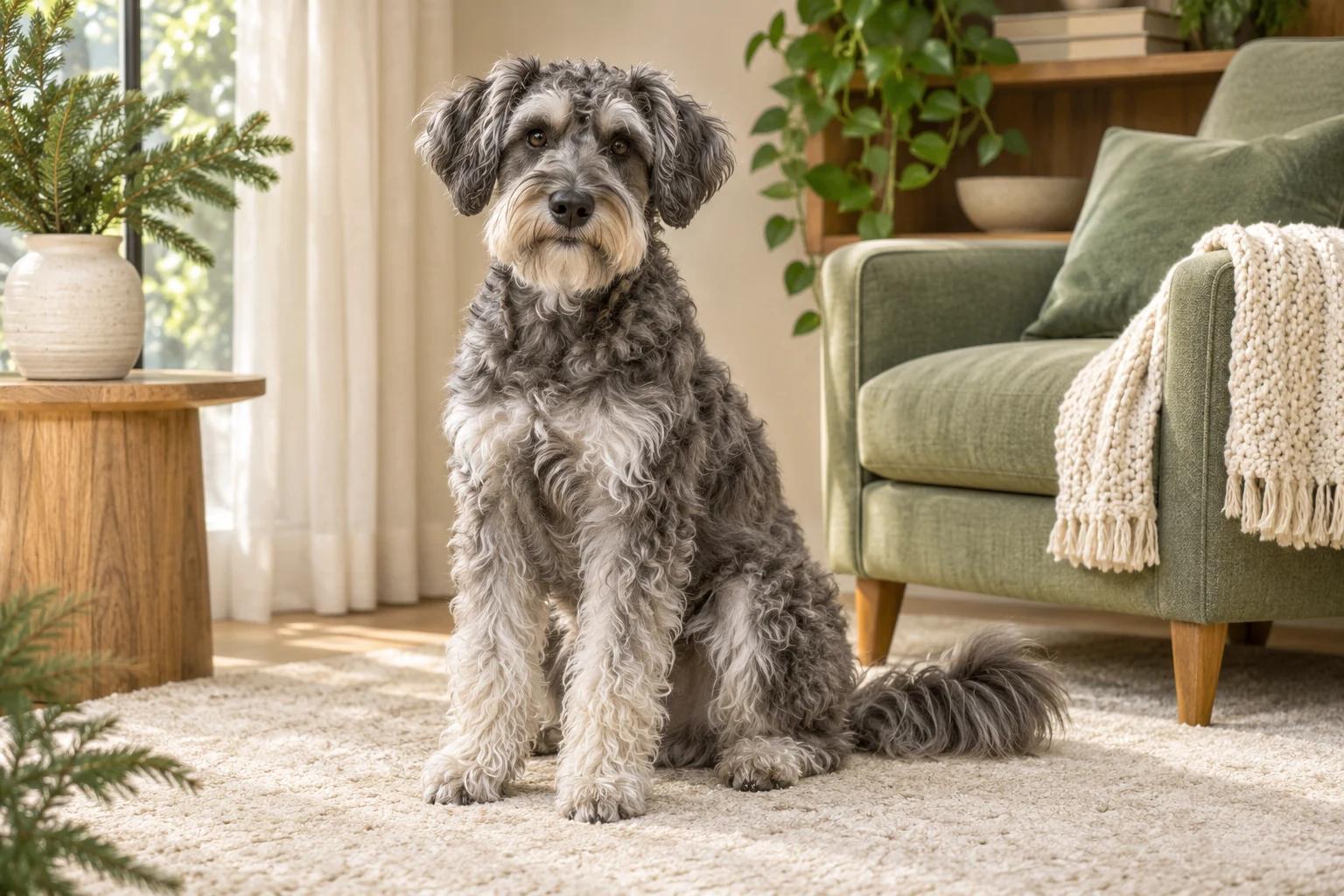
Schnoodle training is easier to plan when you choose a real household task rather than an impressive list of commands. Think about the moment you want to improve: putting on your shoes, getting ready for an outing or preparing for a grooming visit. Describe what the dog should do in that moment before deciding what to teach.
The lessons below cover a first position cue, clear rewards, new experiences and care preparation. They are starting points, not a test every Schnoodle must pass on the same timetable. Work with the dog in front of you rather than comparing progress with a video of somebody else's finished result.
Schnoodle training: teach a comfortable sit
Battersea's sit guide provides a practical first exercise. In a quiet place on a comfortable, nonslip surface, hold a small treat near your dog's nose. Move it gently upward and back so the head follows and the bottom lowers. Mark the seated moment with “yes,” then deliver the treat.
Once the movement is familiar, use the same gesture with an empty hand and reward from the other hand. Add the word “sit,” then gradually make the gesture smaller. Say the cue once, allow a moment to respond and help with the familiar signal if needed.
Do not push the dog's body into position. If sitting appears uncomfortable, stop and ask your vet rather than insisting. A Schnoodle that performs beside your kitchen chair has learned that version of the task; introduce a different position or setting separately. Keep the first lesson about understanding the movement, not remaining still while shoes, keys and other distractions are added all at once.
How to train a Schnoodle with rewards that mean something
Battersea's training introduction explains that rewards depend on what the dog values in that situation. Food, a toy or access to an enjoyable activity can have different appeal at different times. Deliver the reward promptly for the action you intended to reinforce.
For Schnoodle obedience, choose something the individual actively wants rather than assuming that praise alone will always be sufficient. If you intend to reward with play, have the toy available instead of searching for it after the successful response. If you use food, prepare manageable pieces before beginning.
Be precise about the behaviour. Rewarding while the dog is still in the requested position gives clearer information than waiting until it has stood up and wandered away. Avoid turning the lesson into a stream of repeated words. You are trying to make one action understandable, not demonstrate how insistently you can ask. Where an unwanted action is likely, teach an appropriate alternative rather than depending entirely on corrections afterward.
Schnoodle socialization is broader than meeting dogs
Dogs Trust's puppy introduction guide includes people, objects, sounds, surfaces and handling in socialisation. Experiences should be gradual and positive, with the puppy relaxed. Stop an introduction if the puppy becomes worried or moves away; ask your vet about suitable outings and infection precautions.
A Schnoodle puppy's useful introduction might involve noticing a folded umbrella at a distance, seeing someone wear a hat or investigating an unfamiliar household object while it is stationary. Do not add movement, noise and a stranger simultaneously merely to get everything done.
Allow observation without demanding an approach. A puppy looking at something calmly has had an experience even if nobody touches it. Likewise, meeting other animals does not require close contact. Protect their space as well as your puppy's.
Think about the places your dog will genuinely encounter. An apartment entrance, a car and a grooming reception each offer different experiences. Build familiarity in manageable parts instead of treating a busy public outing as a single all-purpose lesson.
Make care preparation part of learning
The AKC's Poodle puppy article highlights positive, gradual introduction to grooming rather than expecting a puppy to accept the whole process immediately. That principle is useful for a Schnoodle's care preparation, without transferring a purebred puppy's developmental timetable to a cross.
Separate the components. Standing near the grooming area, seeing a brush and accepting gentle contact are not the same achievement as completing a haircut. Ask your groomer which simple preparation would help this particular dog. If the dog already finds a tool difficult, begin with professional guidance rather than trying to finish a full session through resistance.
Choose a small, achievable endpoint. For example, the first visit might be a brief introduction rather than a complete transformation into your preferred style. Tell the groomer what the dog has actually experienced and what remains unfamiliar. This makes the visit about a manageable next step, not proving that the dog ought to tolerate care because of its ancestry.
Turn a vague aim into a useful lesson
“I want a well-behaved dog” is too broad to tell you what to practise. “I want to put my shoes on without the dog grabbing the laces” describes a situation. Break that scene into what you do and what you want the dog to do, then select the relevant skill with your trainer.
Consider your own movements. Do you bend down, move a stool, reach over the dog or open a cupboard? A lesson can look completely different from the dog's position than it does from yours. You can rehearse your part without the dog first: put the equipment where you need it, check that the door will not swing into the working space and decide where you will stand.
That preparation is particularly helpful when two adults use different gestures. Watch each other demonstrate the same task. A raised finger, a broad arm movement and a hand held near the nose may all seem like “the same signal” to a person, yet look quite different. Agree on what you are actually showing before judging the dog's response.
Read the Schnoodle profile for wider context and the size-label article for the separate question of parent descriptions. If you are still deciding which daily commitments suit you, use the dog match quiz. Training begins with what you intend to share, not with choosing the longest command list.
FAQ
What should my first Schnoodle training goal be?
Choose a specific everyday situation you want to improve. Describe the desired action clearly enough that another person could recognize it happening.
Does another owner's progress set my dog's deadline?
No. Their finished demonstration does not show all the work behind it or your dog's starting point. Compare your current lesson with your own earlier attempts.
Can different family members practise together?
Yes, but first compare what each person actually does. Similar words can accompany very different gestures and positions, making the task less clear than you intend.
Sources behind this article
- Battersea: Teach your dog to sit ↗
- Battersea: How to train your dog ↗
- Dogs Trust: Puppy socialisation introduction ↗
- AKC: Poodle puppy training timeline ↗
Article source checked: November 16, 2026. Source checked 2026-11-16
Keep reading

Affenpinscher Training: Build Useful Everyday Habits
Read article →