Schnoodle parent labels: Schnauzer breeds and Poodle varieties
Decode Schnoodle parent descriptions using three distinct Schnauzer breeds and three Poodle varieties, without turning those labels into an offspring-size promise.
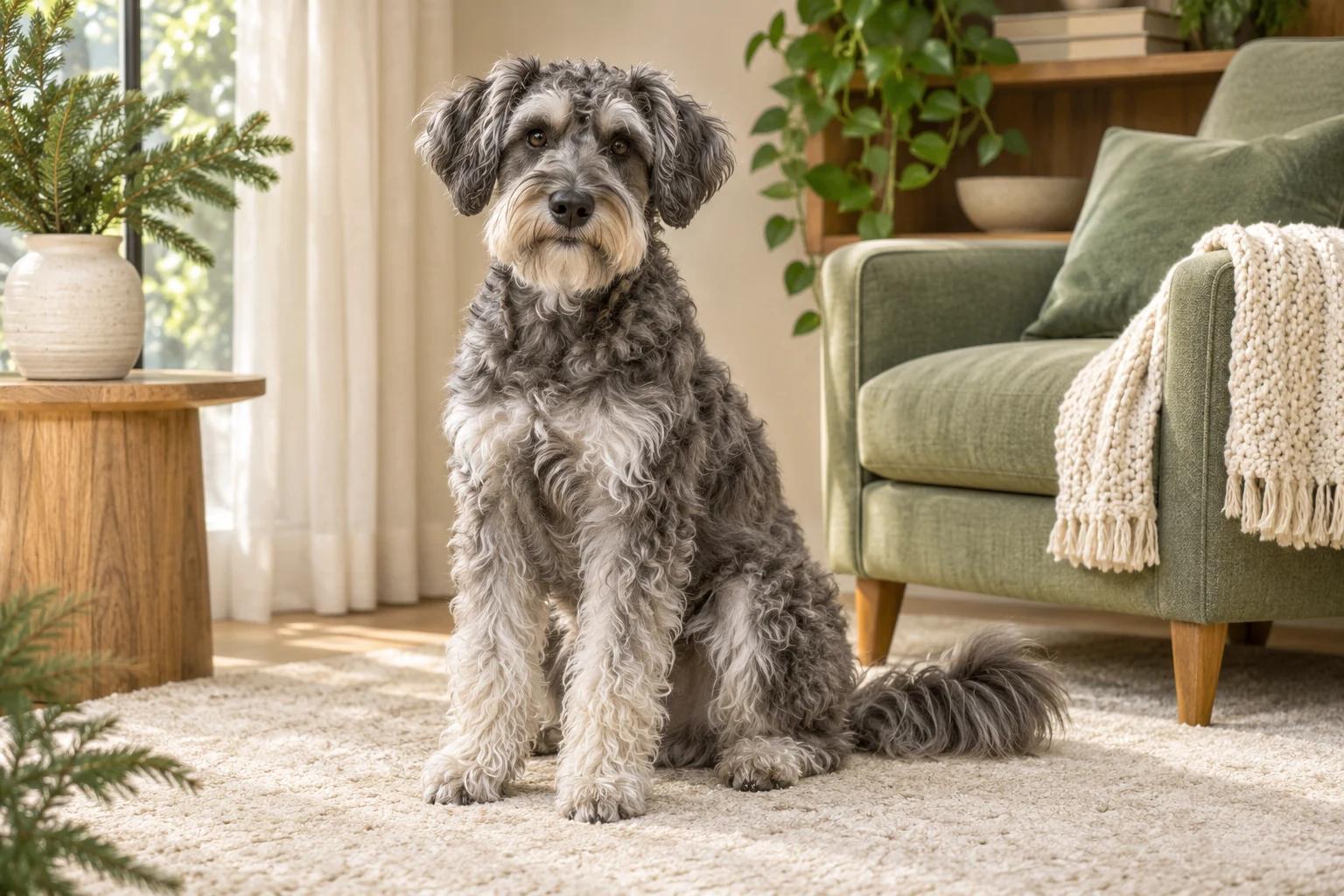
The same size words do different jobs
Schnoodle names a Schnauzer-Poodle cross, but the nickname leaves the parent descriptions incomplete. PetMD identifies several Schnauzer and Poodle types within that broad label. Reading those names carefully matters because Miniature and Standard occur on both sides, yet the classification behind the words is different.
In American Kennel Club usage, Miniature Schnauzer, Standard Schnauzer and Giant Schnauzer are three distinct breeds, each with its own standard. The Poodle Club of America describes Toy, Miniature and Standard as three Poodle varieties. These are the organizations' classifications; do not assume that every registry worldwide uses identical terminology.
Expand the description on both sides of the cross
Consider two illustrative descriptions: Miniature Schnauzer with Standard Poodle, and Standard Schnauzer with Miniature Poodle. They contain the same two size words but identify different parents. Neither description is a prediction of the resulting puppies' dimensions, nor a recommendation for a particular pairing. They simply demonstrate why attaching each word to its full breed name changes the information.
The phrase Standard Schnoodle does not, by itself, tell the reader which of those descriptions applies. Ask the person using it to spell out the Schnauzer breed and the Poodle variety. If they mean something else by Standard, have them explain that separately instead of silently translating the label into Standard Schnauzer plus Standard Poodle.
Keep parent classification separate from a crossbreed label
The PCA's Poodle size categories describe Poodles; the independent Schnauzer standards describe their respective breeds. Combining the names does not create a shared classification system for their offspring. This is a reading distinction, not a way to calculate an adult Schnoodle's height, weight, coat or behavior from two category names.
When comparing parent information, write one full description per parent and note who supplied it. If the background is incomplete or includes further crosses, retain that explanation rather than filling the gap with a familiar label. A useful question is what the description actually establishes. Knowing which Schnauzer breed and which Poodle variety someone means makes the conversation more precise while leaving unsupported predictions out of it.
Sources behind this article
- PetMD: Schnoodle ↗
- AKC: Giant Schnauzer Facts You May Not Know ↗
- Poodle Club of America: Sizes of Poodles ↗
Article source checked: October 20, 2026. Source checked 2026-10-20
Keep reading
Schnoodle vs Cockapoo: Compare the Dogs, Not the Haircuts
Read article →