Rhodesian Ridgeback training: practical first skills
Build Rhodesian Ridgeback training around a hand target, comfortable lead walking and clear rewards. Turn large goals into manageable everyday skills.
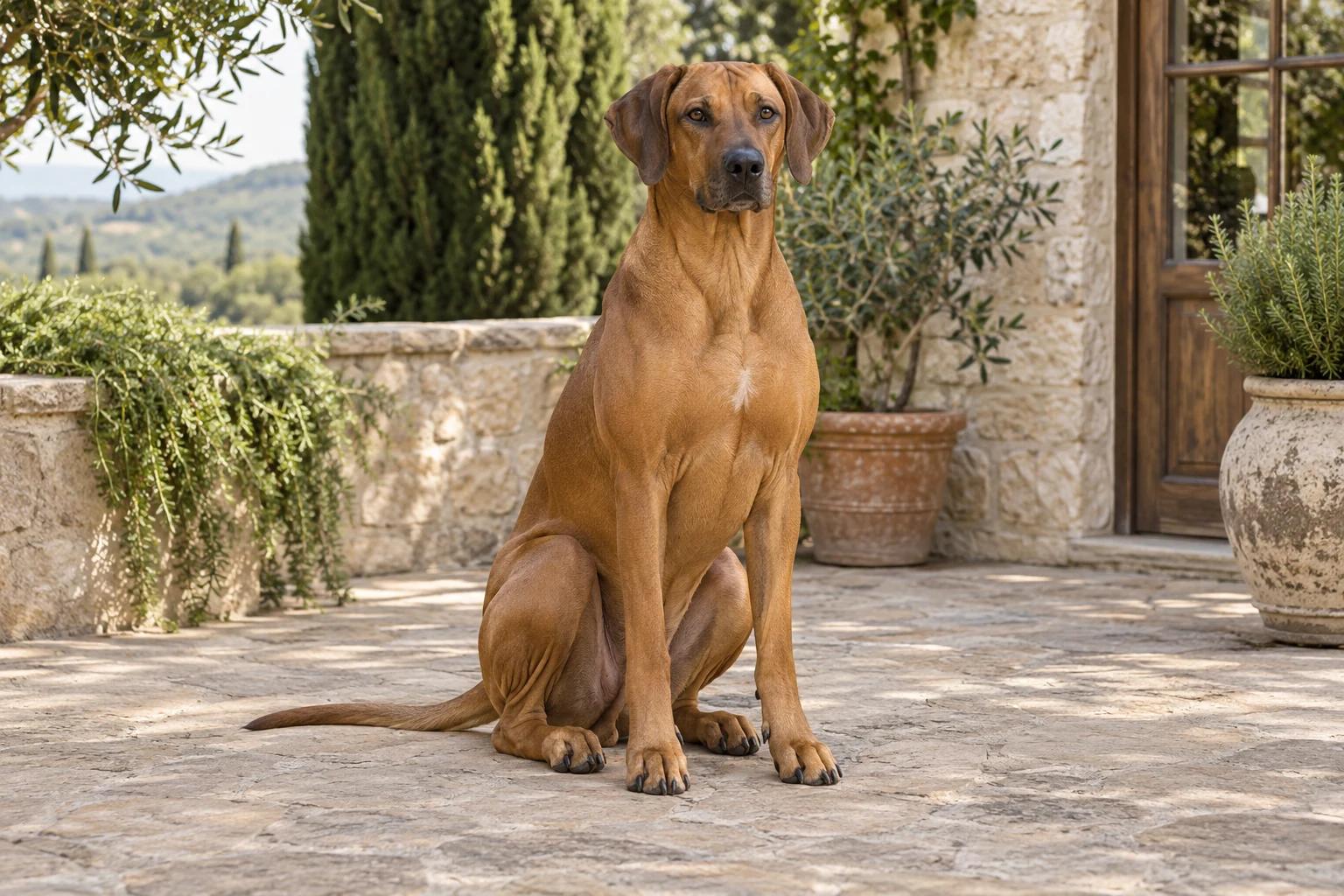
Rhodesian Ridgeback training should make ordinary life easier before it becomes a display of impressive tricks. Moving willingly into a useful position and walking without dragging the handler are valuable achievements. They also give you clear actions to teach, instead of repeatedly asking a dog to “behave” without explaining what that means.
The Rhodesian Ridgeback profile provides the wider care context. The FCI description of a strong, active, intelligent dog is a reason to teach practical skills thoughtfully, not to assume physical strength calls for a contest with the handler.
Rhodesian Ridgeback training: define the action
If you are learning how to train a Rhodesian Ridgeback, start by describing what success looks like. “Stand beside my left leg while I attach the lead” identifies a position and a situation. “Stop being excited” describes a feeling you cannot directly demonstrate to the dog.
Separate the parts of a complicated moment. Attaching equipment, opening a door and passing another person are three tasks, even if they happen within a few seconds during a normal departure. Practice the part you need rather than recreating the entire busy sequence every time.
This is especially useful outside the familiar practice area, where distractions change the task.
Teach a hand target
Dogs Trust's target lesson begins with a hand made interesting by rubbing a little food on it. When the dog's nose sniffs or touches the hand, mark the moment with a brief word and reward. Once contact is consistent, attach a cue such as “touch.” Build any longer contact in small increments. If the dog begins mouthing, pawing or barking in confusion, simplify or pause rather than correcting the mistake.
For a Ridgeback, present the target at a comfortable nose level, not so high that reaching it requires jumping. Stand where there is room for the dog to approach without pressing against furniture. Your hand should invite a movement, not become a tool for pushing the head into place.
Choose an endpoint with room to turn away. Check the route before using the target beside doorways or equipment.
Build a comfortable walking position
Battersea's lead-walking lesson starts somewhere quiet, with the dog on a chosen side. Reward that position, then take one or two steps and reward movement with a loose lead. Increase the distance gradually. Place the reward beside your leg rather than across your path, and return to easier repetitions when the setting becomes more distracting. A relaxed everyday walk does not require an uninterrupted competition-style heel.
Make your practice route physically straightforward. Two steps beside a sofa may be harder than several steps in an open room because your leg and the furniture leave a narrow channel. Check the space at the dog's shoulder level, not only where your own feet will go.
Plan turns before you reach an obstacle. Walking toward a closed gate and then improvising a tight turn can crowd the dog and tangle the lead. In early practice, choose an open turning area and avoid carrying shopping bags or a hot drink. You need your attention on the movement you are teaching.
Rewards should clarify the lesson
The RSPCA recommends reward-based training, using something the individual dog enjoys, such as food, toys or praise. It advises short, regular sessions with few distractions and a patient approach to different learning rates. Finish with an achievable task. A qualified instructor can help with teaching problems; significant behavioral concerns call for appropriately qualified behavioral support.
For Rhodesian Ridgeback obedience, decide which exact response earns the reward before the attempt begins. If you reward standing beside you on one attempt and jumping toward your hand on the next, you have made the task harder to interpret. An occasional timing error is not a disaster, but it is a reason to simplify your own movements.
Keep the reward within reach. Rehearse your own equipment handling without the dog if coordinating everything feels awkward.
Socialization needs a modest goal
Rhodesian Ridgeback socialization should not be a plan to collect as many greetings as possible. Define what you need in a specific setting. Passing through a quiet entrance, standing while someone speaks to you and remaining comfortable near an unfamiliar object are different goals. There is no benefit in treating them as one large test.
Choose a location where you can leave without squeezing past the very thing you intended to observe. An open area with several routes is easier to manage than a narrow passage with people approaching from both ends. If your dog is frightened or struggling, stop the exercise and seek professional guidance rather than trying to force a successful finish.
Training also cannot replace physical security. A new skill is not permission to remove a lead beside traffic or leave an open gate unattended. Keep the real-world arrangement safe while you teach, and judge progress by reliable responses under appropriate conditions rather than a single lucky attempt.
For a broader ownership check, use the dog match quiz. The existing article on reading a Rhodesian Ridgeback's ridge covers appearance, a separate subject from learning and daily handling.
FAQ
Which skill should I teach first?
Choose a small action that solves an ordinary problem in your home. Identify the starting position, the movement and the finish. A clear, useful task is easier to assess than a vague ambition to have a perfectly obedient dog.
What if two people use different cues?
Agree on the cue and the action it describes before practicing together. Different words are not inherently impossible for a dog to learn, but accidental differences make early teaching harder to interpret. Demonstrate the exercise to each other without adding new demands.
Does a good lesson mean the dog is ready for a busy outing?
No. Success describes the conditions under which you practiced. An unfamiliar place adds movement, noise and other distractions. Choose the next step deliberately instead of treating one successful session as proof that every situation is now manageable.
Sources behind this article
- FCI: Rhodesian Ridgeback Standard ↗
- Dogs Trust: Target Training ↗
- Battersea: Walking on a Lead ↗
- RSPCA: Dog Training ↗
Article source checked: November 16, 2026. Source checked 2026-11-16
Keep reading

Affenpinscher Training: Build Useful Everyday Habits
Read article →