Reading a Rhodesian Ridgeback’s ridge
Learn what forms the Rhodesian Ridgeback’s ridge, what crowns mean, and why this show-standard feature cannot answer every question about a dog.
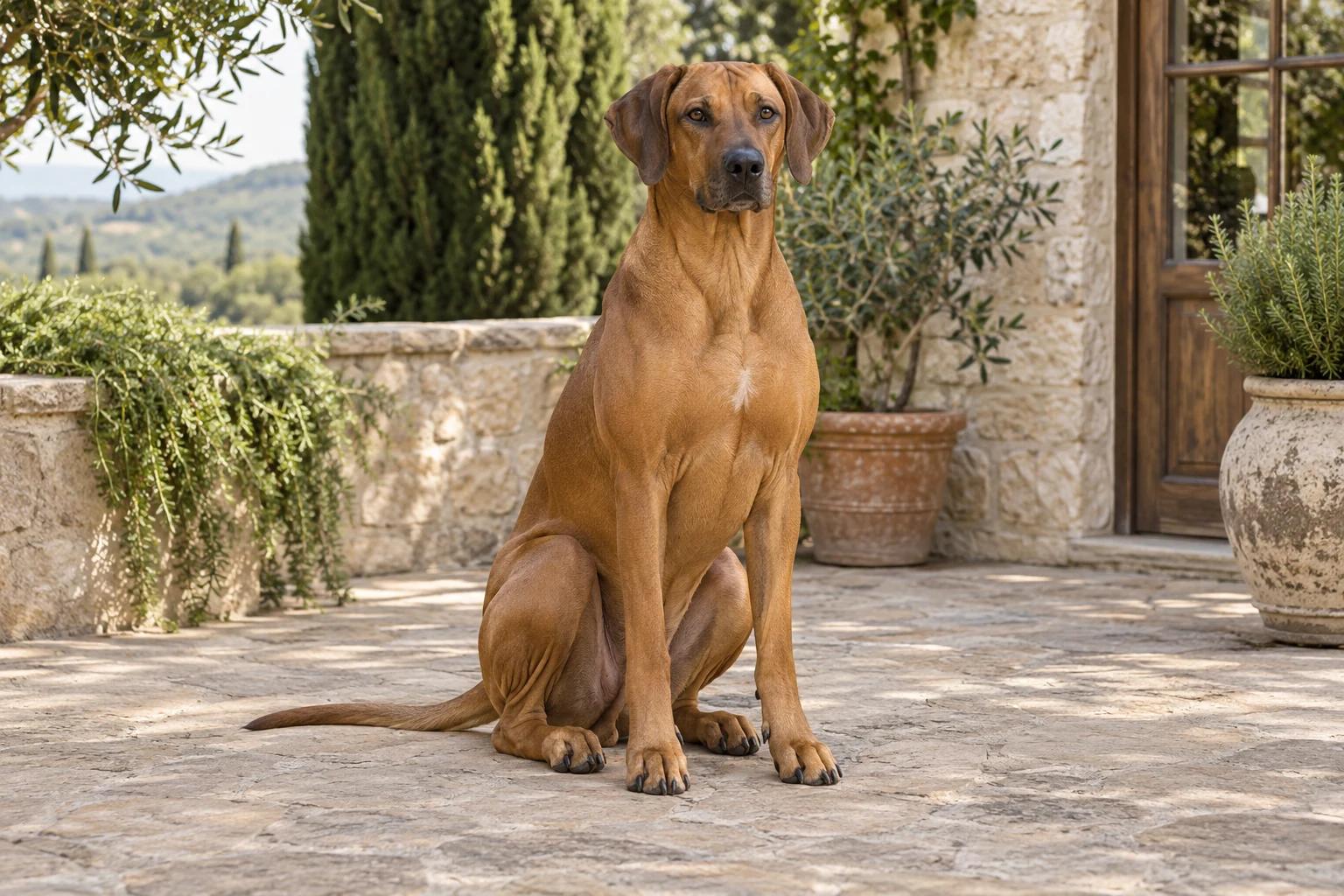
It is a change in hair direction
The ridge on a Rhodesian Ridgeback's back is formed by hair growing in the opposite direction to the surrounding coat. It is not a raised spine or a stripe of a different required color. Looking along the back reveals the change in direction that gives the breed its name. This is a useful first distinction when a photograph makes the feature look like a physical bump.
The AKC standard describes a defined, tapering, symmetrical ridge beginning behind the shoulders and continuing toward the hips. It also describes two matching crowns, or whorls, opposite one another. Those small swirls of hair are part of the standard's description of the ridge's arrangement.
Ridgeless dogs exist
The Rhodesian Ridgeback Club of the United States notes that some Ridgebacks are ridgeless. The AKC standard treats ridgelessness as a disqualification in conformation, the show-ring assessment of how a dog matches its breed standard. That is a statement about judging against a particular standard. It does not mean a family can evaluate the whole animal by looking for one visible feature.
Nor does a correctly shaped ridge provide a health clearance or establish how a dog behaves with visitors, children or other animals. Keep those questions separate. A breeder's explanation of the ridge may be accurate and interesting while still leaving the ordinary work of evaluating health information and learning about the individual ahead of you.
Use the detail to improve, not narrow, your attention
If someone points out an unusual crown or the absence of a ridge, ask what they mean in plain language. Are they describing a show-standard detail, identifying the dog in a litter or discussing a concern that needs veterinary assessment? Those conversations have different purposes. A word such as “fault” can otherwise sound like a general verdict rather than a term from judging.
Spend at least as much attention on the dog's daily life as on the stripe in the photograph. Learn the routine, observe the individual when appropriate and discuss the commitments involved. The ridge is a distinctive feature worth understanding. It is one part of the dog you are considering, not a complete explanation of that dog's needs or suitability for your home.
Sources behind this article
Article source checked: October 20, 2026. Source checked 2026-10-20
Keep reading
Rhodesian Ridgeback vs Vizsla: choosing your companion
Read article →