Pug training: small lessons that make daily life easier
Make Pug training practical with clear cues, manageable lessons, everyday manners and calm preparation for care, outings and new experiences.
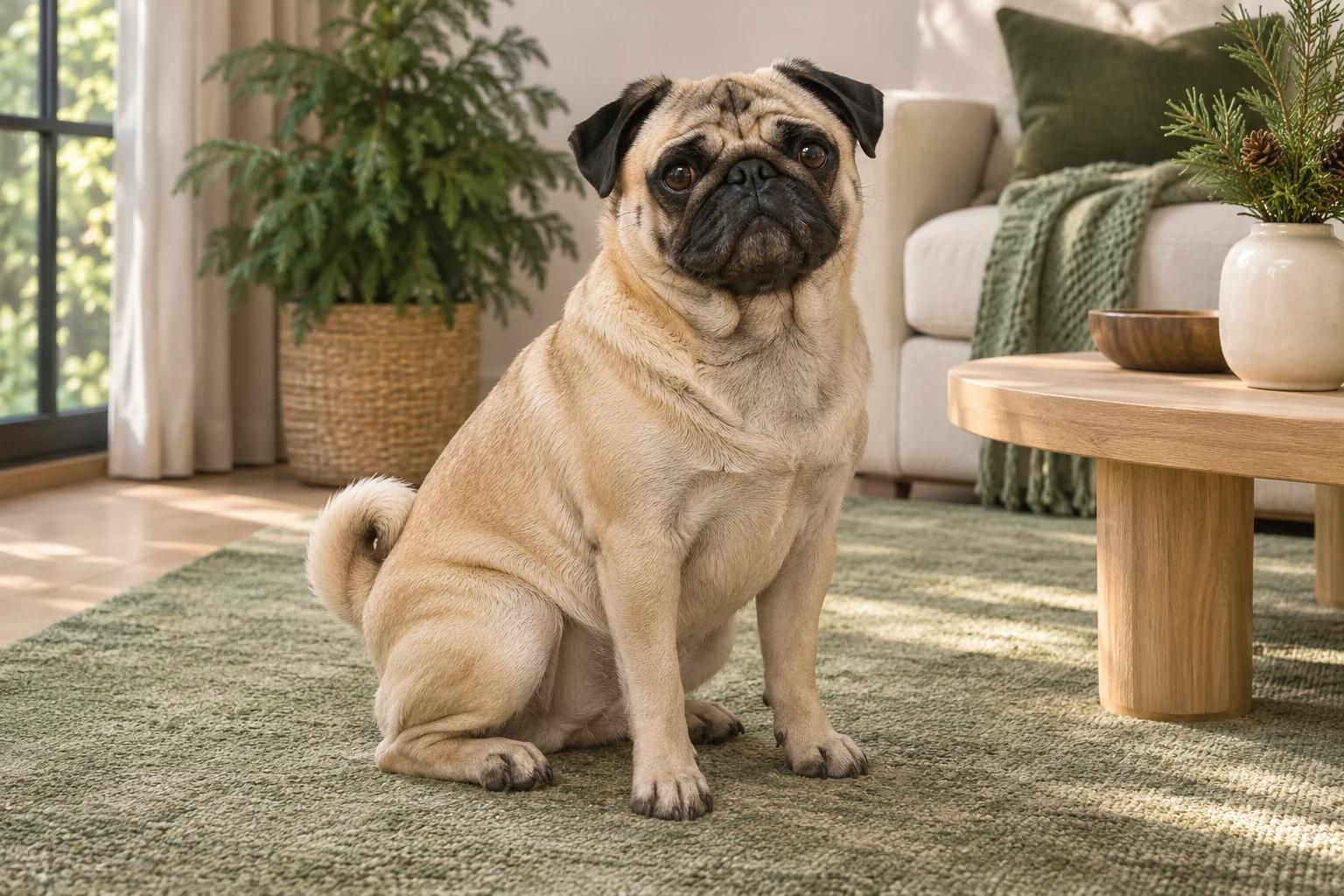
Pug training is most useful when it improves the moments you share every day. Think about answering the door, preparing an outing, sitting down to eat and making time for care. You do not need an elaborate performance programme to begin. You need a few clear goals, an environment that supports learning and a way to recognise progress without expecting every lesson to work immediately in every place.
Pug training begins with understandable expectations
VCA's Pug profile recommends reward-based training. The AKC's Pug puppy guide includes pairing the dog's name with something enjoyable and introducing grooming positively. Use those principles at the individual's pace rather than treating an age chart as a deadline.
Start by listing the situations that need attention in your home. Perhaps the dog rushes into the hallway while you collect shoes, or cannot settle beside you when you work. Describe the action you want instead, so everyone knows what they are teaching.
Read the Pug profile for the wider ownership picture. Training belongs alongside care, appropriate activity and rest. It should not become a way to demand participation when the dog is uncomfortable or needs a quieter part of the day.
Make household cues consistent
Choose simple words that everyone can use in the same way. If one person says a cue to mean approach and another uses it to mean stop, the dog has to solve a problem you have created. Write the agreed meanings down if several people share care.
Avoid repeating the dog's name as background noise. Use it thoughtfully, notice the response and keep practice easy enough to understand. If attention is difficult, simplify the environment rather than increasing the volume of your request.
Learning how to train a Pug includes noticing what you are doing between cues. Are you reaching for equipment while asking the dog to stay still? Is someone else encouraging play? Removing conflicting signals can make a lesson much clearer.
At the end, record one useful observation. A note such as responds in the kitchen but not yet in the hallway tells you where to practise next. Calling the dog stubborn tells you very little about how to change the task.
Practise the doorstep before the exciting outing
Departures combine several events: people moving, equipment appearing and access to the outdoors. Break that sequence into smaller pieces. Practise when you have time to pause, not only when everyone is already late.
You might begin by having the dog remain comfortably near you while you pick up a lead. Then put it down and end the practice. Later steps can include attaching equipment and moving toward the exit with instruction suited to your setup.
Keep the space organised. Shoes, bags and multiple leads on the floor can make an otherwise simple departure confusing. If possible, prepare your belongings before inviting the dog into the busy area.
Pug obedience should make these transitions easier, not create a rigid ritual you cannot maintain. Choose a routine that works for your home and teach each part clearly. Ask a qualified reward-based trainer for help if departures remain difficult.
Teach greetings without requiring constant contact
Decide how you want an ordinary greeting to work. A visitor should not have to guess whether to encourage jumping, bend over the dog or wait. Explain the plan before the person arrives and manage the doorway accordingly.
Practise with a calm, familiar helper before expecting success during a gathering. A single quiet arrival gives you a clearer learning opportunity than several people carrying bags and talking at once. Keep the dog's access manageable while skills develop.
Let the dog disengage after greeting. Being small or companionable does not make it available for continuous touching. Give it somewhere to rest and explain that space to visitors, especially children.
Pug socialization is about suitable experience, not compulsory interaction. Work with your trainer and veterinarian on appropriate introductions and puppy health precautions. You can observe a new situation from a manageable distance without requiring the dog to approach everything.
Use indoor learning thoughtfully
Choose a place with enough room for the task and a surface that lets the dog move comfortably. Keep distracting toys or household activity out of the immediate area if they make the lesson harder. A simple setup lets you see the dog's response clearly.
Select one action at a time. For example, if practising a comfortable wait near your chair, do not simultaneously introduce a new visitor and unfamiliar grooming equipment. Those can be separate lessons once the first task is understood.
Do not make progress depend on increasing physical effort. Useful learning can concern attention, positioning or a calm transition. Ask your veterinarian about suitable activity if you are considering a physically demanding class or sport.
Keep training rewards within an agreed care plan rather than improvising dietary changes. The separate Pug weight and body-condition article covers that discussion. This training plan is about communication and practice, not calorie targets or weight management.
Prepare for care before care becomes urgent
A dog that is familiar with a brush, towel or handling location has a clearer starting point than one meeting everything during a necessary procedure. Ask the caregiver what the Pug already knows and continue from that level.
Have equipment ready before beginning. Start with a manageable part of the routine and stop before trying to complete an entire checklist. Your veterinarian or groomer can show appropriate techniques; a trainer can help you build cooperative participation.
Do not use the dog's size as a reason to bypass learning and simply hold it still through every task. If it struggles, pause and seek help with the setup or technique. A new objection to familiar care also deserves veterinary attention.
Make a note of what was comfortable. This is useful information for another caregiver or professional appointment. Clear records help you continue the same plan rather than repeatedly beginning from guesswork.
Troubleshoot the lesson, not the dog's character
When a cue stops working, check what changed. A new room, another person, a different time or an unfamiliar sound may have increased difficulty. Return to a manageable version and build again rather than assuming the dog has forgotten everything.
Look at your own timing and clarity. Did you recognise the action you wanted, or were you distracted by preparing the next step? A qualified instructor can observe details that are hard to notice while you are participating.
If difficulties persist or the behaviour raises safety concerns, seek appropriate professional support. Training advice should be specific to what happens, where and under which conditions. Describe events plainly instead of reducing them to a personality label.
Prospective owners can use the dog match quiz to consider whether they enjoy this kind of daily involvement. For an existing owner, the same question is practical: which small lesson will improve tomorrow? Start there and build a routine you can repeat.
FAQ
Must a Pug master skills by a fixed age?
No. Use the individual's experience and progress to guide expectations. Ask your instructor how to adjust the next step rather than treating a published timeline as a test every dog must pass.
Why does a cue work at home but not elsewhere?
A different place can add distractions and change the task. Practise an easier version in a suitable setting and build gradually with your instructor. Success in one room does not establish success everywhere.
What is a useful first training goal?
Choose something you need every day, such as a manageable departure or a comfortable wait near your chair. Define the action clearly, organise the surroundings and practise when you have time to concentrate.
Sources behind this article
Article source checked: November 15, 2026. Source checked 2026-11-15
Keep reading

Affenpinscher Training: Build Useful Everyday Habits
Read article →