Pug weight: what the scale cannot tell you
Distinguish the Pug breed-standard weight from individual body condition, using ribs, waist and abdominal outline to make veterinary follow-up more useful.
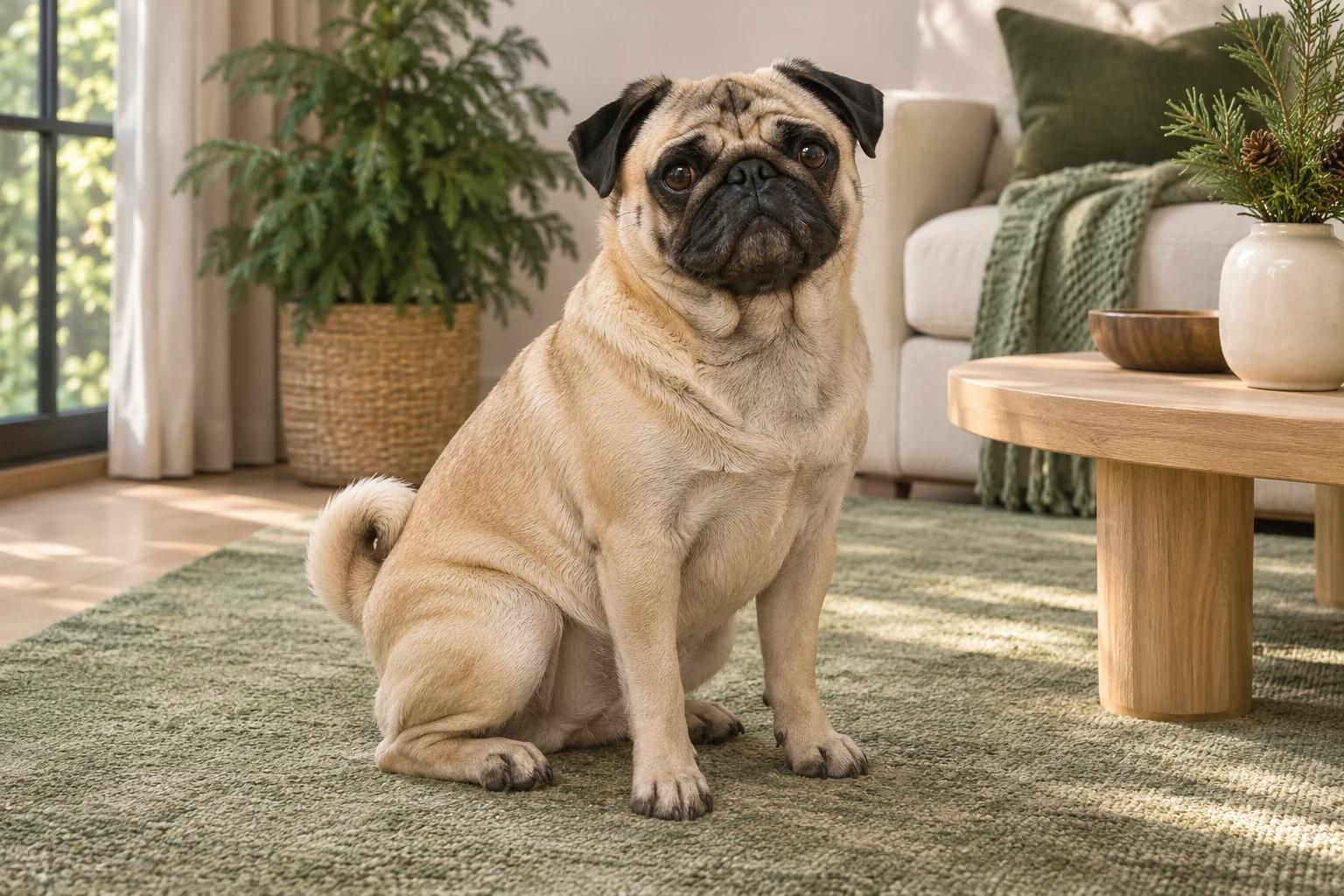
A breed standard is not a feeding target
The AKC Pug standard describes a compact dog and lists 14 to 18 pounds as desirable weight. That number belongs to a description of breed type. It does not establish the ideal weight for every Pug, and being inside the range does not by itself demonstrate healthy body condition. A scale supplies a measurement, not the whole assessment.
This distinction matters when a familiar phrase such as “Pugs are supposed to be solid” ends a conversation before anyone looks more closely. The standard's emphasis on developed muscle is not an instruction to accumulate body fat. Neither a show description nor a favorite photograph should become an automatic target for the dog at home.
Add touch and two viewpoints
WSAVA's nine-point body-condition chart describes ideal scores of four or five using several features together. Ribs should be readily felt without excess fat covering; a waist should be visible from above behind the ribs; and the abdominal line should rise when viewed from the side. These observations complement weight rather than replace it.
Have the veterinary team demonstrate the assessment on your Pug, including how gently to feel the ribs and where to look for the waist. Use that shared reference when following progress. Do not decide that a single photograph or an uncertain home score justifies a diet change. Individual assessment is particularly useful when your impression and the scale appear to disagree.
Turn measurements into a usable conversation
For a planned review, bring the current food label, how portions are measured and an honest account of extras. A household can agree on the main meals yet overlook the separate contributions from training, visitors and several people offering treats. Naming those sources makes the routine understandable without assigning blame.
A simple example is a dog whose weight has risen between visits while the stated meal portion has stayed the same. Instead of guessing at a percentage reduction, describe everything offered and let the veterinarian assess the change in context. Agree on what to measure and when to reassess. This article supplies no calorie allowance, weight-loss rate or exercise prescription; those depend on the dog. The useful habit is to interpret the number alongside body condition and a complete picture of daily care.
Sources behind this article
Article source checked: October 20, 2026. Source checked 2026-10-20
Keep reading
Pug vs French Bulldog: choosing for everyday life
Read article →