Poodle toy training: small steps for useful skills
Build Toy Poodle training around clear cues, a simple hand target, everyday manners and gentle introductions to the wider world.
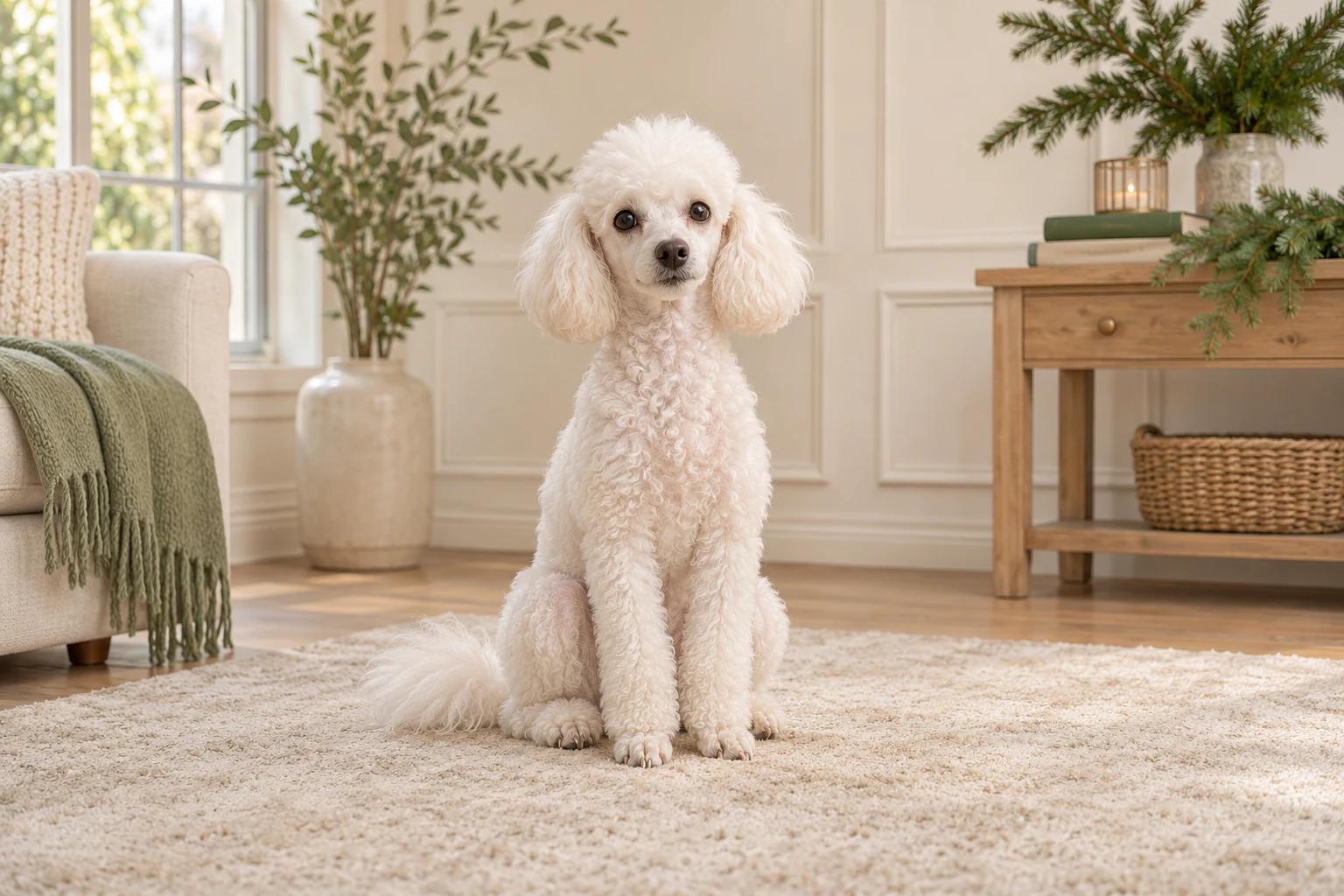
Poodle toy training works best when the dog can understand the task and the person can see what is being learned. Small size can make it tempting to pick a dog up or move it instead of teaching a useful response. Yet giving a Toy Poodle clear, manageable choices can make daily life easier for both of you.
Begin with your household priorities rather than a long trick list. What would help tomorrow: coming toward you in a quiet room, cooperating with lead attachment, or waiting away from an opening cupboard? Pick one clear starting point.
Poodle toy training: make the lesson physically clear
VCA's Toy Poodle guide recommends reward-based teaching using food, games, or praise. The practical challenge for an owner is delivering that information at the dog's level, without constantly looming overhead or asking it to jump toward a hand.
Choose a nonslip patch of floor with space around it. Sit or position yourself comfortably so that you can present a hand and deliver a reward without sudden bending. Keep the dog on the floor rather than using an unsecured elevated surface to bring it closer to you.
Decide what you will say and what movement counts as success. If different people use different words for the same task, write down an agreed cue. Poodle toy obedience should begin with clarity, not louder repetition when the dog is uncertain.
Teach a simple hand target
The AKC's nose-targeting guide offers a useful foundation: the dog touches an offered palm with its nose. Present a flat hand close to the nose, mark contact with a click or a brief word, then reward. Once the response is reliable, add a cue such as touch before offering the hand. Introduce distance and distractions gradually.
For a Toy Poodle, keep the hand comfortably reachable without stretching upward. Imagine using the skill to invite the dog a short distance toward you, rather than reaching down to reposition it. Start in a quiet, familiar place; a busy doorway is a later practical application, not the first test.
If the dog does not engage, pause and reconsider the setup. Is your hand moving too quickly? Are you asking from too far away? Is the dog occupied with something else? A simple lesson can reveal more about your presentation than about the dog's willingness.
Keep your notes concrete: “touched the palm beside the sofa” tells you what happened. “Knows touch everywhere” claims more than one easy session demonstrates.
Turn manners into small household projects
When considering how to train a poodle toy, choose skills tied to events that happen repeatedly. Lead attachment is one example. Set out the equipment before calling the dog, choose the same comfortable place, and avoid turning the preparation into a chase around furniture.
A resting mat is another useful project to discuss with your trainer. Decide where it will remain during meals or work calls and what you want the dog to do there. Do not move the location constantly while expecting the same response.
Agree on what happens before the skill is reliable. Perhaps a familiar caregiver manages the dog in another area while the door is open. Management is not failure; it prevents a real-life situation from becoming a test the learner is not ready to pass.
Keep sessions short enough that you can pay attention to what is happening. End when you have useful progress or need to rethink the setup, rather than continuing because a timer says you owe another lesson. A brief, understandable exchange is more valuable than a long stretch of confusing repetition.
Give socialization a purpose beyond greetings
Poodle toy socialization should include learning about the world, not being handed to every person who admires the dog. Think of ordinary situations: a distant trolley, a person wearing a coat, a different floor surface, or quiet observation from a suitable location.
Plan an easy exit before beginning. If a place becomes busier than expected, you should be able to leave without squeezing through the very crowd that has become difficult. For a puppy, ask your veterinarian how to balance suitable experiences with health precautions in your area.
Allow observation without insisting on interaction. Someone can pass without touching the dog. Another dog can be present at an appropriate distance without requiring a greeting. Record which experiences seemed comfortable and ask a qualified trainer for help if fear or persistent difficulty appears.
Do not use a training cue to draw the dog toward something it is trying to avoid. A skill learned in a calm room is not permission to override discomfort in a new place. Step back and make the situation more manageable.
Teach the household to notice the dog
Small dogs can disappear beneath the visual clutter of coats, chairs, and bags. Make training easier by reducing that clutter at the places where you interact. Keep the lead ready, leave room for the dog to approach, and ask people to pause before opening a door.
Agree that picking the dog up is not the automatic answer to every slow response. Sometimes lifting is necessary for a particular situation, but it should not replace teaching every ordinary movement. Ask a professional to demonstrate comfortable handling when you need guidance.
Also avoid making barking the only reliable way to get a person's attention. Notice the quiet moments when the dog is already waiting or checking in. If barking becomes a persistent problem, describe the triggering situations to a reward-based trainer instead of relying on a promise that a clever breed will quickly stop.
Review one skill before adding five more
At the end of a week, review what works, where it works, and who can ask for it. This is more useful than counting named commands. A cue understood with one person in one room is a foundation to develop, not a disappointment.
The Toy Poodle profile places learning within the wider care routine. Our Toy Poodle size article addresses physical planning separately, and the dog match quiz helps prospective owners consider their available time. Seek veterinary advice for sudden behavioral change or apparent discomfort rather than treating it as disobedience.
FAQ
What is a useful first skill for a Toy Poodle?
A simple hand target can give you a clear shared task: the dog approaches and touches an offered palm. Keep the setup easy and physically comfortable. Choose a skill you will practice thoughtfully rather than starting with a long list of commands.
Does socialization require greeting every person or dog?
No. Calm observation can be part of learning about the world. Arrange suitable experiences with room to move away, and do not force contact. For puppies, discuss local health precautions with your veterinarian while planning appropriate introductions.
What should I do when a training cue does not work?
Check the setting, your presentation, and what the dog has actually practiced. Reduce the difficulty instead of repeating the word more loudly. If problems persist, ask a qualified reward-based trainer to observe; a specific example is more useful than describing the dog as stubborn.
Sources behind this article
- VCA Animal Hospitals: Toy Poodle ↗
- American Kennel Club: How to Teach Your Dog to Nose Target or Touch ↗
Article source checked: November 15, 2026. Source checked 2026-11-15
Keep reading

Affenpinscher Training: Build Useful Everyday Habits
Read article →