Toy Poodle size: read the measurements behind the label
Understand the AKC Toy Poodle height category, separate marketing labels from measurements, and compare practical space needs without treating size as a health promise.
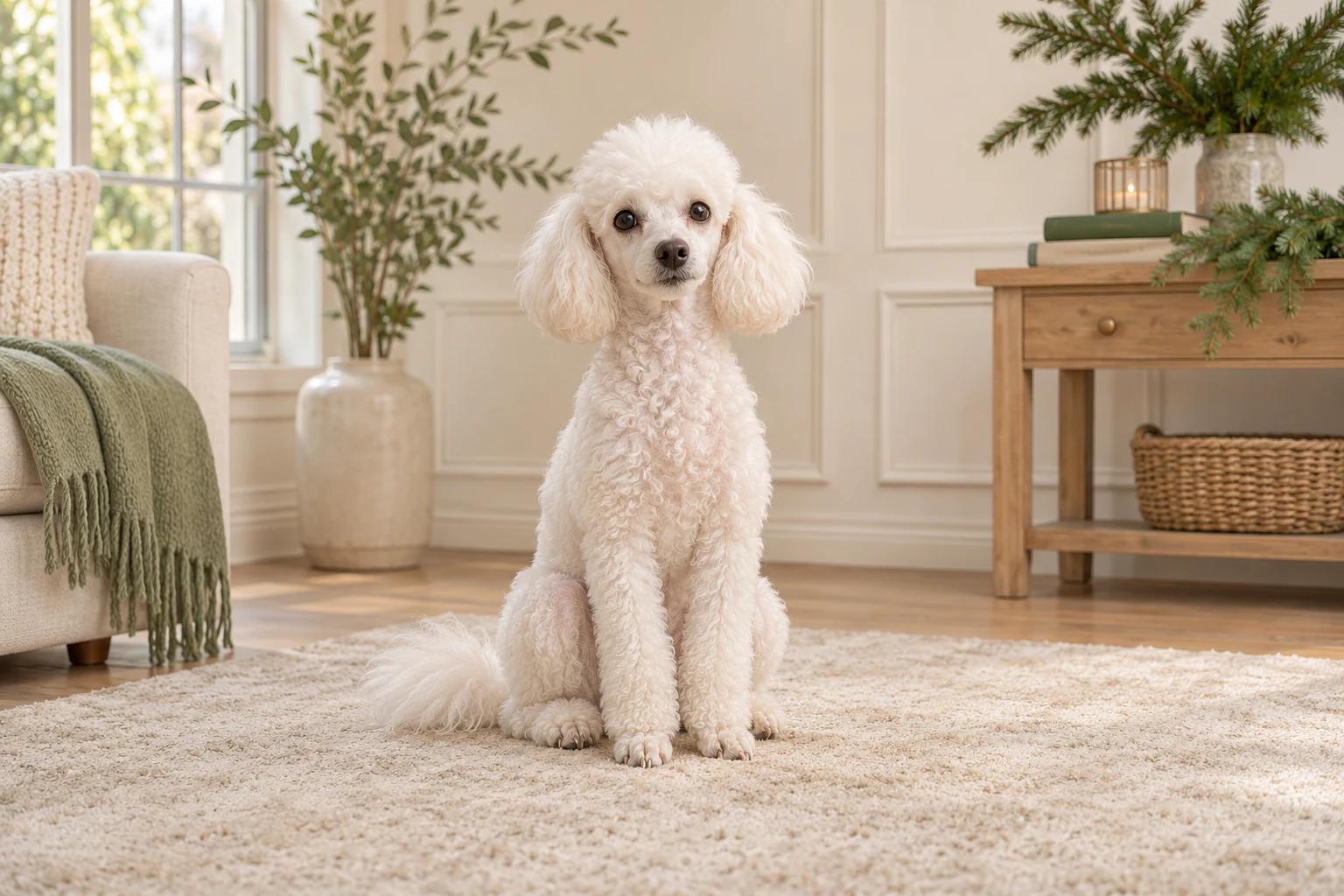
Toy is a defined AKC variety
The AKC Poodle standard defines a Toy Poodle as 10 inches or less at the highest point of the shoulders. Standard and Miniature are the other varieties named in that standard. This is a U.S. registry definition based on height, not a promise about adult weight, personality or how little care a dog will need.
Words such as teacup or tiny may appear in an advertisement, but they are not additional varieties in this AKC standard. Before comparing two listings, replace those words with a clear description: the dog’s age, current measured height and weight, and whether the adult size is known or estimated. A label becomes useful only when everyone understands what it represents.
Separate a measurement from a forecast
An adult measurement and a puppy’s projected adult size answer different questions. Keep them in separate columns when making notes. Record who supplied the information and when it was measured. If an estimate is based on the parents, write that down as its basis rather than turning it into a guaranteed outcome.
For example, a carrier that fits a puppy today is a current fit decision. A claim that the same carrier will fit throughout adulthood is a prediction. Check the manufacturer’s instructions and the dog’s actual ability to use the space comfortably; do not buy permanent equipment solely because an advertisement calls the puppy exceptionally small.
Measure the household too
Walk through the practical route a dog would use: resting place, feeding area, doors and outdoor access. Note narrow gaps, busy thresholds and where people routinely put bags or move furniture. The point is to make a small dog visible in your planning, not to assume every Toy Poodle faces the same household risks.
Include care arrangements in that exercise. Who will provide walks, learning activities and grooming? The Poodle Club of America describes the smaller varieties as sharing the breed’s general characteristics and emphasizes regular grooming. Compact size changes the scale of the equipment; it does not remove the need to make time for the dog.
Keep size separate from health evidence
The parent club cautions that registration papers do not guarantee health or disposition. Neither does a seller’s size label. Review the individual dog’s medical history and any relevant parental screening records with your veterinarian. Choose the animal whose known needs you can meet, rather than treating the smallest advertised description as an achievement in itself.
Sources behind this article
Article source checked: October 20, 2026. Source checked 2026-10-20
Keep reading
Poodle toy vs maltipoo: compare the daily partnership
Read article →