Persian Cat Exercise: Comfortable Play With Room to Pause
Plan Persian cat exercise around comfortable play, accessible space and individual choices, without imposing breed-wide endurance targets.
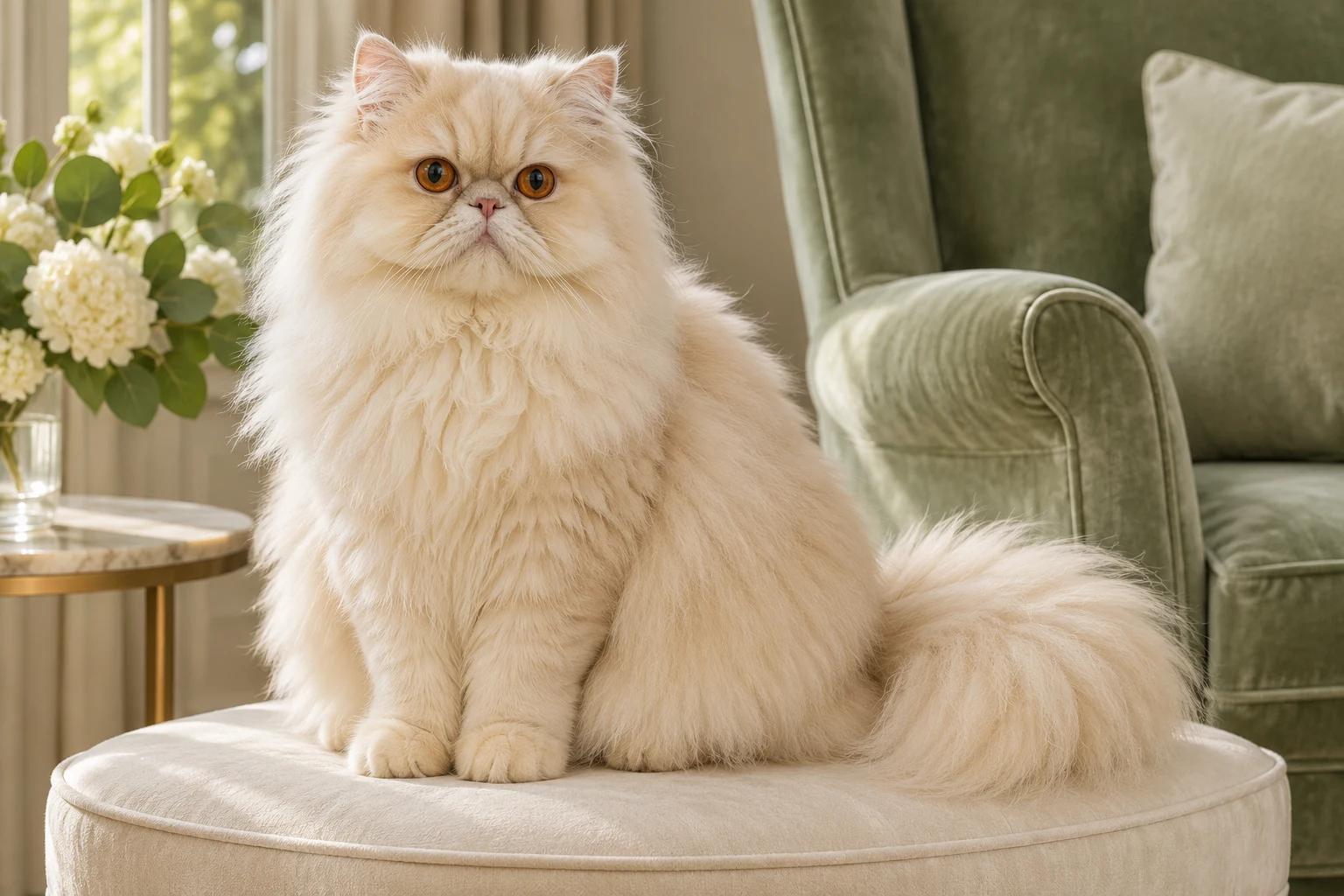
Persian cat exercise starts with an invitation, not an endurance target. A quiet cat can still enjoy following a toy, investigating a room or sharing a brief game with a familiar person. The current breed profile specifically warns against treating a calm disposition as a reason for inactivity. Your task is to offer opportunities the individual can use comfortably, then pay attention to its choices.
This guide explores persian cat indoor play without prescribing minutes, running distances or a weight-loss program. Discuss changed activity or discomfort with your veterinarian. Difficult or open-mouth breathing is an emergency: contact a veterinarian or emergency veterinary service immediately; do not wait to see whether rest improves it.
Persian cat exercise: separate reputation from the individual
TICA describes bursts of playful activity within the Persian group. That account supports offering play. They do not tell you exactly what your cat should do each day, or establish that a cat declining a particular toy is unwilling to be active at all.
Read the Persian profile, then ask the current caregiver which activities are familiar. A rolling object may interest one animal while another prefers following a moving toy near cover. Begin with what is known rather than assembling an exercise routine from a breed stereotype.
If an older or newly adopted cat has activity limitations or an existing care plan, ask your veterinary team what is appropriate before changing the routine. The goal is a suitable opportunity, not proof that the animal can match a video of a more active cat.
Make the floor part of the game
Before introducing a toy, look at the space. Move loose obstacles and avoid slippery, crowded routes. Give the cat room to turn and a way to leave the activity. A short, clear route may be more useful than a room filled with equipment it cannot use comfortably.
Choose stable, accessible resting places as part of that arrangement. Do not place a necessary resource at the top of a difficult climb to make the cat exercise. Access to food, water, litter and rest should not depend on completing your chosen activity.
FelineVMA's indoor-cat guidance treats environmental needs as a wider responsibility than simply keeping a cat indoors. Play belongs alongside retreat and suitable resources. A thoughtful space offers choices for both movement and rest rather than making one an obstacle to the other.
Try an invitation you can observe
Prepare a safe toy and begin at a distance where the cat can notice it without being crowded. Make the invitation easy to follow and watch whether the cat orients toward it, approaches or chooses not to participate. Do not press the toy against the animal's face to force interest.
Change one feature if the invitation is unsuccessful. You might try a different location, a gentler movement or a familiar object at another time. Changing everything at once makes it harder to learn what the cat actually prefers. Keep small parts and damaged toys out of reach, and put interactive equipment away appropriately after use.
Watching is information too, but do not count it as a completed exercise requirement. You are learning about engagement, not filling a numerical quota. A cat that repeatedly declines familiar activities or changes its usual movement deserves attention beyond another purchase from the toy aisle.
Allow the game to end
A useful play opportunity includes the freedom to stop. Notice when the cat moves away, settles or no longer follows the invitation. Avoid carrying it back to the starting point or making another person restart the activity immediately because the session seemed too short.
Adults should manage interactions with children and explain that the animal is not responsible for providing entertainment. A cat declining a game has not broken a promise attached to its breed. Children can help prepare or put away equipment while an adult protects the cat's choice about participation.
Persian cat activity level also needs to be considered across the day, not only at the moment you feel like playing. Ask when the cat usually engages, and look for opportunities compatible with that pattern. An unremarkable, repeatable invitation may be more useful than an ambitious routine nobody maintains.
Keep comfort at the center of the observation
The site's Persian profile asks owners to consider breathing comfort during ordinary activity. Cornell's feline dyspnea guidance calls for immediate veterinary care when breathing comfortably is in question. PDSA specifically says to contact a vet immediately for struggling to breathe, panting or open-mouth breathing. These are emergency concerns: stop the activity and contact your veterinarian or an emergency veterinary service immediately. Do not wait for improvement, finish an exercise diary or attempt home treatment.
Likewise, a sudden reduction in play should not be dismissed as the breed being lazy. Describe what changed and when. Mention relevant changes in handling, grooming or other routines without deciding the cause yourself. Follow the veterinary team's urgency advice rather than waiting to gather a perfect exercise diary.
The separate Persian eye-observation guide concerns another kind of everyday change. It is a reminder that a calm appearance or familiar facial shape should not make a new concern invisible. This article gives no home treatment plan for those problems.
Do not turn exercise into a feeding calculation
Movement and body condition belong in an individual care discussion. This guide does not convert a breed weight range into a calorie allowance or recommend restricting food to make a cat play. If weight is a concern, ask your veterinarian how activity and feeding should fit the cat's health and existing instructions.
Food-based activities may be suitable for some animals, but rewards and feeding devices need to fit the agreed diet. Ask for help if there are restrictions or difficulty using a device. An activity is not useful simply because it occupies the cat for longer; it also needs to be understandable and comfortable.
For prospective owners, the cat quiz can organize preferences about play and care. Follow that with a practical conversation about this Persian. Ask what the animal enjoys now, what support it needs and how you will maintain opportunities when the household is busy.
Frequently asked questions
Do Persians need chances to play?
Yes. A quiet breed description does not remove the need for appropriate activity and enrichment. Offer opportunities suited to the individual and observe comfort and interest.
How many minutes should a Persian exercise?
No breed-wide duration is prescribed here. Ask your veterinarian about individual needs or limitations, and avoid treating an online schedule as a target the cat must complete.
What if my Persian does not chase a toy?
Review the toy, setting and timing without forcing participation. Seek veterinary advice about a new loss of interest, changed movement or any concern about comfort.
Should play be used to test breathing endurance?
No. Difficult, panting or open-mouth breathing warrants immediate contact with a veterinarian or emergency veterinary service. Do not wait to see whether it improves or try home treatment.
Sources behind this article
- TICA: Persian ↗
- FelineVMA: Indoor cats position statement ↗
- Cornell: Dyspnea ↗
- PDSA: Breathing problems in cats ↗
Article source checked: November 20, 2026. Source checked 2026-11-20
Keep reading

American Curl exercise
Read article →