Oriental Longhair Cat Size: Weight, Build and Practical Fit
Explore Oriental Longhair cat size, published weight references and equipment fit without treating a breed range as an individual feeding target.
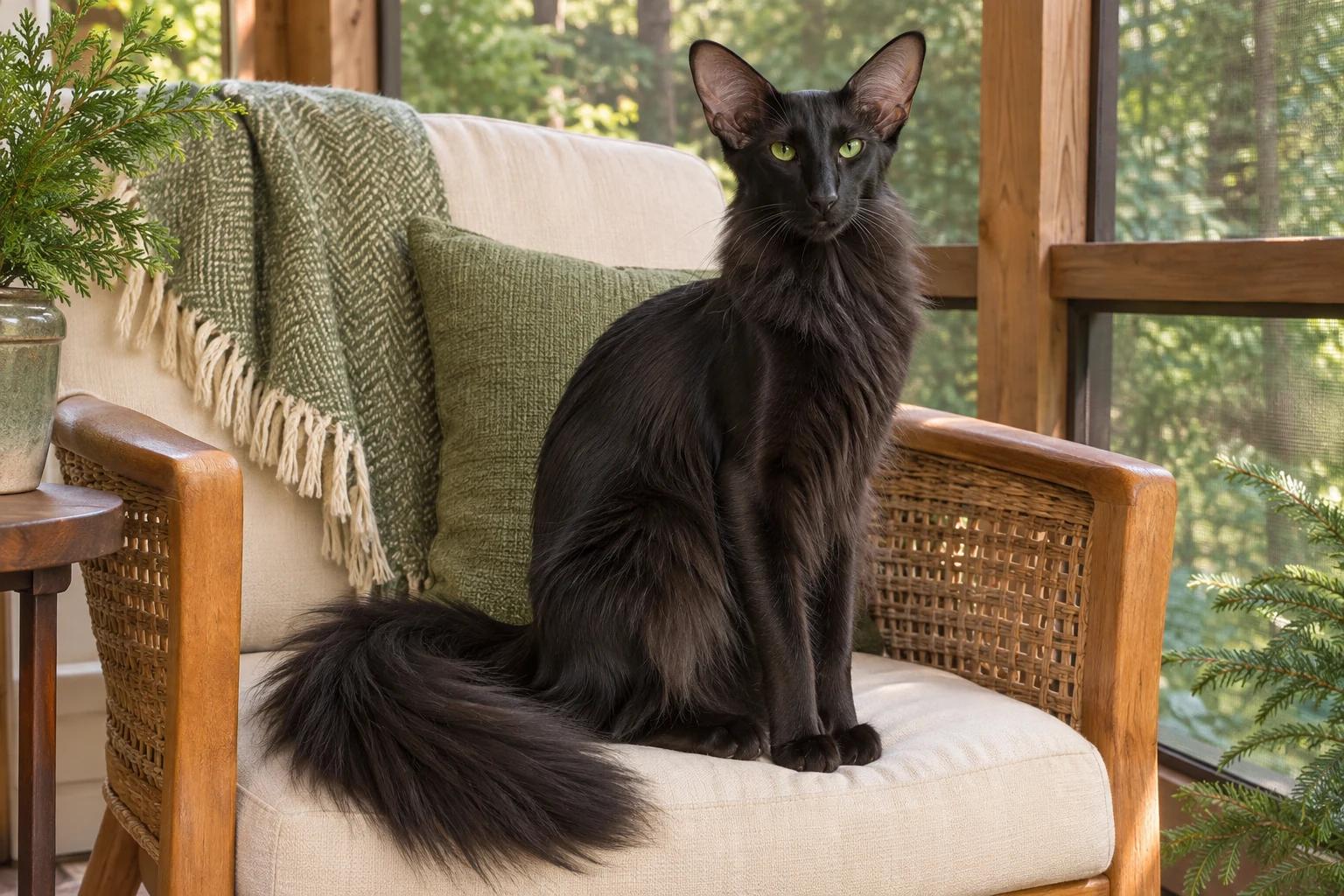
Oriental longhair cat size can be misleading in photographs. The long outline, large ears and flowing tail create an impression that a weight alone cannot explain. The site's current reference is 5–8 pounds for adult females and 8–12 pounds for adult males, following TICA's approximate figures. These are descriptive ranges, not a requirement that every cat land inside them or a target you should pursue through feeding.
If you are planning a home for this breed, think about build, movement and equipment fit as well as oriental longhair cat weight. A comfortable carrier and accessible resting places matter more than winning an argument about whether the cat looks small or medium.
Oriental longhair cat size: what the references describe
TICA places the Oriental Longhair in the Siamese breed group and describes a medium-sized, lean, muscular body with long lines. The semi-long coat changes the outline without changing the underlying type into a broad, heavy-bodied cat. Read the Oriental Longhair profile for the current site description and the sources behind it.
The approximate female and male weight references overlap at eight pounds. That alone shows why sex is not enough to predict a particular animal's appearance or equipment needs. A young cat's current weight is also not a guaranteed adult result. Ask about the individual and its veterinary records rather than choosing supplies only from a breed average.
GCCF discusses Oriental varieties together in parts of its account. Keep the named coat variety and the source's scope attached to any figure you read. A number given for Oriental Shorthairs should not silently become an extra size estimate for the Oriental Longhair.
Is there a reliable Oriental Longhair cat height?
The reviewed breed material describes proportions rather than supplying a verified shoulder-height range for this article. We therefore do not add a height chart or convert body length into shoulder height. Search results that give different measurements may be measuring different things, or may omit how the figure was obtained.
If you need a measurement for a practical purpose, identify that purpose first. Clearance inside a carrier is different from reaching a shelf, and neither can be resolved by measuring the ears. Ask a professional to help assess fit if the cat is uncomfortable being positioned or measured. You do not need a complete set of body measurements to notice that an opening is awkward or a resting surface is too cramped.
Avoid restraining a cat in an unfamiliar posture simply to produce a number. Equipment selection should make daily life easier, not create an unnecessary handling exercise. An observation of comfortable movement through an existing opening may be more useful than a hurried tape-measure result.
Check a carrier in three dimensions
Start with the cat's actual travel needs and ask your veterinary team for help selecting a carrier. Look at the usable interior, entrance and access for handling, as well as the manufacturer's limits. A stated maximum weight does not tell you whether a long-bodied cat can settle comfortably inside.
When it is safe to explore the carrier at home, leave the entrance available and let the cat investigate. Observe whether it can change position without becoming wedged against the sides. Do not close it in to see how long it will tolerate a poor fit. If the carrier already causes concern, plan a gradual introduction with professional guidance rather than combining a new container and an urgent journey unnecessarily.
Think about your own handling too. A carrier needs to remain secure while being lifted and transported. The cat's measured weight, the carrier's own weight and the way it opens all affect the task. Confirm the product's instructions instead of improvising an attachment or relying on a decorative handle.
Match the resting surface to the long outline
A lean Oriental Longhair may look compact when curled and surprisingly long when stretched out. Before selecting a bed or perch, watch the positions the individual actually chooses. A photograph of a tightly curled cat does not establish the amount of resting space it prefers.
Check stability and the approach route for raised furniture. An athletic breed description does not tell you the safe load or installation method for a shelf. Follow the manufacturer's instructions and consider the combined load if more than one animal may use it. Give the cat an alternative so it is not forced to use an uncertain surface.
The coat can also hide the edges of the body in pictures. Look at how the cat stands and moves rather than judging support from a silhouette. If its usual movements change or a jump appears uncomfortable, contact your veterinarian instead of assuming the structure is simply too small or the cat has become lazy.
Use weight history without making a feeding target
Ask the current caregiver for dated weights and relevant veterinary observations. A series of measurements is easier to interpret when you know the cat's age and circumstances. An isolated number without that context may create unnecessary alarm or false reassurance.
Discuss body condition and feeding with your veterinarian. A cat inside the published range can still need individual assessment, and a cat outside it should not automatically be pushed toward the nearest boundary. This article does not provide calorie calculations, growth milestones or instructions to alter portions based on breed alone.
If several people care for the cat, keep the same agreed feeding instructions available to them. Record changes the veterinary team requests rather than letting one person react to a breed chart while another follows the existing plan. The important consistency is in care, not conformity to an online ideal.
Plan hygiene and access separately from size
A suitable litter area needs to work for the individual using it, not merely carry a label for a medium cat. Review access, space to turn and the surrounding route. The separate Oriental Longhair litter-hygiene article discusses soiled fur and why repeated cleanup should not conceal a new problem; it is not a reason to assume every longhaired cat needs the same tray.
For the broader household decision, the cat quiz can organize your preferences about activity and care. It cannot predict an individual cat’s final weight. Build around the actual animal and leave room to replace equipment if its needs change.
A fit note for a long-coated, long-lined cat
Keep a practical fit note with three observations: the usable length of the current resting surface, how the cat changes position inside its familiar carrier, and whether the coat hides a cramped edge or opening. Record the equipment model as well as the animal’s current measurements when available. This is a shopping and access record, not a body-condition score. It helps you distinguish a fluffy outline from the space the torso actually uses, and makes a replacement decision easier without inventing a breed height.
Frequently asked questions
How big do Oriental Longhair cats get?
The current reference is approximately 5–8 pounds for females and 8–12 pounds for males, following TICA. These are reference ranges, not individual targets or guaranteed adult weights.
Is the coat responsible for the breed's long shape?
The semi-long coat contributes to the outline, but the underlying breed type is also long-lined and lean. Judge equipment fit around the actual body and movement rather than fur alone.
How tall is an Oriental Longhair?
This article does not publish a verified shoulder-height range. The reviewed material describes body type and weight; it does not justify inventing a height figure.
Should a cat outside the reference range be fed differently?
Ask your veterinarian to assess the individual and its body condition. Do not change feeding simply to bring a cat inside a published breed range.
Sources behind this article
Article source checked: November 20, 2026. Source checked 2026-11-20
Keep reading
Oriental Longhair Cat Personality: Living With an Inquisitive Companion
Read article →