Oriental Longhair Cat Personality: Living With an Inquisitive Companion
Explore Oriental Longhair cat personality, vocal interaction, curiosity and company while making room for the individual cat’s preferences.
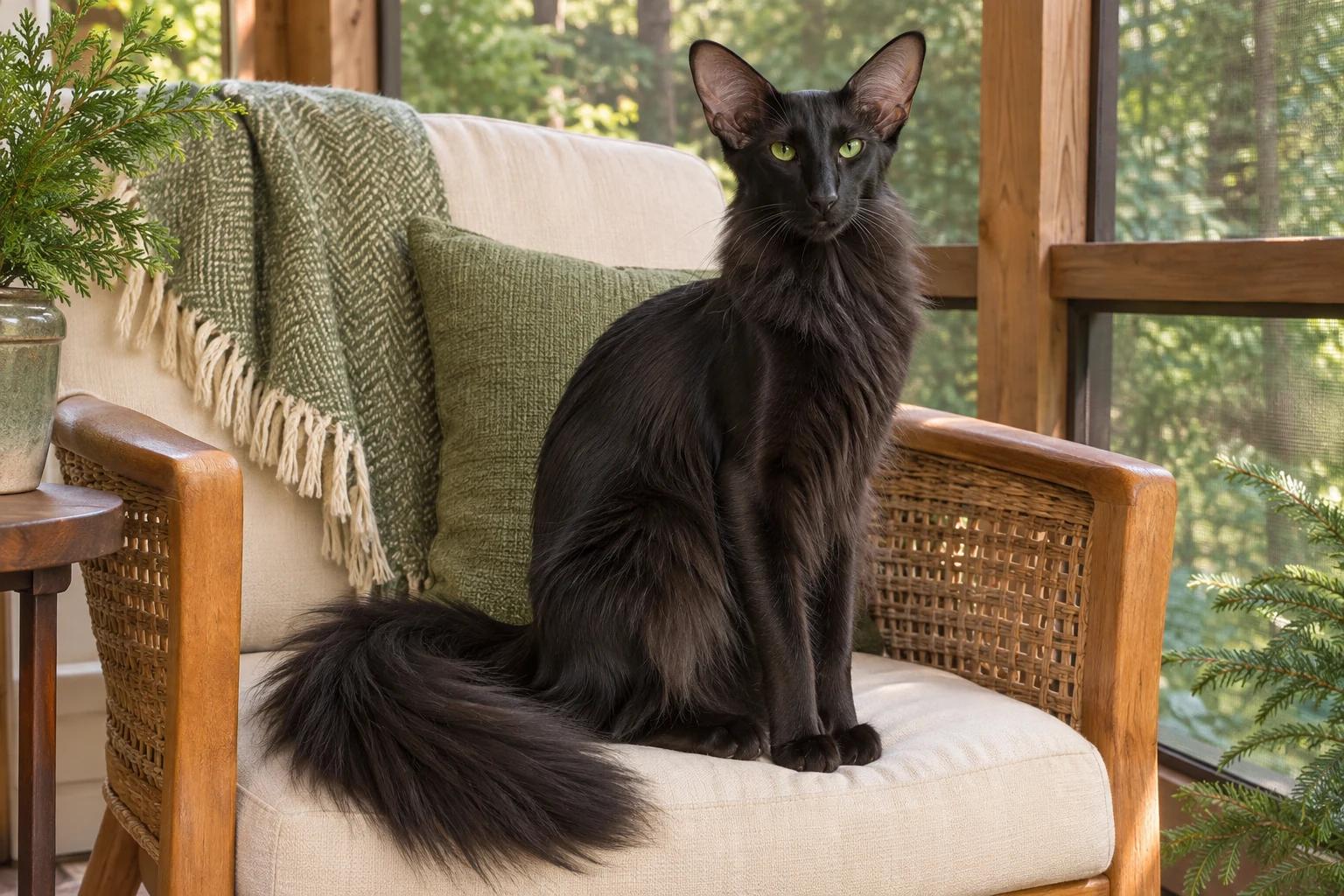
Oriental longhair cat personality is often summarized as social, talkative and lively. Those words describe an expectation of interaction, not a promise about every greeting or cuddle. The useful next step is to picture the relationship in ordinary rooms: a cat watching you work, investigating a cupboard or choosing whether to join a game. A flowing coat may attract you first, but the daily exchange of attention is a separate commitment.
The current breed profile emphasizes companionship and curiosity. This article explores what those tendencies might ask of a household, while leaving room for the animal's own history and preferences.
Oriental longhair cat personality: participation matters
TICA describes a people-focused, playful member of the Siamese breed group. That gives you a reason to ask how an individual spends time with familiar people. Does it settle beside a person, follow movement between rooms, bring a toy or prefer interaction in a particular place? Answers to those questions make a social description useful.
The Oriental Longhair profile also calls for a home that can support exploration and regular interactive time. Before deciding, look at the moments when you most need concentration. Could the cat rest nearby without having access to a hazardous workspace? Is someone able to offer an appropriate game at a predictable point in the day?
Avoid planning around an imaginary companion that waits patiently until every task is finished. Equally, do not assume that every approach requires immediate handling. Learn which kinds of participation this particular cat seeks and which arrangements make those choices practical.
Talkative does not mean predictable
Oriental longhair cat characteristics include a reputation for vocal interaction. A tendency to call is not a complete description of volume, frequency or context. Ask the present caregiver what the household actually hears and when. Someone who enjoys conversation with a cat may find that engaging; a noise-sensitive home should consider the same information carefully.
During a visit, listen without prompting a performance. One quiet meeting does not establish that the cat will always be quiet, and one vocal episode does not define its future routine. Ask whether the observed behavior is familiar or unusual for that setting.
If vocal behavior changes suddenly after adoption, discuss it with your veterinarian rather than assuming the breed explains the change. A familiar breed tendency should help you ask questions, not supply a diagnosis. Keep descriptions concrete: where the cat was, what happened nearby and whether other behavior changed at the same time.
Make curiosity compatible with your rooms
A lively cat needs useful opportunities to investigate, but a room full of novelty is not automatically a better environment. FelineVMA's indoor-cat guidance includes access to safe places and appropriate resources. Start by distinguishing spaces the cat can explore from areas that need a reliable physical boundary.
Store tools, cleaning materials and fragile objects before offering access to a new area. Provide stable observation points and a quieter retreat. If the cat repeatedly investigates a particular cupboard, review how it is secured rather than expecting a verbal correction to function as a lock.
An empty box or a familiar toy may be interesting without a large purchase. Watch whether the object is used and remove unsafe or damaged items. You are assessing an individual preference, not proving that an Oriental Longhair must enjoy every activity associated with an athletic breed.
Affection can change with the situation
The same cat may want company at breakfast and space while resting. Oriental longhair cat behavior should be understood in context rather than labeled affectionate one day and aloof the next. Notice how it approaches, how it chooses to leave and whether your own response gives it a clear choice.
Let a resting cat remain undisturbed. When it seeks contact, offer the kind it normally accepts and pause to see whether it wants more. Being people-focused does not remove its ability to decline. Tell guests how the cat prefers to meet someone instead of handing it around so everybody can experience the breed's reputed sociability.
Adults should guide children and remain responsible for care. Ask about previous experience with other animals, but do not treat that history as an automatic pass for a new introduction. A companion's comfort depends on the setting and the individuals involved, not a slogan about a friendly breed.
Time apart deserves an honest conversation
Before adoption, explain the periods when the home is empty and ask how this cat has handled comparable routines. Request observations rather than a universal number of hours that the breed can be left. A schedule that worked in one home may depend on familiar surroundings or company that your home does not provide.
Consider practical backup before you need it. Who can maintain care during a late return or illness, and what information would they need? Keep the plan realistic for your household instead of assuming that extra toys will make every absence equivalent to interaction.
Adding another animal is a separate decision with its own care demands and introduction process. It is not a guaranteed solution for a cat that appears unsettled. Seek veterinary or qualified behavioral advice when you have concerns, especially if the behavior is new or accompanied by other changes.
Meet the individual behind the attractive coat
Ask to see a normal activity that the cat already enjoys, then allow time for it to stop. You are interested in the whole pattern, not just the most photogenic moment. Which invitation did it accept? Did it return to explore, settle elsewhere or seek a familiar person? Each observation is a prompt for a question rather than a score.
Keep coat hygiene in the care discussion without making it the definition of personality. The existing Oriental Longhair soiled-fur guide addresses a different practical concern. A cat's response to an uncomfortable care task should not become evidence that it is generally difficult or unfriendly.
Use the cat quiz to clarify your preferences, then compare them with the caregiver's account. The strongest decision combines a realistic home routine with an animal whose needs you understand. The breed description starts that conversation; it does not finish it.
Frequently asked questions
Are Oriental Longhairs usually interactive?
TICA describes a social, lively breed. Ask what interaction means for the individual: nearby company, play and petting can be different preferences.
Is every Oriental Longhair loud?
No individual volume or calling schedule is guaranteed. The breed has a talkative reputation, but observations and caregiver history are more useful than assuming every cat sounds the same.
Does a sociable cat always want visitors to touch it?
No. Let the cat choose its distance, explain its preferences to guests and protect its retreat. Sociability is not consent to repeated handling.
Will another pet automatically meet its companionship needs?
No. Compatibility and introductions need individual assessment. Another animal creates additional responsibilities and should not be treated as a guaranteed answer to a behavioral concern.
Sources behind this article
Article source checked: November 20, 2026. Source checked 2026-11-20
Keep reading
Oriental Longhair Cat Size: Weight, Build and Practical Fit
Read article →