Oriental Longhair litter hygiene: what to do about soiled fur
Separate litter-area checks from your Oriental Longhair’s coat care, with professional guidance for soiled or tangled fur and new toileting changes.
Identify the concern before choosing a cleaning method
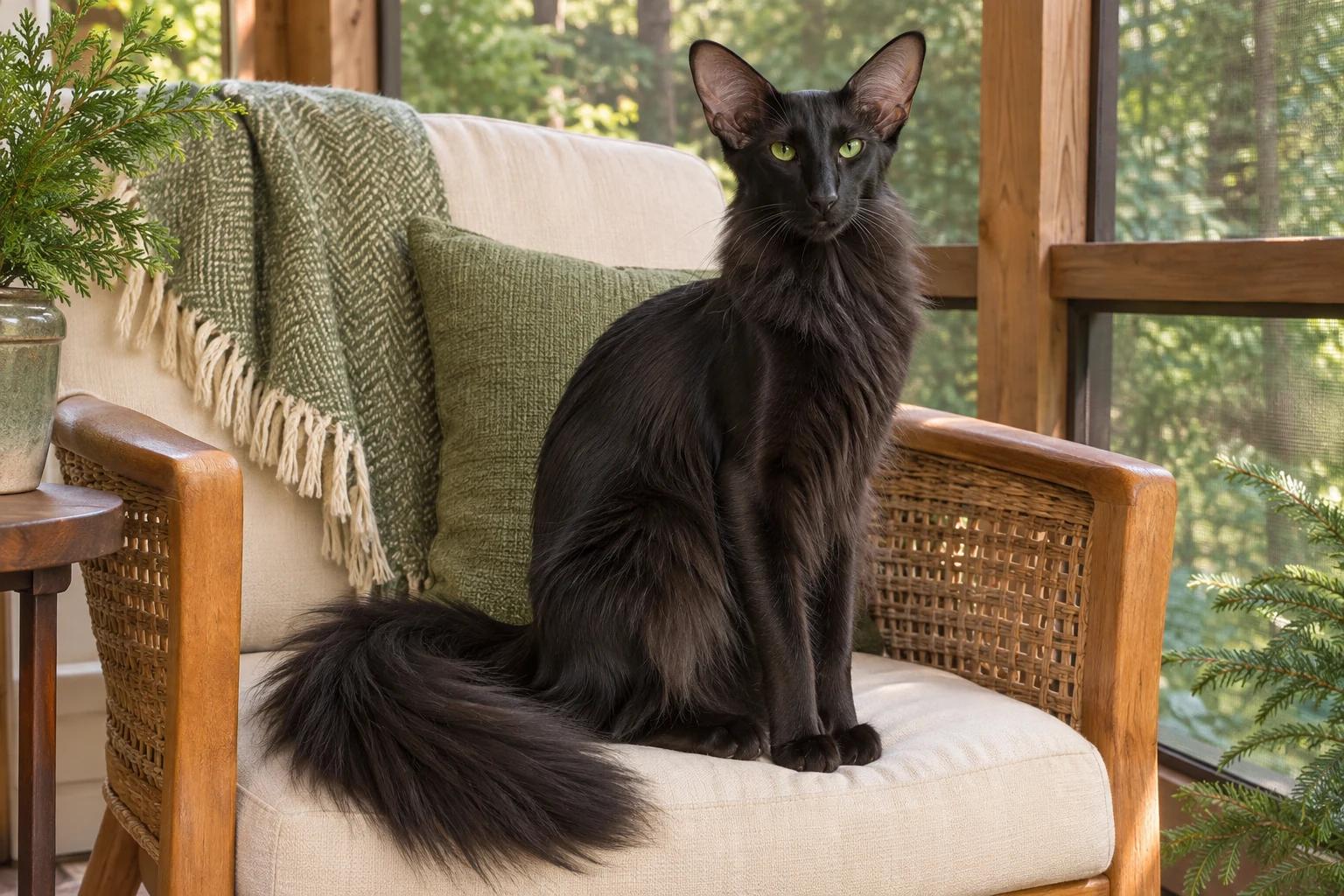
TICA describes the Oriental Longhair’s semi-long coat. If fur near the rear becomes soiled, start by identifying what you have noticed rather than reaching for scissors or a bath. A coat-care problem and a change in toileting may need different help, and the breed label cannot explain why it happened.
If the substance is unknown or potentially harmful, contact your veterinary team for advice promptly instead of applying an ordinary grooming routine. Tell them what happened and any product already used. This guide does not give a contamination-removal recipe, and a household product being familiar to you does not establish that it is suitable for a cat.
Keep the cat comfortable while arranging appropriate help
Ask the vet or an experienced cat groomer how to manage ordinary soiled fur for this individual. VCA recommends professional help for difficult tangles and cautions against scissors on mats. Do not cut close to the skin or pull through a dirty knot to make the coat look tidy before an appointment.
Explain if the cat resists handling or the area seems sore. That information helps determine what care is appropriate; it is not a reason for you to hold the cat more firmly and continue. Keep any professional directions intact and tell other caregivers what they should leave for trained help rather than trying a different technique.
Review the litter area separately
Cats Protection recommends clean, accessible trays in quiet locations and notes that individual tray suitability matters. Look at whether the cat has room to use the tray comfortably and whether the cleaning routine is reliable. Do not assume every coat issue can be solved by changing the litter or buying a different tray.
Write down any recent changes in the area and what the cat actually does. A caregiver handover can identify who cleans, where supplies are kept and what needs reporting. Keep these observations separate from a diagnosis. If the problem recurs, the veterinary team needs both the coat history and any toileting changes, not just a description of the latest cleanup.
Do not let repeated cleanup hide a new health concern
Cats Protection advises veterinary assessment for sudden toileting changes and no punishment. Contact the practice when something is different rather than repeatedly treating the result as a grooming inconvenience. If the cat struggles to pass urine or cannot pass urine, contact your vet or an emergency veterinary service immediately for an emergency appointment, as PDSA advises. Do not delay that call to clean the coat.
After advice, keep a clear plan for routine hygiene and for situations that need help. Your Oriental Longhair’s care should protect comfort without making every incident a reason for forceful handling. The useful outcome is understanding which household checks you can make, what professional care is needed and when a coat concern is part of a wider change worth reporting.
Sources behind this article
- TICA: Oriental Longhair ↗
- VCA: Grooming and coat care ↗
- Cats Protection: Toileting ↗
- PDSA: Blocked bladder in cats ↗
Article source checked: October 22, 2026. Source checked 2026-10-22
Keep reading
Building a calm brushing-and-reward routine with a Burmilla
Read article →