Norwegian Forest Cat Exercise: Play, Climbing and Activity Indoors
Norwegian Forest Cat exercise guide: how active the breed is, daily play ideas, hunting-style games, food puzzles, and how to keep an indoor Wegie moving.
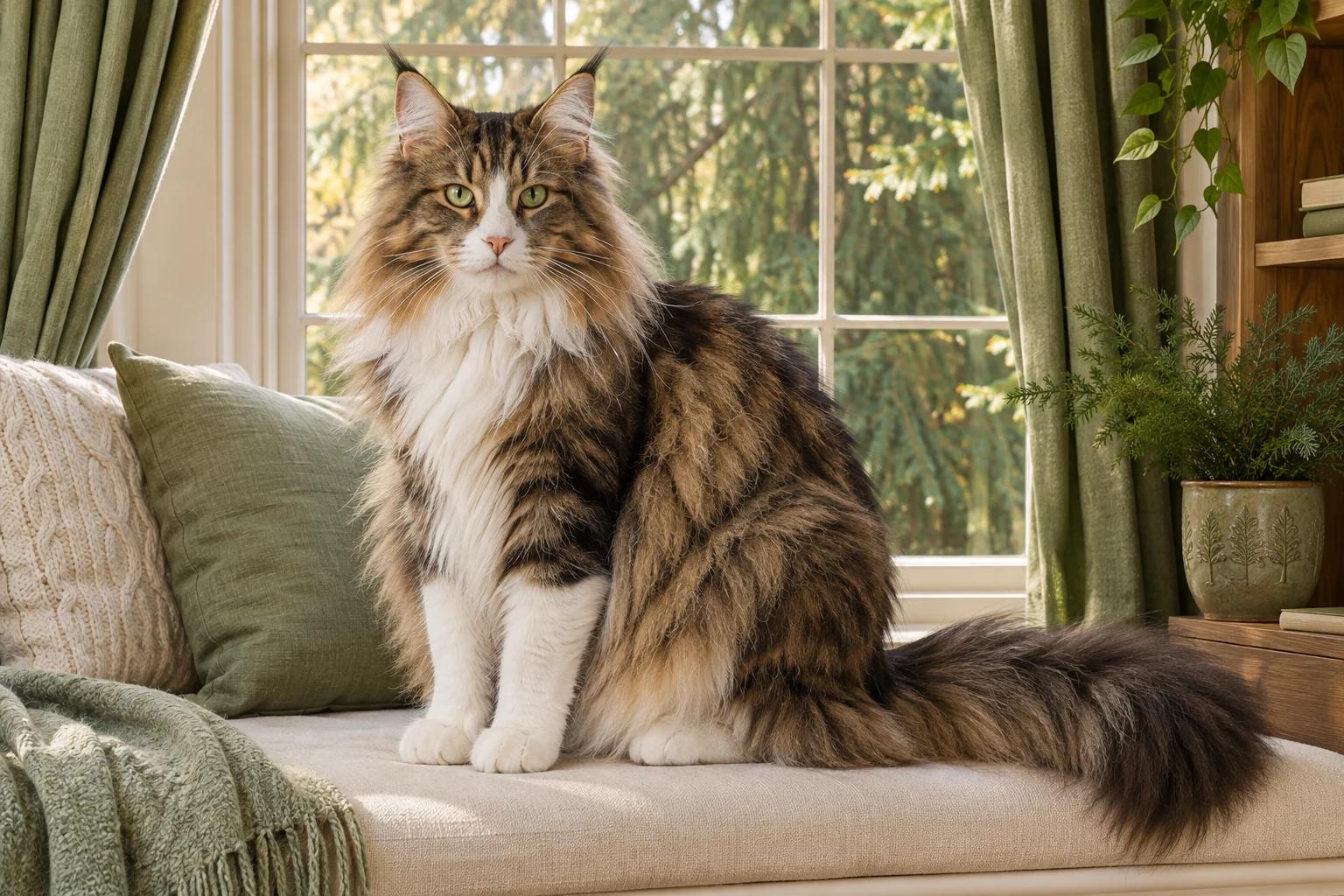
Norwegian Forest Cat exercise doesn't mean long workouts. Breed descriptions paint a cat that enjoys climbing and interactive games, but also likes a good nap. CFA describes "moderately active cats" with bursts of energy, while the GCCF says they "have a lot of energy and enjoy interactive games." This guide explains how active the breed tends to be, how to build daily play into an indoor routine, and which kinds of exercise suit a large, strong climber. Every cat is different, so watch your own cat and adjust.
Norwegian Forest Cat activity level
What our breed profile says
The Norwegian Forest Cat breed page scores activity needs at 3 out of 5 and playfulness at 3 out of 5. It says the breed "often enjoys climbing and interactive play" and recommends stable, tall furniture. Enrichment interest scores 2 out of 5.
What registries say
The descriptions vary a little:
- CFA calls them "moderately active cats" with bursts of energy.
- GCCF says they have a lot of energy, enjoy interactive games, and are enthusiastic climbers. It also says they will entertain themselves with games when you're not home.
Put together, the picture is a cat with real bursts of energy and a love of climbing, but not one that needs constant activity. Individual cats will sit at different points on that range.
A slow-maturing breed
CFA notes that the Norwegian Forest Cat is fully mature at approximately age five. Play style may change as your cat moves from kitten to young adult to mature cat, so keep reviewing what your cat enjoys.
Norwegian Forest Cat exercise: how to exercise a Norwegian Forest Cat
VCA's general indoor-cat guidance recommends opportunities for play, exploration and social contact, including several short play sessions. It also discusses prey-like toys, toy rotation and food puzzles. These are general cat-enrichment examples, not a breed-specific exercise prescription. Ask your veterinarian about a change in activity or any feeding question.
Start with the time you can actually give
Write down two or three points in your ordinary day when you are home and unhurried. A plan built around your real schedule is easier to keep than an ambitious timetable that disappears after the weekend. If several people share the household, decide who is responsible for offering an opportunity, rather than assuming somebody else has done it.
Do not mark a session successful merely because you put a toy on the floor. Notice whether the cat joined in, watched, walked away or returned later. Those observations let you compare options without inventing an exercise score. They can also help another household member understand what you mean when you say the cat likes a particular game.
Choose a usable part of the room
Look at the room from the point of view of someone setting up and putting things away. Is the floor occupied by bags? Will a door opening interrupt the space? Can you reach the storage box without abandoning the activity halfway through? Make the arrangement straightforward for the humans as well as inviting for the cat.
For a large climber, equipment choice matters separately from time spent playing. Check a product's dimensions, weight rating and installation instructions. Our guide to choosing climbing furniture for a Norwegian Forest Cat covers the furniture decision in more detail; this article focuses on fitting activity into everyday life.
Compare one change at a time
Suppose one evening's setup attracts interest and another does not. Before buying more equipment, compare what was different: who was present, where you were and whether the cat was already resting. You do not need to turn this into a research project. A one-line note can prevent you from repeatedly choosing something the cat ignores.
Try not to change the location, equipment and person all at once. When you keep some details familiar, it is easier to notice what the cat prefers. A preference is useful information even when it does not match what another owner says their Norwegian Forest Cat enjoys.
Agree on what a pause looks like
The cat does not owe you a performance. If it leaves, allow the opportunity to end without chasing it around the room. Put the equipment away and carry on with the day. That keeps the household plan manageable rather than making every quiet evening feel like a failed training session.
If you are worried because the cat is behaving differently from its usual self, talk with your veterinarian. A breed's moderate activity rating cannot explain a sudden change in an individual.
Norwegian Forest Cat indoor play: a simple household plan
Use a short list with three columns: setup, response and next step. For example, you might record that the cat watched from its favorite chair, approached after a few minutes and then returned to rest. Your next step might simply be to leave more time before changing the setup. Another day you may record immediate interest. Neither entry needs a numerical rating.
Keep a separate list of equipment already owned. It is easy to buy duplicates when toys are stored in several rooms. Label a container or take a photograph of the contents so everyone knows what is available. Replace damaged items according to their instructions instead of letting them circulate between cupboards.
If a sitter will take over, share the ordinary plan rather than writing just exercise the cat. Explain where equipment is kept, what the cat usually chooses and who to contact with a concern. A short, realistic handover is more useful than a long list of activities nobody has tried with that individual.
At the end of a week, keep the parts that fit your household. There is no prize for the longest list. The point is to make space for the cat's interests consistently while leaving room for rest and individual choice.
Signs to watch for
Activity varies from cat to cat and changes with age. But if your Norwegian Forest Cat suddenly stops climbing, plays much less, or hesitates before jumping, don't push it to stay active. Talk with your veterinarian, since changes in movement can have physical causes.
Our breed page also suggests discussing portions and body condition with your veterinarian. If your cat is gaining weight, ask for advice before increasing exercise.
Is a Norwegian Forest Cat right for your lifestyle?
If you can offer daily interactive play, sturdy climbing space and room for a large cat, a Norwegian Forest Cat may suit you. To compare its activity needs with other breeds, take the My Breed Atlas cat quiz.
Sources
Checked 2026-11-17.
FAQ
How active are Norwegian Forest Cats?
Norwegian Forest Cats are generally moderately active. CFA describes bursts of energy, while the GCCF says they have a lot of energy and enjoy interactive games. My Breed Atlas scores activity needs at 3 out of 5.
How much exercise does a Norwegian Forest Cat need?
There's no breed-specific exercise target. VCA recommends daily play for indoor cats, with at least three short sessions a day. For a Norwegian Forest Cat, include climbing, hunting-style games and food puzzles, and adjust to your cat's interest and age.
What toys do Norwegian Forest Cats like?
Preferences vary between individuals. Notice what your own Norwegian Forest Cat approaches and returns to, and keep a short record rather than buying solely on breed recommendations. Use equipment according to its instructions and replace damaged items.
Can a Norwegian Forest Cat live indoors?
A Norwegian Forest Cat can be considered for an indoor home that provides room for its interests and companionship. Match the arrangements to the individual cat, use suitable equipment and talk with your veterinarian about questions concerning its activity.
Sources behind this article
- CFA – Learn more about the Norwegian Forest Cat ↗
- GCCF – Norwegian Forest Cat breed page ↗
- VCA Animal Hospitals – Cat Behavior and Training: Enrichment for Indoor Cats (updated May 31, 2023) ↗
Article source checked: November 17, 2026. Source checked 2026-11-17
Keep reading

American Curl exercise
Read article →