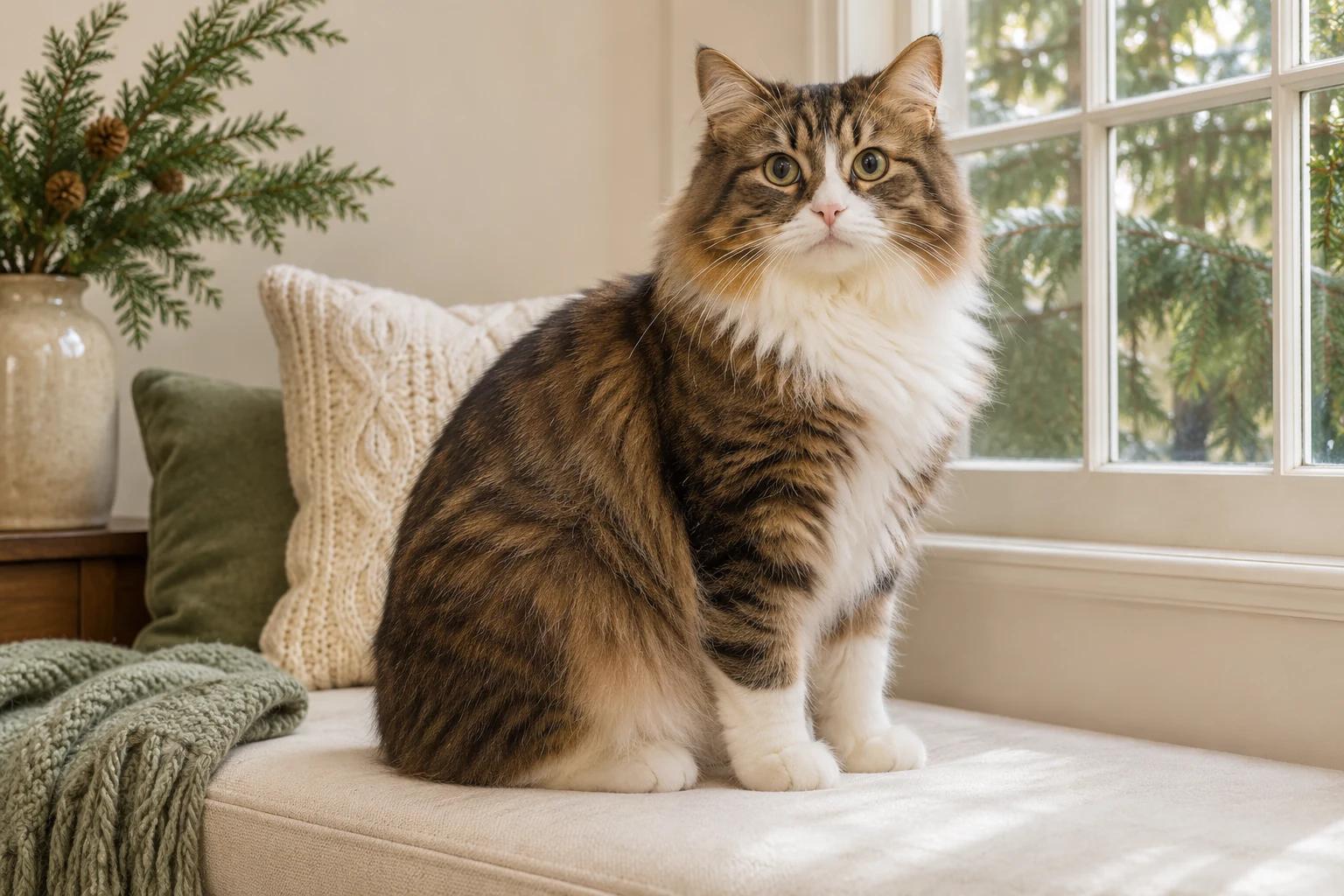
Choosing climbing furniture for a Norwegian Forest Cat
Choose a Norwegian Forest Cat’s climbing and resting furniture around usable space, stable access and an easy route down, rather than height alone.
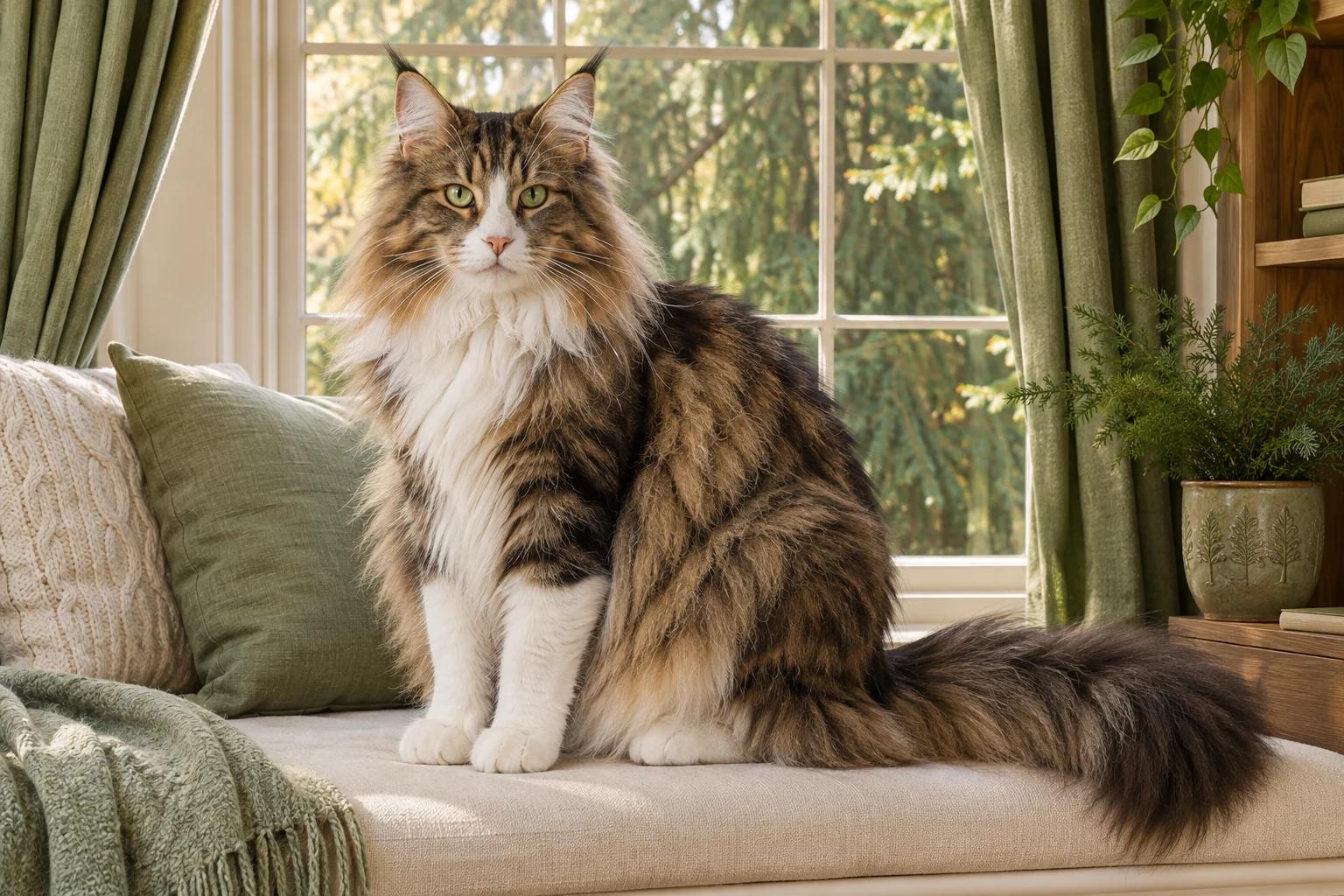
Choose for the cat in front of you
CFA describes the Norwegian Forest Cat as active and substantial. That background can explain why a prospective owner starts looking at climbing furniture, but a breed description is not a set of equipment measurements. Check the individual cat’s present size, movement and preferred resting positions before deciding what will fit.
Ask its caregiver which surfaces it currently uses and how it gets between them. A photograph of a cat on a high shelf tells you little about the route it took or whether the same arrangement would work in your room. Start with the practical job the furniture needs to do: provide a comfortable place to climb, rest or observe while preserving easy access.
Check usable space and stability
Look beyond the advertised overall height. Consider whether the resting area gives this cat enough room to settle comfortably and whether the route between levels is straightforward. Follow the manufacturer’s assembly, anchoring and load instructions. If those instructions do not clearly support the intended use, choose another arrangement rather than improvising a safety guarantee.
Rehearse the location on paper before buying. Include the space used when a door opens, the path people take through the room and nearby objects a cat could reach from the new perch. These are editorial planning checks, not an endorsement of a particular product. The best-looking unit in a photograph may be awkward beside your actual sofa or doorway.
Plan the journey down as carefully as the climb
Cats Protection advises making sure cats can get up and down from high places safely on their own. Trace the route in both directions. A narrow turning point, a long gap or an obstacle at the bottom may matter even when the upward route looks inviting. Observe how the individual cat moves instead of encouraging it to demonstrate a demanding jump.
For cats with mobility concerns, Cat Friendly Homes emphasizes accessible resting places and prioritizing access over height. Bring any hesitancy, change in jumping or difficulty moving to your vet’s attention. Do not conclude that a cat who stops using a perch is simply being fussy, and do not insist it keep climbing because the breed is described as active.
Keep the resting place a refuge
Think about what happens around the furniture. A perch next to a busy passage may be easy for people to admire but offer little privacy. Cats Protection recommends quiet resting and hiding areas. A cat should be able to withdraw without being followed, reached for or repeatedly invited to perform for visitors.
If several animals share the home, watch whether one blocks another’s route. Discuss access difficulties with a qualified professional where needed. More height alone does not resolve a route that an individual cannot use comfortably. Your observation should include whether the cat can leave as well as whether it can arrive.
Reassess as the household and cat change
Check the installation and condition of the furniture according to its instructions, and reconsider the layout when nearby furniture moves. Record which levels your cat actually uses. A simpler arrangement that remains comfortable can be a better fit than equipment whose most impressive features are consistently unused.
Before bringing home a Norwegian Forest Cat, budget for practical adaptation rather than one permanent purchase. The cat may grow, age or change its preferences, and your home may change too. The useful ownership skill is to notice when an arrangement no longer serves the individual and to seek advice when a change in movement may need assessment.
Sources behind this article
- CFA: Norwegian Forest Cat ↗
- Cats Protection: Creating the ideal home ↗
- Cat Friendly Homes: Home environment modifications ↗
Article source checked: October 22, 2026. Source checked 2026-10-22
Keep reading
Setting up a first-night room for a Birman
Read article →