Maine Coon cat temperament: four everyday behaviors
Understand Maine Coon cat temperament through voice, paw use, companionship and adult play, with specific examples and room for individual preferences.
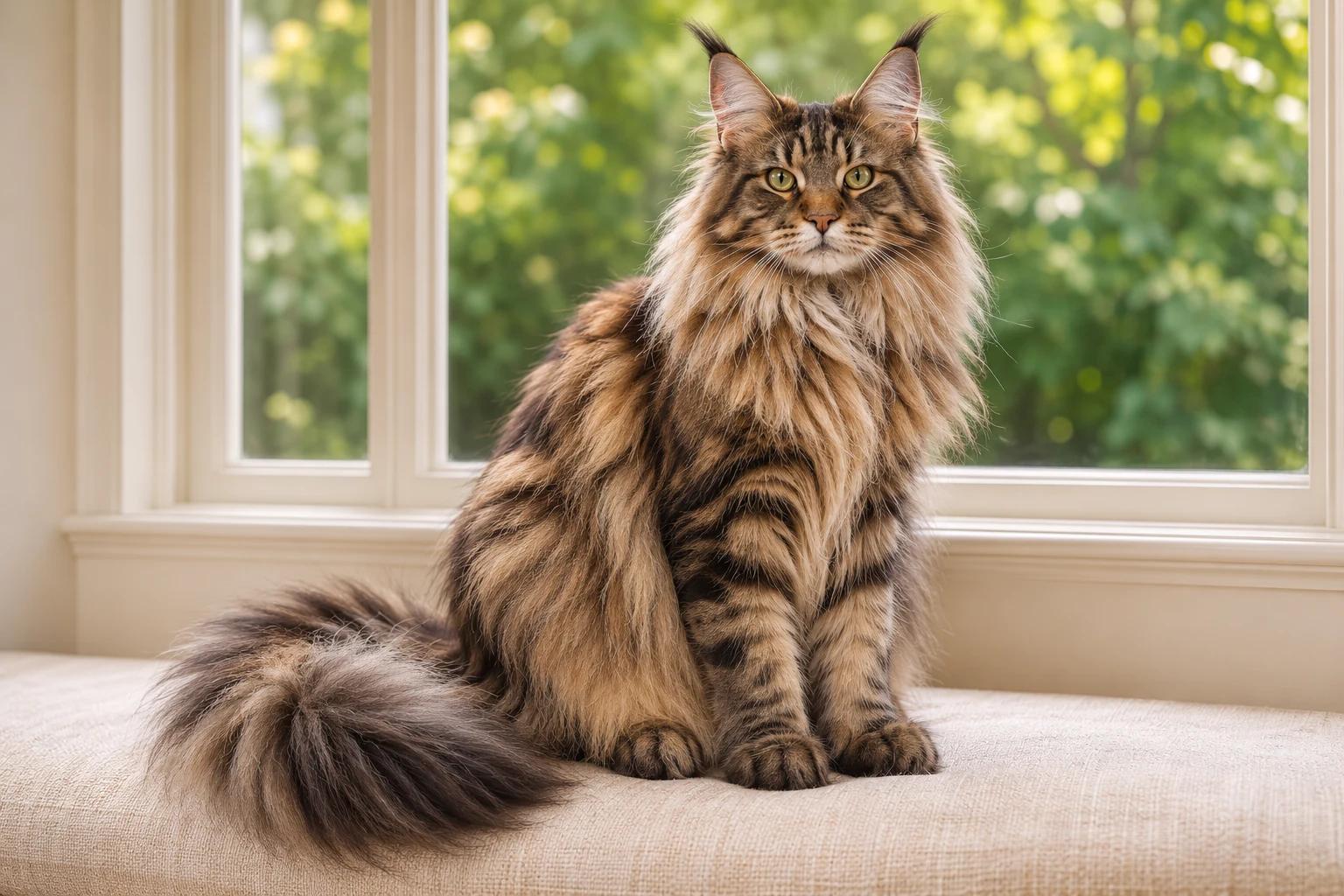
Maine Coon cat temperament is easier to understand through recognizable actions than through a single flattering nickname. What, exactly, would an owner be describing? A sound, a way of investigating an object, a preference about attention and an invitation to interact are different kinds of information. Separating them makes a breed account more useful without turning it into a prediction about every cat.
Start with the Maine Coon profile, then consider the concrete examples below. These are descriptions from feline organizations and a veterinary source, not results from a controlled comparison of breeds. A description can suggest something worth noticing; it cannot tell you what an unfamiliar individual will do tomorrow. That distinction matters when choosing a companion rather than merely identifying a cat in a photograph.
Maine Coon cat temperament includes a varied voice
FIFe's breed narrative describes communication through chirping sounds, despite calling the breed generally quiet. Quietness and an absence of communication are not the same thing. A small sound can still be part of an exchange between a cat and someone nearby.
For an owner, the useful distinction is between the character of a sound and the amount of noise in the household. A chirp is not evidence that the cat will always be silent, nor does hearing one tell you exactly what it means. Notice what happens immediately before and afterward rather than translating every sound into the same request.
For example, compare a brief sound during an approach with a sound followed by departure. Those sequences contain more information than the sound alone. You need not invent a fixed vocabulary in which one syllable always means food and another always means affection.
This is one way to make descriptions of Maine Coon cat personality concrete: listen to an actual interaction instead of judging communication by loudness alone.
Look at what those front paws are doing
VCA's Maine Coon account describes unusually dexterous use of the front paws, including scooping food or water and putting toys into a water bowl. These examples of Maine Coon cat behavior are more specific than simply calling the breed intelligent.
The distinction is useful when watching the cat investigate something. Touching an object, moving it and carrying it in the mouth are different actions. A paw reaching toward a bowl may be part of the investigation rather than an invitation for you to move the cat's foot or repeat the action for an audience.
If your own Maine Coon dips a toy, consider the object and the water together when describing what happened. “Put the toy into the bowl” is a clearer account than “was naughty” or “wanted a bath.” Neither a liking for a particular water game nor one playful incident establishes a preference for being washed.
VCA gives examples to recognize, not instructions to arrange water experiments or teach every Maine Coon to reproduce them.
Attention and resting habits are separate preferences
The Maine Coon Cat Club describes a cat that enjoys attention without necessarily demanding it continuously. Its account also mentions unusual sleeping places and positions. Those two observations concern different parts of domestic life: participation when awake and choices about where to rest.
Do not make one answer the other. A Maine Coon resting somewhere unexpected has not thereby rejected companionship. Equally, enjoying attention during one interaction does not mean every resting moment needs to become another interaction. The breed account is more useful when these descriptions remain separate rather than being compressed into “always wants company.”
An owner can distinguish attention that the cat approaches from attention that interrupts something already happening. The first gives a clearer example of what that individual chose. It is not necessary to wake a resting cat to demonstrate an affectionate personality to a visitor.
When reading about Maine Coon cat characteristics, keep room for both the social interaction and the unremarkable pause afterward. A household companion does not have to be performing for someone throughout the day to fit that description.
Adult play is not a second kittenhood
The French Feline Federation's Maine Coon article, written by Solenn Helias, describes a playful side continuing into adulthood. Its everyday-object example distinguishes an opportunity to interact from an object marketed as a sophisticated cat toy.
That is a description of playfulness, not a recommendation to leave small household objects available. Use suitable cat toys rather than reproducing every incidental example literally. The useful idea is that an adult's interest need not depend on a complicated new product.
Nor does “kitten-like” mean that the adult should be expected to behave exactly as it did months or years earlier. Think about the present interaction: whether the cat approaches the offered activity and what it actually does with it. There is no need to turn a breed description into a demand for a particular performance.
For owners choosing a Maine Coon, this makes adult play a genuine part of the relationship rather than a feature assumed to disappear automatically with kittenhood. It still belongs to the individual cat, not to a slogan.
Coat maintenance is a separate responsibility; the Maine Coon grooming routine covers that topic. For broader ownership preferences, use the cat breed quiz.
Frequently asked questions
Does a quiet Maine Coon have nothing to say?
A Maine Coon may communicate with chirping sounds rather than loud calls, according to FIFe.
Does Maine Coon paw play mean the cat wants a bath?
Maine Coon paw investigation around water does not establish a preference for being washed.
Is adult Maine Coon play only a kitten habit?
Adult Maine Coon play is described by the French Feline Federation, not restricted to kittens.
Sources behind this article
- FIFe Maine Coon narrative ↗
- VCA Maine Coon behavior ↗
- Maine Coon Cat Club breed account ↗
- French Feline Federation Maine Coon ↗
Article source checked: November 16, 2026. Source checked 2026-11-16
Keep reading

American Bobtail cat temperament
Read article →