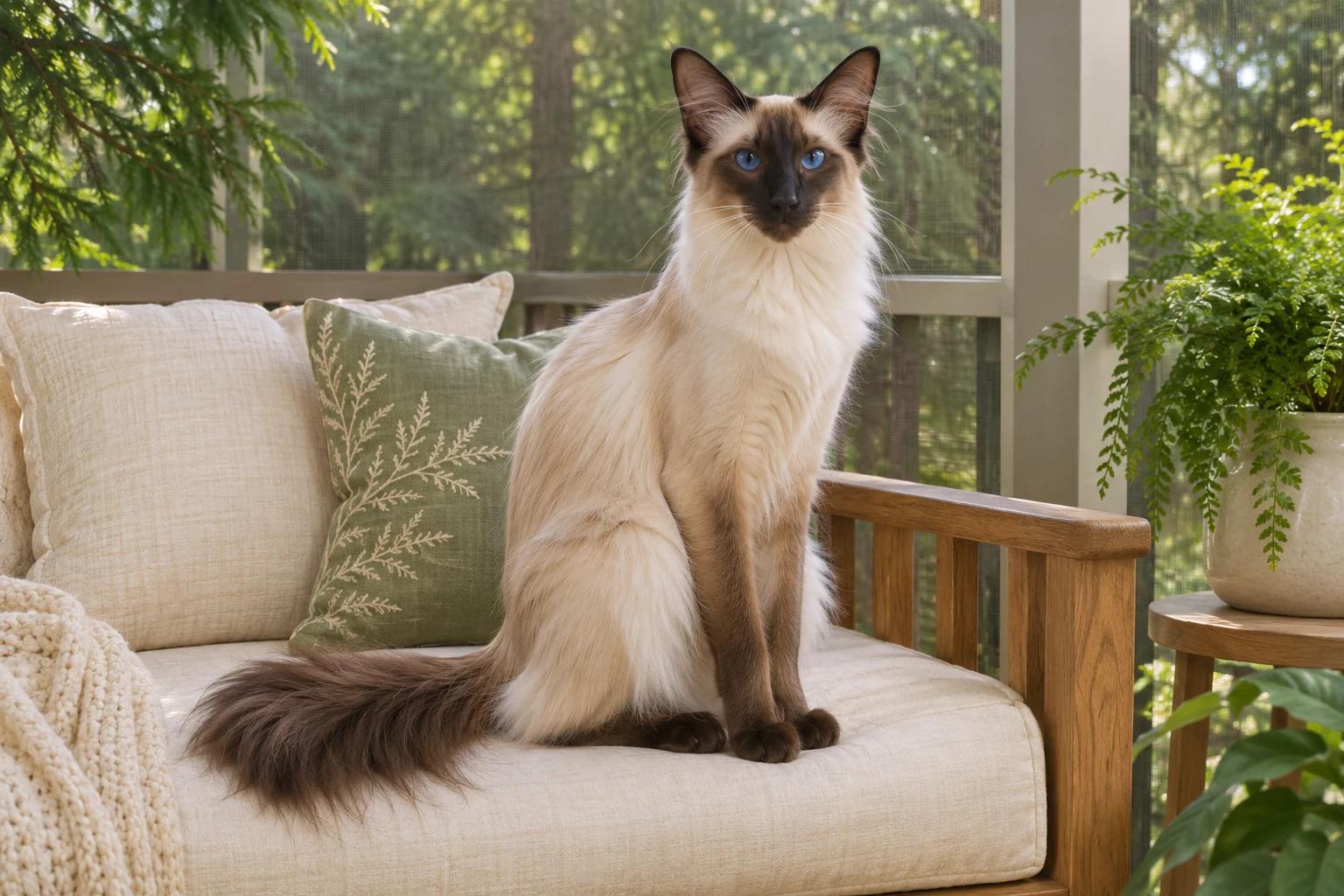
Maine Coon cat exercise: practical indoor games
Build Maine Coon cat exercise around floor play, voluntary learning and suitable toys, with practical methods and no one-size-fits-all activity quota.
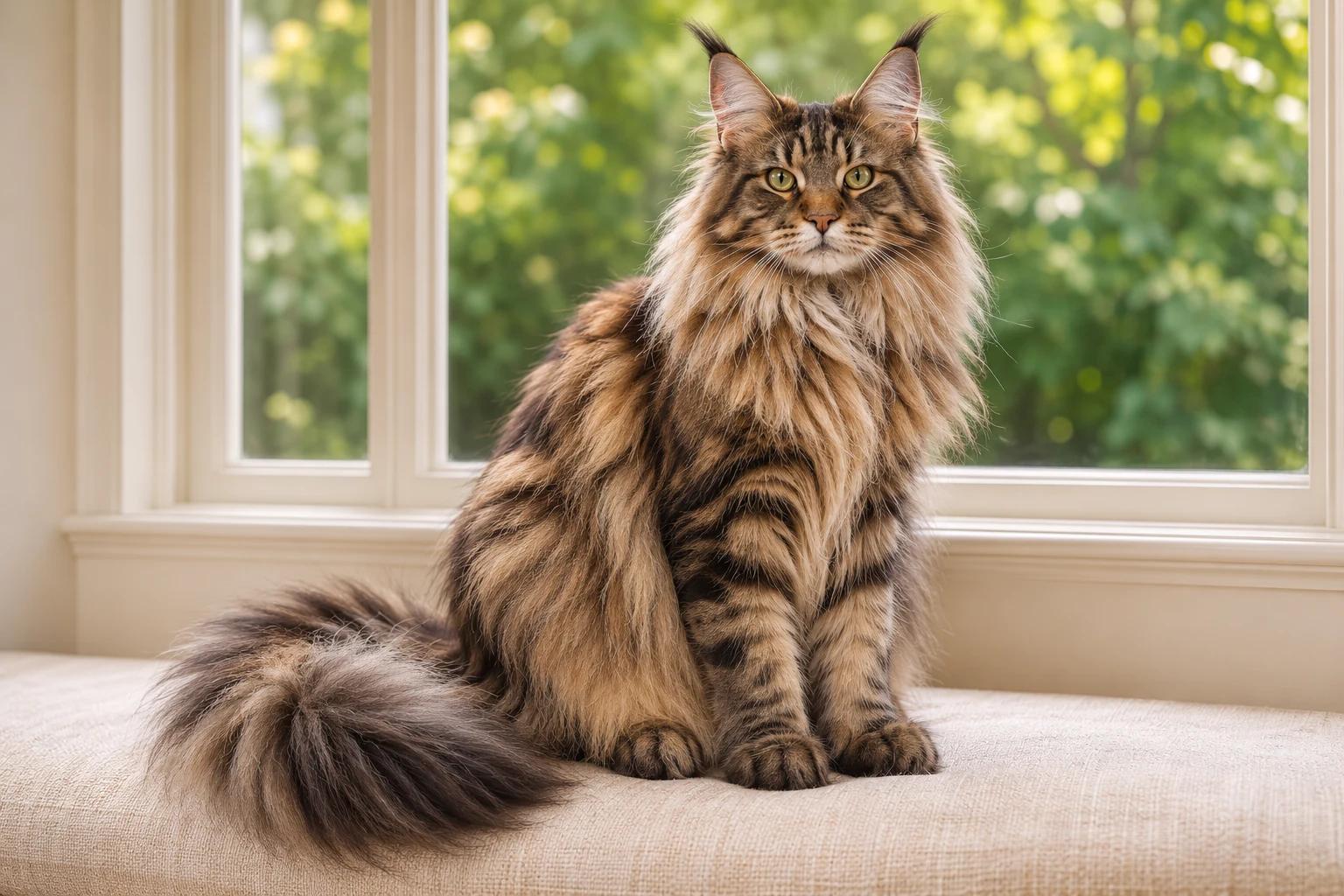
Maine Coon cat exercise needs a practical answer to “What will we actually do together?” rather than an impressive-looking list of equipment. Start with an activity you can offer clearly and assess by the cat's participation. A session's usefulness is not measured by how elaborate it looks in a photograph.
The Maine Coon profile introduces the breed. This guide distinguishes the breed account from general feline play and training methods. None of the methods below is a Maine Coon-only experiment, and none provides a compulsory daily quota for every individual. For a cat with particular exercise needs, ask its veterinarian about suitable activity rather than selecting a workload from its breed name.
Maine Coon cat exercise can begin at floor level
TICA's Maine Coon account describes an interest in chasing objects along the ground. It also describes interactive toys, fetching and simple rewarded commands as possibilities for play. These offer participation without making jumping central.
For Maine Coon cat indoor play, start by distinguishing the action you are offering. Rolling an object away invites pursuit. Waiting for the cat to carry it back adds a separate expectation. A cat that enjoys the first does not have to complete the second for the game to have value.
A learned action is different again: the cat is responding to a familiar signal rather than simply following whatever moves. Alternate activities according to what the individual already understands and enjoys, not because a breed description says it can learn tricks.
TICA describes playfulness continuing beyond kittenhood. An adult Maine Coon does not need to be treated as a retired spectator simply because the kitten phase has ended. The form of the interaction can be chosen around that particular adult.
Make the movement interesting, not relentless
The San Francisco SPCA's play guidance recommends imitating prey movement rather than continuously waving a toy. A small twitch can attract attention; dangling an object directly in the cat's face is not a convincing imitation of prey.
Try this adjustment before deciding your Maine Coon cat activity level is low. Change the movement, not merely its speed. Let the object pause, then move it a little. Watching and preparing an approach can be part of the game; immediate pursuit is not the only response worth noticing.
The SPCA also distinguishes cats that prefer ground play from those attracted to airborne movement. Observe the preference instead of repeatedly presenting the same style more insistently. The question is what attracts this cat, not which movement looks most athletic to you.
When bringing a session to an end, the guidance recommends reducing its intensity rather than stopping abruptly. A quieter final movement makes a more gradual finish than suddenly removing an exciting toy in mid-chase.
Turn a nose touch into a few voluntary steps
Karen Pryor Academy's target-following lesson starts with a target held an inch or two in front of the cat. Mark a nose touch with a click and deliver a treat. Offer the target again after the cat finishes chewing.
Only after touches are reliable does the lesson move the target a few inches farther away, so the cat takes a few steps to reach it. Further small increases can develop following, with changes of direction added afterward.
For a Maine Coon owner, this is a modest movement game, not a way to pull or push the cat into position. Keep the target close enough that the next step remains understandable. Moving the target rapidly away can turn a touch into a different challenge.
The article's written method supports this progression; it does not establish a Maine Coon-specific learning speed. If the cat has not yet offered a touch, remain with that easier action rather than adding distance simply because you planned a longer exercise session.
Check the route as well as the toy
Cornell's toy guidance advises avoiding toys with small detachable pieces or strand-like parts that could be swallowed, and considering the environment in which play happens. Heavy objects that could fall and places from which a distracted cat could fall matter alongside the toy itself.
Apply that check to the route your Maine Coon is actually following. The object may travel across clear floor while the cat's approach passes close to something unstable. Assess the whole movement, not just the point where the toy finishes.
Cornell also notes that entertaining objects need not be expensive, giving cardboard boxes as one example. The purpose of an object is to provide an opportunity for interaction, not to demonstrate how much equipment you have bought.
When deciding how to exercise a Maine Coon cat, separate an attractive product description from the conditions in which you will use the item. A toy and a room cannot be evaluated independently if the game sends the cat moving through both.
For a separate everyday responsibility, read the Maine Coon grooming routine. Use the cat breed quiz to compare broader ownership preferences.
Frequently asked questions
Must Maine Coon exercise include jumping?
Maine Coon exercise can include ground pursuit; TICA describes floor-oriented chasing and other interactive games.
What can I change if my Maine Coon only watches a toy?
For your Maine Coon, change the toy's movement. The SPCA recommends prey-like pauses and subtle movement rather than constant waving.
Does Maine Coon target training start with a long route?
Maine Coon target training starts with a nearby nose touch before adding small increases in distance.
Sources behind this article
Article source checked: November 16, 2026. Source checked 2026-11-16
Keep reading

American Curl exercise
Read article →