Keeshond Training: Greetings, Settling and Daily Manners
Teach practical Keeshond manners with a resting station, rehearsed greetings, manageable classes and cooperative care.
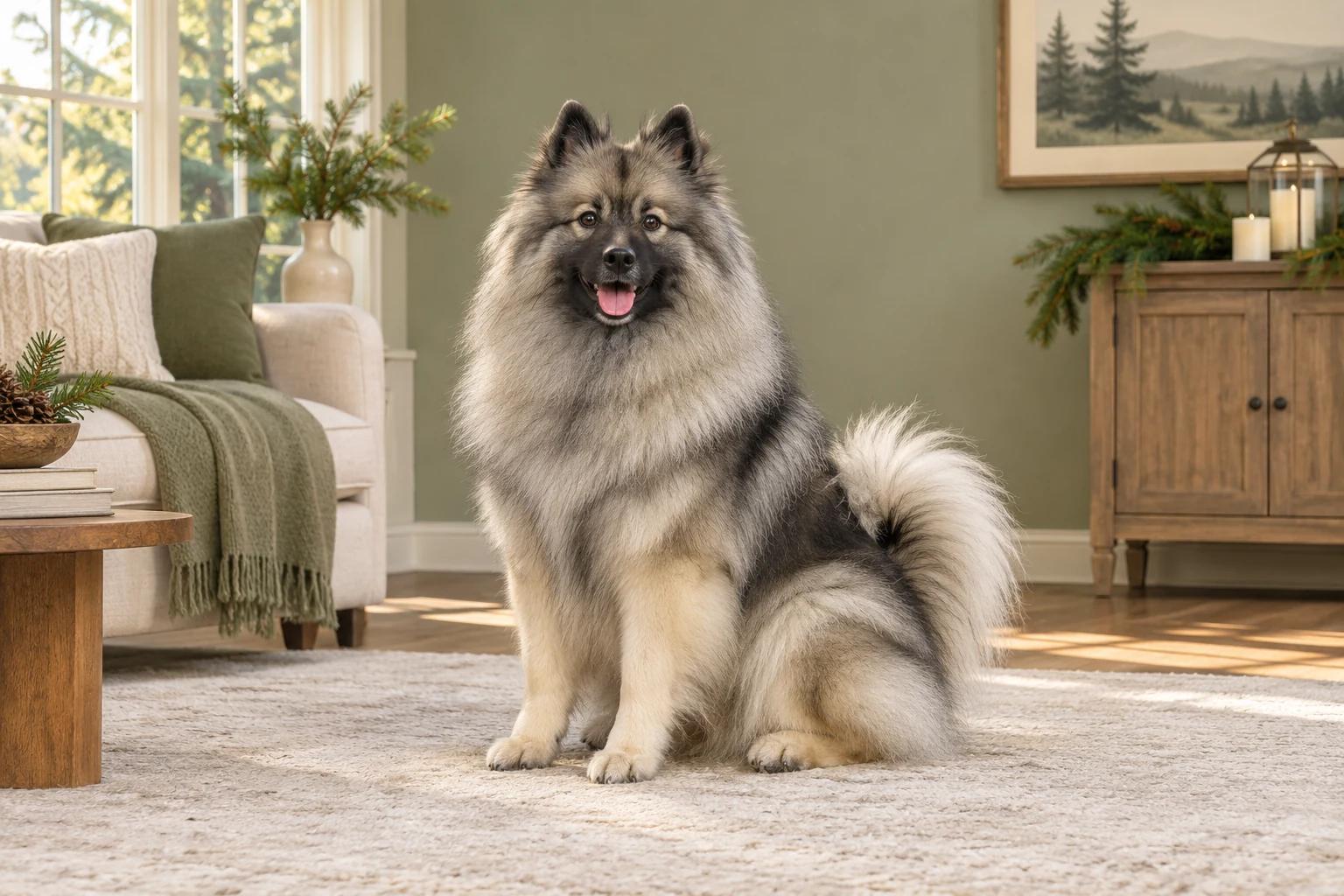
Keeshond training works best when it gives an enthusiastic household companion a clear job. Instead of asking only for less jumping, less hovering or less excitement, decide what the dog should do at those moments. A resting station, an organized greeting and a predictable care routine are useful starting projects.
The Keeshond Club of America encourages early guidance and basic training, with further classes as skills develop. Its emphasis on companionship also matters: lessons should become part of living together, not a separate weekly event that never reaches the front door or living room. Keeshond Club of America general information.
Keeshond training: give enthusiasm a destination
Choose a mat or bed in a place where your dog can join household life without blocking a route. Look at the room from a practical angle. Can you reach the door without stepping across the mat? Can the dog lie comfortably? Will a visitor have to walk directly into its space?
The AKC's place-training guide builds the behavior by rewarding interest in the mat, then being on it, before adding more difficult expectations. It treats the place as a rewarding destination rather than punishment and recommends increasing distance, duration and distractions separately. AKC place-training guide.
For your first session, remove the visitor entirely from the picture. Work with the mat in a quiet room and recognize a small response, such as stepping onto it. You are teaching what the surface means before asking the dog to remain there while something exciting happens.
Choose an end signal so the exercise has a clear finish. Discuss the wording with everyone who will practice. If one person releases the dog with a word and another walks away silently, the lesson becomes harder to interpret.
Rehearse a greeting before the guest arrives
A Keeshond's friendly reputation can lead visitors to encourage more excitement than you intended. Decide on your greeting arrangement before inviting somebody to help. Ask the person to follow a simple plan rather than arriving with their own ideas about training.
For example, begin with the guest seated and the dog entering with its caregiver, rather than tackling the entire doorway scene at once. Work with a trainer to choose a setup appropriate to the dog if greeting behavior is difficult to manage. A practice guest should be willing to pause, move away or end the session when asked.
Keep the first goal modest. You might want the dog to approach without jumping, or to stay with you while the other person sits down. Do not combine an unfamiliar guest, a ringing doorbell and a long wait on the mat in the first attempt.
Afterward, note which part was easy and which part needed help. If entering through the door caused most of the difficulty, that is the component to practice separately. Repeating the full scene while hoping for a different result gives you less useful information.
Teach the humans a response to everyday noise
The Keeshond profile identifies vocal behavior as something owners should plan for. Start by listing the sounds or events that prompt your individual dog, rather than treating all barking as one problem.
Ask what happens immediately afterward. Does someone rush to the window? Does every bark start a conversation? Does the dog repeatedly watch a busy path from its bed? This is a household observation exercise, not a reason to blame the dog for noticing its surroundings.
Choose one manageable situation and arrange it differently. Moving a resting spot away from a busy window may make practice easier. Rehearsing a familiar destination before opening the door may give you a clearer routine. If you need help selecting an approach, bring a description of the exact sequence to a reward-based trainer.
Avoid setting silence as the only evidence of success. You might first notice that the dog turns back toward you sooner or follows the household routine more readily. Record those concrete changes, while keeping your expectations realistic about normal canine communication.
Make grooming cooperation a training subject
A Keeshond's coat creates recurring handling tasks, so how to train a Keeshond includes preparing for care. Set up the brushing area at a time when no full grooming session is due. Let the dog become familiar with the location and the equipment before combining everything.
Choose one tiny component to practice: approaching the mat, standing beside you or allowing a brief touch in an already comfortable area. Ask the groomer to show you the positions they use so home practice supports the actual appointment.
Do not turn a training session into an unplanned complete brush-out because the dog is doing well. Ending while the task is manageable can make the routine easier to repeat. If the dog avoids touch or seems uncomfortable, stop and consult the appropriate professional rather than interpreting resistance as an obedience failure.
Use classes for learning, not just attendance
For Keeshond socialization, a class should provide manageable practice around people, dogs and ordinary distractions. Before booking, ask about class size, spacing, reward-based methods and what the instructor does when a dog needs more distance.
Tell the instructor about the dog's age and experience. For a puppy, check appropriate timing and locations with your veterinarian. For an adult, describe the skills it already has and the situations you want to improve. An introductory class is a starting environment, not a test of whether a dog deserves its friendly breed description.
After a lesson, choose one exercise to repeat at home. Write down the instructor's setup, the cue and what counted as a successful response. This is more effective than remembering only that you practiced sit or stay, because the details explain what the dog was learning.
Let obedience serve the day
Keeshond obedience becomes valuable when it makes daily routines easier for both of you. A pause while equipment is prepared, a familiar resting station during dinner and a cooperative grooming setup may matter more than an elaborate sequence of tricks.
Review the plan when your schedule changes. A new work pattern, visitor or caregiver can change the context even if the dog knows the cues. Give the new arrangement its own practice rather than expecting instant transfer.
Our Keeshond history article explores the breed's background, while the breed quiz helps prospective owners consider the ongoing attention and learning they can provide. Neither replaces the small, repeatable lessons that make a real household routine work.
FAQ
What is a useful first Keeshond training project?
A mat or resting-station exercise is a useful starting project because it gives the dog a clear destination. Begin in a quiet setting and teach the location before expecting it to work during a busy greeting or household activity.
Does a friendly Keeshond still need socialization?
Yes. A friendly tendency does not teach a dog how to handle every setting. Plan manageable experiences with the people, places and routines it will encounter, and choose classes appropriate to the individual's age and experience.
Should grooming be part of training?
Yes. A Keeshond will encounter regular coat-care tasks, so familiarizing it with the setting, equipment and handling can support the routine. Practice small components separately and ask a groomer to demonstrate suitable positions and techniques.
Sources behind this article
Article source checked: November 15, 2026. Source checked 2026-11-15
Keep reading

Affenpinscher Training: Build Useful Everyday Habits
Read article →