Karelian Bear Dog Training: Practical Everyday Skills
Plan Karelian Bear Dog training around leaving objects, walking transitions, household cues and manageable socialization.
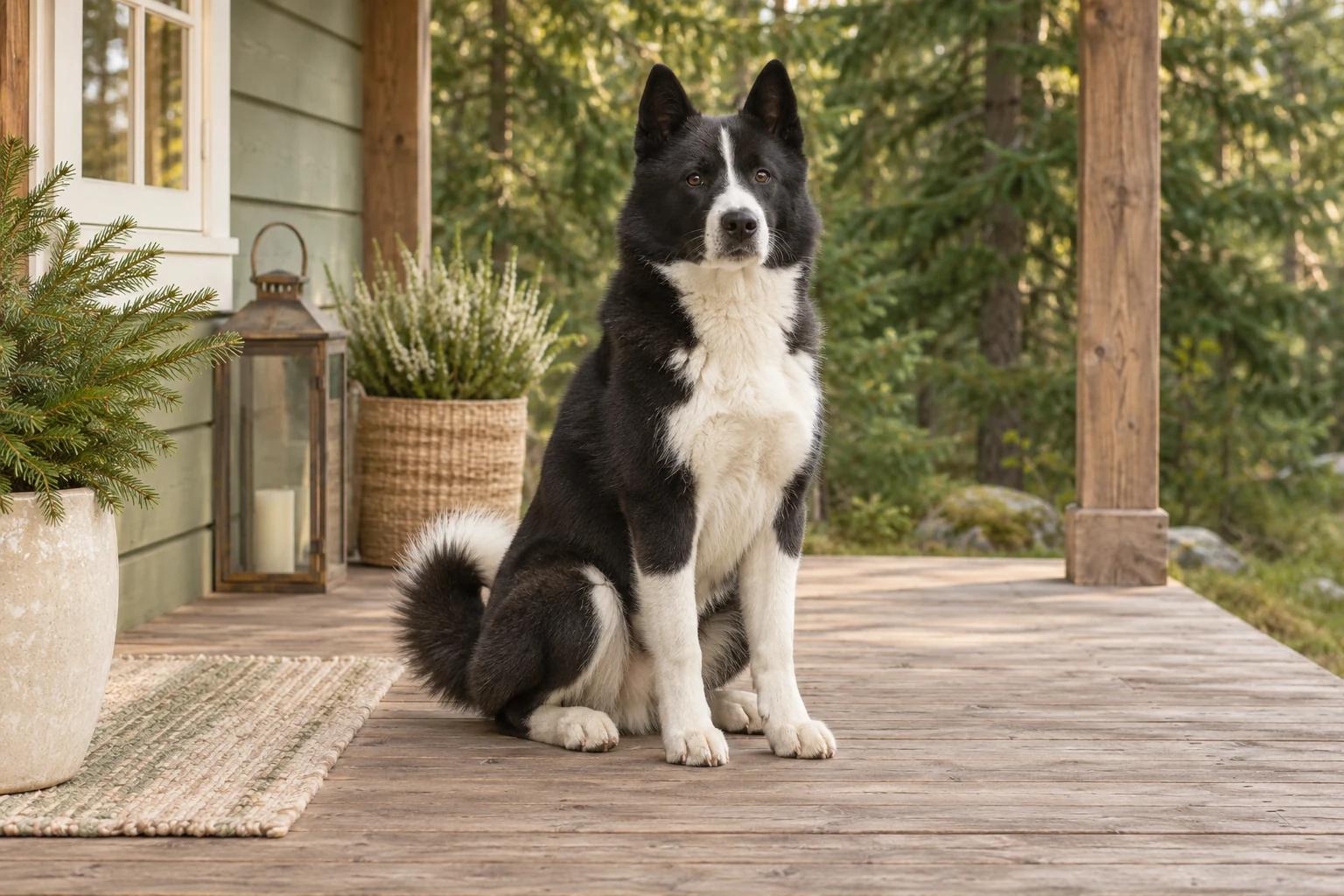
Karelian Bear Dog training is most useful when it makes daily transitions manageable: leaving the house, turning away from something interesting, waiting while a gate opens and returning to a familiar resting place. Begin with those jobs rather than expecting a long obedience sequence to solve every outdoor situation.
The Finnish Kennel Club emphasizes the breed's hunting instinct and notes that some individuals show territorial behavior. For an owner, that is a reason to plan environments carefully, not to stage a test involving wildlife or unfamiliar dogs. Finnish Kennel Club Karelian Bear Dog reference.
Karelian Bear Dog training begins before the cue
Draw a simple map of the places you will use: the exit from your home, your usual walking route, the car and a quiet practice space. Mark where you have room to pause or change direction. A lesson is easier to organize when you know where you will stand and what you will do if the surroundings change.
Then choose one behavior for each location. At the door, you may want the dog to wait while you attach equipment. At the car, you may want a controlled transition between the vehicle and the walking area. On the route, you may want the dog to move with you when you turn.
These are teaching goals, not assumptions about what a new dog understands. Ask the current caregiver which cues already exist and how they are used. Keeping familiar words initially may be clearer than replacing them all with your own preferred vocabulary.
For the broader ownership picture, consult the Karelian Bear Dog profile. Use its background to prepare questions while building your training plan around the individual dog in front of you.
Give “leave it” a small, clear meaning
A useful leave-it lesson begins with an ordinary object in a controlled setting, not a squirrel running across a path. The AKC's guide teaches disengagement from a tempting item and rewards it with something separate, rather than eventually giving the dog the item it was asked to leave. It builds from simple setups toward new locations and distractions. AKC leave-it training guide.
Choose a practice item that you can keep inaccessible without wrestling or grabbing. Arrange the lesson before bringing the dog into the space, with suitable rewards ready. If you cannot keep the setup calm and controlled, ask a reward-based trainer to demonstrate a starting exercise rather than improvising with a valuable possession.
Write down the smallest response you are watching for, such as looking away from the item. This helps you recognize the beginning of the skill. Expecting the dog to ignore an entire room of temptations makes it hard to see what has actually been learned.
Keep practice objects separate from real hazards. Medication, dangerous foods and sharp objects should remain securely stored, not become training equipment. A cue is additional support, never a substitute for preventing access.
Build a walking routine with an exit option
For a Karelian, thoughtful route selection belongs in the training plan. Ask its caregiver where wildlife or other dogs tend to make walks harder, then choose a starting route that gives you more room. Do not make the busiest local path your default classroom simply because it is popular.
Practice a change of direction somewhere unremarkable. Pick a landmark, turn with the dog and continue to another nearby point. Work out your own movement and leash handling before adding difficulty. If the routine feels awkward without distractions, simplify it now.
A successful walk might include a small piece of practice and an otherwise familiar outing. You do not have to rehearse every skill on every trip. Note which part went well and which location needs a different arrangement next time.
If the dog becomes absorbed in something you cannot manage, use distance and your prepared exit rather than repeating cues indefinitely. Keep the dog secured and seek professional help if handling the situation is beyond your current skills. Training progress should not depend on winning a confrontation beside a path.
Socialization should fit the dog's actual life
Karelian Bear Dog socialization is not a promise that every future interaction will be welcome. Think instead about building manageable experience of necessary situations. Start with the places and people the dog will encounter regularly, including veterinary staff, caregivers and visitors to your home.
For a home visit, decide where the dog can wait before the door opens and how the guest will enter. Tell the guest the plan beforehand. A visitor who arrives ready to give the dog space is easier to work with than one who expects an immediate greeting.
For encounters with other dogs, discuss the individual's history with a qualified trainer or caregiver. Do not use an unfamiliar loose-dog group as an assessment. The question is how to manage this dog's daily environment, not whether you can produce a dramatic demonstration of sociability.
Puppy outings need a plan appropriate to the puppy's stage and circumstances. Ask your veterinarian about timing and suitable locations. An adult dog with limited experience may also need an easier starting point than its age suggests.
Make household obedience practical
When considering how to train a Karelian Bear Dog, choose tasks that reduce daily confusion. A station near the equipment cupboard can give you somewhere to organize departures. A familiar resting place can help you separate training from the household's busiest moments. A predictable handover can make care easier when someone else takes over.
For Karelian Bear Dog obedience, consistency means the same cue leads to the same task, not that every session must look identical. Practice with another household member only after explaining the setup. Agree where the person stands, what response they will recognize and how the exercise ends.
Avoid adding several difficulties together. A new handler, unfamiliar room and exciting object create three changes, even if the cue itself is old. Return to a simpler version when you change the context, then decide what to add next.
Review the plan, not just the dog
Keep a brief record of the lessons that affect real life. “Waited while I clipped the leash in the hallway” is more informative than “good today.” “Could not turn with me beside the field entrance” identifies a location to reconsider.
If a skill stops working, check what changed in the setting and routine. For sudden changes or possible discomfort, consult your veterinarian. For repeated handling difficulties, bring the notes to a qualified trainer rather than escalating pressure on your own.
Our article on the Karelian's traditional working role covers its history separately. The breed quiz can help prospective owners think through whether this kind of active management and learning fits their lives.
FAQ
What should I teach a Karelian Bear Dog first?
Start with daily transitions: putting on equipment, moving with you, waiting at a planned station and leaving ordinary objects alone. Choose the first task according to your home and the dog's existing experience rather than following a fixed trick list.
Can leave-it training remove hunting interest?
A leave-it cue teaches a particular response; it does not erase a dog's background or guarantee behavior around wildlife. Practice in controlled settings and maintain suitable containment and leash management outdoors.
Does socialization require dog-park visits?
No. Socialization can involve manageable exposure to the people, places and routines a dog needs to encounter. An unfamiliar loose-dog group is not a necessary teaching environment or an appropriate shortcut for assessing an individual Karelian.
Sources behind this article
Article source checked: November 15, 2026. Source checked 2026-11-15
Keep reading

Affenpinscher Training: Build Useful Everyday Habits
Read article →