What does a Karelian Bear Dog’s traditional work actually involve?
The Karelian Bear Dog’s traditional role includes holding elk and bear at bay and barking at game. That specific task deserves more explanation than the breed name alone.
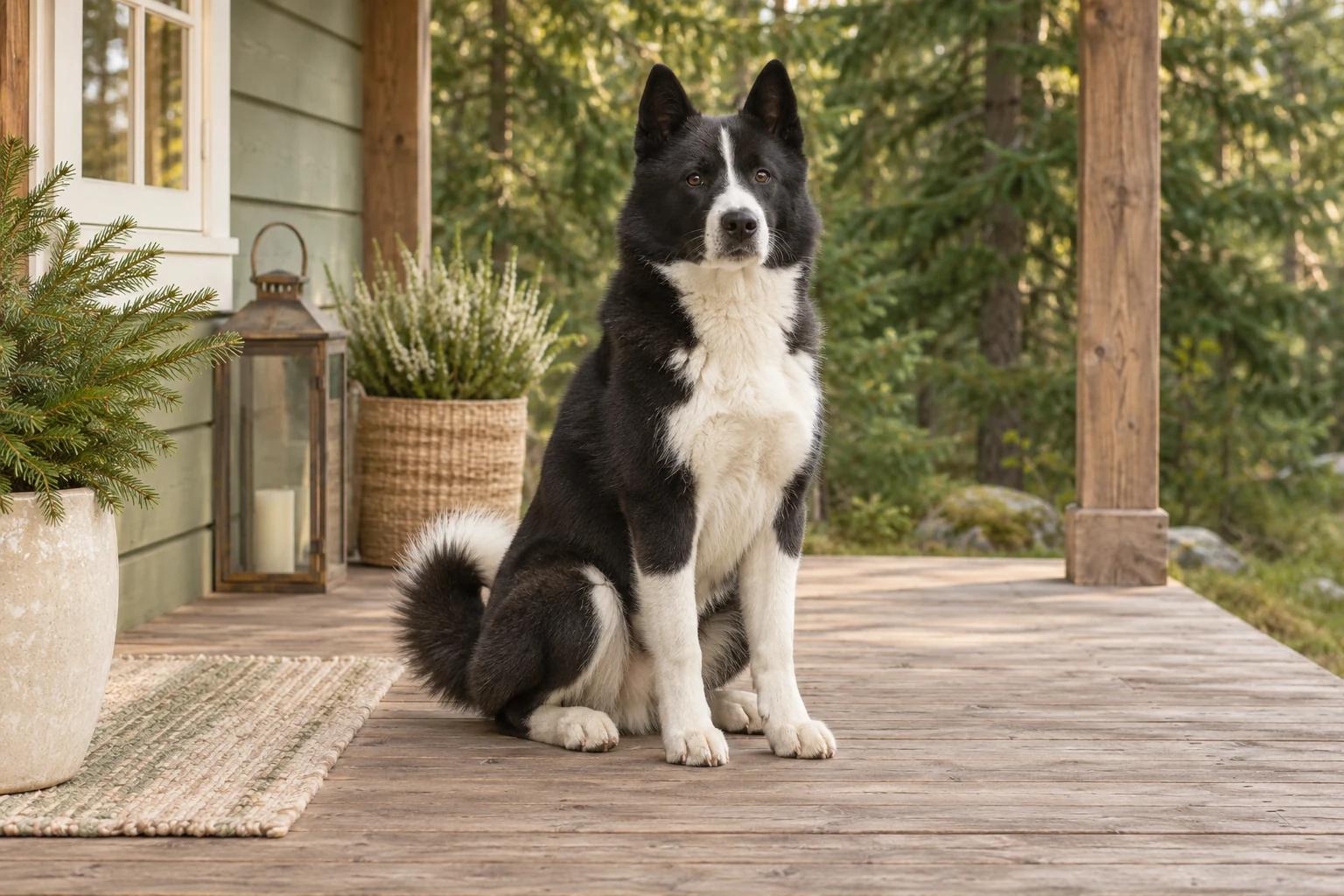
A job description behind a striking name
The name Karelian Bear Dog naturally draws attention to the quarry. The FCI description supplies the action: this hunting spitz works mainly with elk and bear, holds game at bay and marks game by barking. Its history connects breeding begun in 1936 with a goal of producing a sturdy dog that barks at big game; a first standard followed in 1945 and registrations in 1946.
Two words to discuss with a working handler
The document describes independence alongside cooperation during game work. For someone meeting a working dog, that pairing is a useful opening for questions: what does the dog do on its own, what has it been taught, and what does the handler expect during the task?
Answers about actual training and experience are more informative than choosing one adjective as the whole explanation. Neither independence nor cooperation predicts every response in a household or demonstrates a particular dog’s competence.
Keep hunting history separate from a new assignment
Someone presenting a dog for wildlife-conflict work should be able to explain the relevant training and documented experience of the handler-and-dog team. The breed name and traditional hunting role are not that evidence. Nor do they establish that taking a dog near a bear will make an encounter safe.
For household placement, discuss the individual’s routine and management directly. Understanding the original task helps frame that conversation, but it does not settle the placement or certify the dog for another kind of work.
Sources behind this article
Article source checked: October 20, 2026. Source checked 2026-10-20
Keep reading
Karelian Bear Dog vs Akita: Size and Daily Life
Read article →