Great Dane training: everyday skills that matter
Plan Great Dane training around calm greetings, manageable walks, socialization and everyday handling, with clear goals for your household.
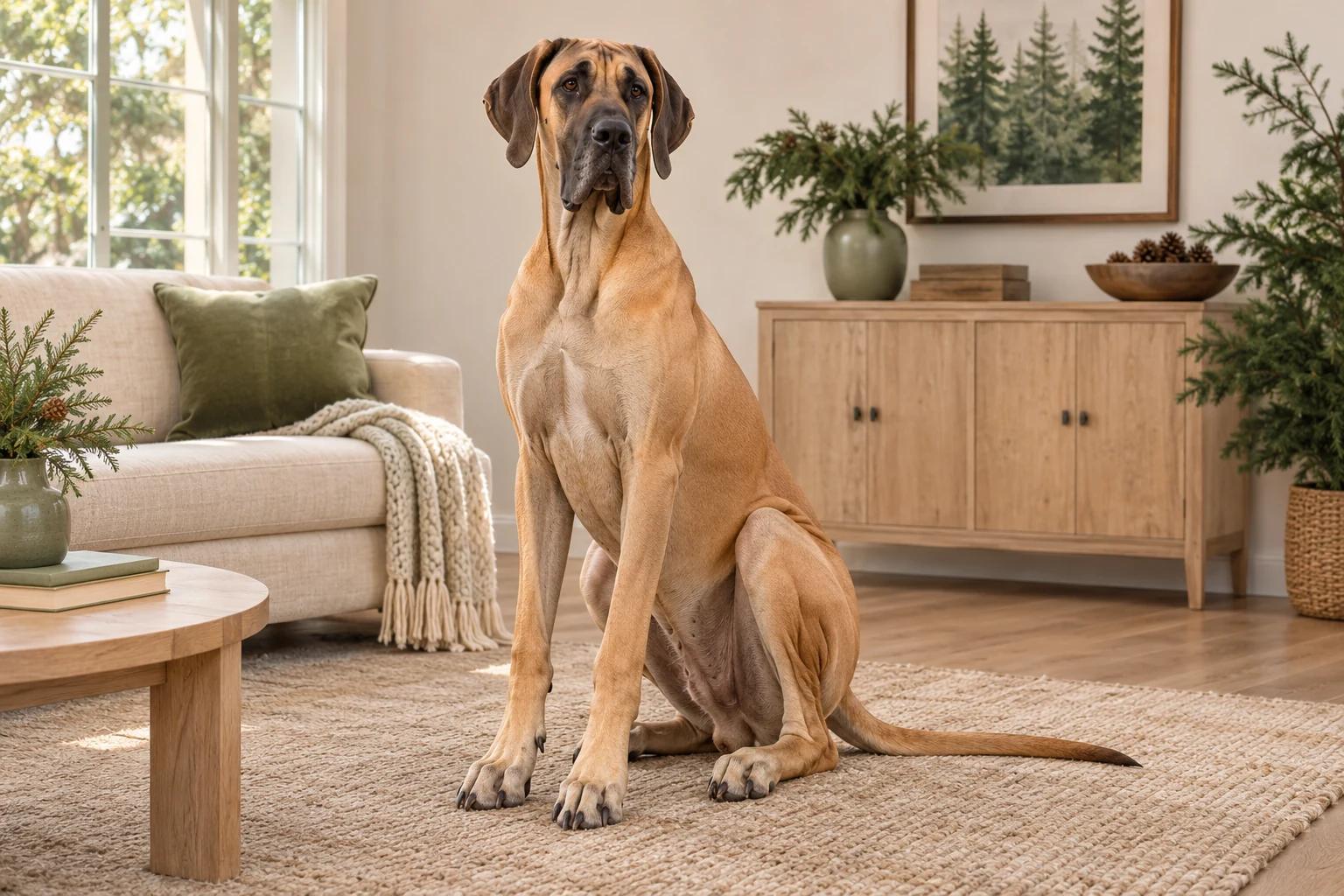
Great Dane training should make ordinary moments predictable: attaching a lead, passing another person, receiving a visitor and waiting while you prepare something. With a dog of this scale, those small skills matter more than a long list of impressive tricks. The AKC emphasizes the ownership commitment that comes with the breed's size and strength; your training priorities should reflect that reality.
Begin with a short list of behaviors you need in your actual life. A household using a shared elevator may choose different early practice from one whose main challenge is an open garden gate.
Great Dane training: choose the first three jobs
Pick three practical goals and describe each in observable terms. “Be polite” is too vague. “Keep four paws on the floor while the visitor approaches” gives everyone something concrete to work toward. “Walk with me” needs a similarly clear meaning: perhaps a loose lead and enough attention to turn together.
A third useful goal might be waiting in a designated place while a person handles a task. Choose somewhere the dog can use comfortably, not a tiny target selected because it looks neat. The point is an understandable position, not an endurance contest.
The UKC standard stresses consistency in training. Translate that into household agreement: the same cue, the same requested action and the same basic response from each caregiver. Different people can have different voices without changing the meaning of the exercise.
How to train a Great Dane without a strength contest
VCA recommends consistent, positive training. Start by deciding what you will reward, then arrange a situation in which the dog has a reasonable chance to do it. Ask a reward-based trainer for help with timing and setup if you are new to this work.
For a greeting rehearsal, recruit one cooperative adult rather than waiting for a roomful of visitors. Agree on the plan before the person approaches. Keep the first exercise simple enough that you can notice and reward the chosen behavior rather than spend the whole session trying to recover control.
If the dog becomes difficult to manage, pause and change the setup. More distance, fewer people or a quieter location may be useful discussion points with your trainer. Do not rely on being able to physically outmatch a grown Dane when an exercise goes wrong.
A training plan should also include management for moments you are not practicing. A visitor arriving with shopping bags is not automatically the right opportunity for another greeting lesson.
Make walking practice specific to the route
Great Dane obedience becomes useful when skills survive ordinary distractions. Identify one challenge at a time: leaving the entrance, passing a stationary person or turning away from an interesting scent. Avoid combining all three into the first rehearsal.
Write down where the difficulty starts. “Pulls everywhere” may become “pulls from the gate until the first corner.” That smaller description helps you and a trainer choose a more focused exercise. Practice the relevant skill in an easier place before expecting it on the busiest part of the route.
Equipment should fit the individual dog and the intended task. Ask a qualified professional to assess it rather than buying something simply because its packaging says it controls large breeds. Equipment does not explain a cue or replace practice.
Keep a backup plan for an unexpectedly crowded path. Know where you can turn away or create space without stepping into traffic. Choosing a manageable route is part of training preparation, not an admission that the dog has failed.
Socialization is not a greeting quota
Great Dane socialization should involve learning about everyday situations, not collecting as many encounters as possible. Think about the experiences your particular dog will need: a clinic waiting area, people carrying unusual objects, a calm visitor or another dog at a comfortable distance.
Ask your veterinarian about appropriate outings for a puppy and your trainer about how to introduce new situations. Record the dog's response, not just the number of places visited. A calm observation from farther away may be a better starting point than a close encounter you cannot manage.
Prepare a simple phrase for strangers: “We're practicing watching today, so please give us space.” This makes it easier to follow your plan when someone is excited to meet a very large puppy.
Do not force interaction to prove friendliness. If a particular situation repeatedly causes difficulty, bring a description to your trainer rather than adding more of the same exposure without a plan.
Practice care before you need cooperation
List the everyday handling tasks your Dane will encounter, such as approaching the scale at the clinic or presenting a paw for inspection. Ask the relevant professional to show you an appropriate practice sequence. Keep home rehearsal distinct from attempting a procedure you have not been taught.
Use a comfortable setup and an agreed stopping point. Record which part is easy and which part needs help. “Allows a brief touch to the shoulder” is useful information; “hates grooming” is less precise and can hide progress.
If tolerance changes suddenly or handling appears uncomfortable, contact your veterinarian. Training should not be used to argue a dog out of a possible physical problem.
For space and equipment logistics, our Great Dane home-planning article covers the separate task of checking the household. This training guide focuses on communication rather than repeating that walkthrough.
Keep a record small enough to maintain
After practice, note the cue, location and result in one or two sentences. Add the next easier or slightly harder version you intend to try. This avoids starting every session by guessing what happened last time.
Bring those notes when choosing a class or booking individual help. Ask the trainer how they would manage a giant adolescent in that setting, how much room is available, and what they expect you to practice between meetings. Observe the teaching style if possible.
Read the Great Dane profile for the wider ownership picture. If you are still deciding whether this commitment matches your routine, the breed quiz can help organize your priorities before you commit to a dog.
FAQ
What should a Great Dane learn first?
Prioritize practical skills such as manageable lead walking, calm greetings and waiting in an agreed place. Choose the order around your actual household and work with a reward-based trainer to make each goal specific and achievable.
Can an adult Great Dane start training?
An adult can begin a new learning plan. First ask about its existing cues, routines and previous training so you do not accidentally create conflicting expectations. A trainer can help adapt the work to the dog's experience and current behavior.
Does a calm temperament mean training is optional?
No. A calm impression does not show whether a dog understands a cue in a busy setting. Practice the everyday behaviors you will rely on and make management arrangements for situations that are not yet suitable training opportunities.
Sources behind this article
- American Kennel Club: Great Dane ↗
- United Kennel Club: Great Dane standard ↗
- VCA Animal Hospitals: Great Dane ↗
Article source checked: November 15, 2026. Source checked 2026-11-15
Keep reading

Affenpinscher Training: Build Useful Everyday Habits
Read article →