Great Dane home planning: walk the route before buying gear
Plan for a Great Dane's everyday space by checking resting areas, doorways, vehicle access and care arrangements before committing to oversized equipment.
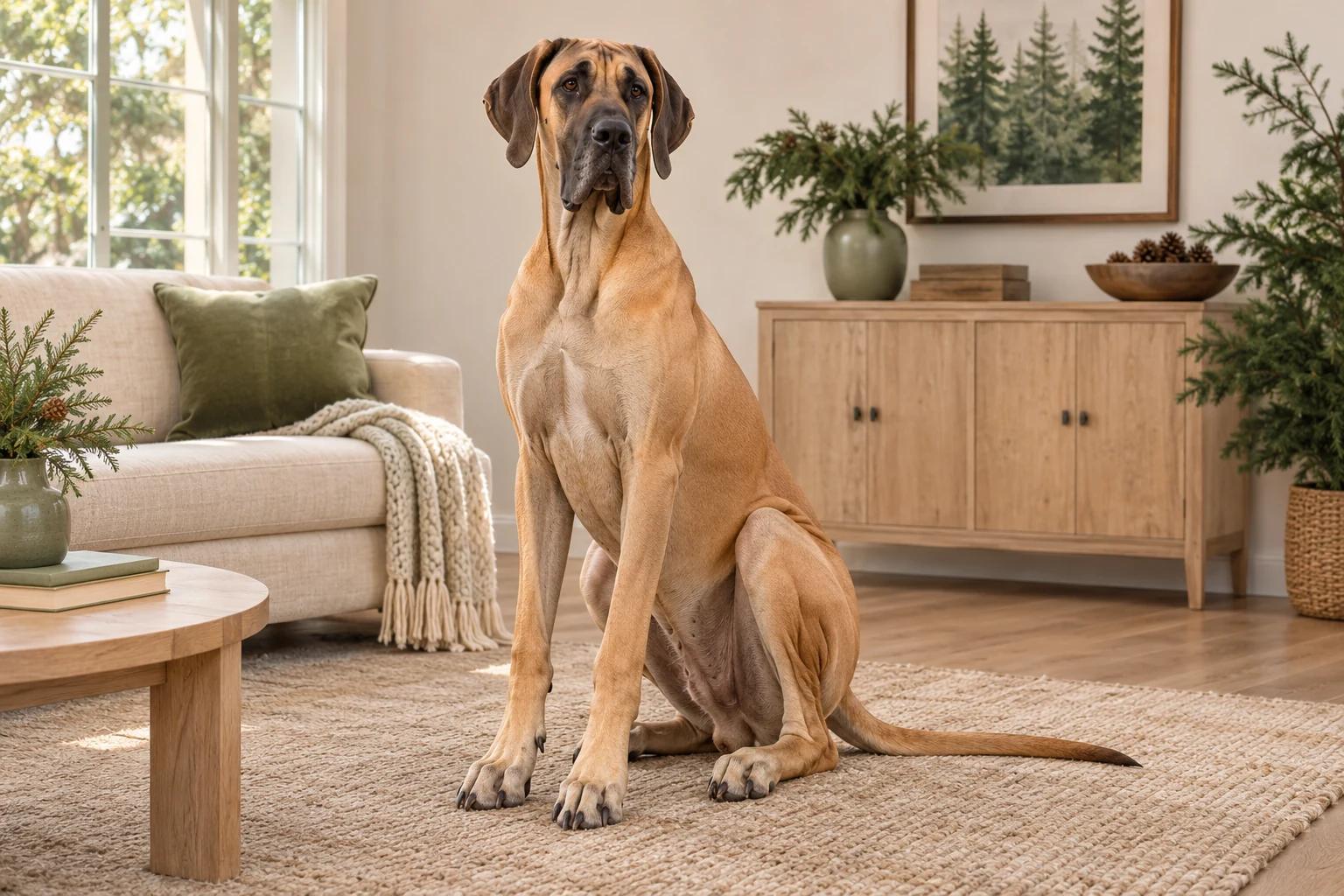
Size becomes practical at the doorway
A Great Dane's scale matters in places smaller than the garden. The AKC standard identifies the breed as a giant working dog and sets minimum shoulder heights of 30 inches for males and 28 inches for females. Those are conformation thresholds, not a prediction of an individual dog's measurements or a formula for buying a bed. Use them as a prompt to plan for a genuinely large adult.
Before ordering equipment, walk the route from the entrance to the resting area and then to the outdoor exit. Look at the turns as well as the straight sections. A hallway may seem spacious until a door swings open, someone carries laundry through it and the dog is trying to turn around.
Mark the resting space on the floor
Use removable tape or a paper outline to mark the footprint of a bed or crate you are considering. Check whether people can still move comfortably and whether nearby doors and cupboards open. Compare the product's internal usable dimensions with its external footprint; both matter, but they answer different questions.
If an adult dog is already known, use its actual measurements and the manufacturer's fit guidance. If you are planning for a puppy, keep present fit and future fit separate. Ask about exchange arrangements or adjustable options before buying. The word giant on packaging is not itself evidence that the item will suit your dog or your room.
Include the journey out of the house
Measure the relevant vehicle opening and usable travel area before choosing travel equipment. Check the manufacturer's instructions for the specific vehicle and product. Plan where people and luggage would go as well. A setup that works only with every seat empty may not fit the trips your household actually takes.
Consider access to veterinary care and help if the dog cannot move normally. Discuss handling and transport arrangements with the clinic rather than inventing a lifting method. If your everyday route includes stairs, a narrow landing or a shared elevator, describe those details when asking about an individual dog's mobility needs.
Make space in the care plan as well
Ask prospective sitters or boarding providers whether they can accommodate the actual dog and equipment; do not assume a general dog-care service has suitable space. Keep those answers with your measurements. This walkthrough cannot determine whether a particular Great Dane will thrive in a home, but it can reveal a blocked doorway, an unsuitable purchase or a missing care arrangement before the dog arrives.
Sources behind this article
Article source checked: October 20, 2026. Source checked 2026-10-20
Keep reading
Great Dane training: everyday skills that matter
Read article →