European Shorthair cat size: weight, frame and growth
Understand European Shorthair cat size with current male and female weight ranges, physical proportions and carefully scoped growth research.
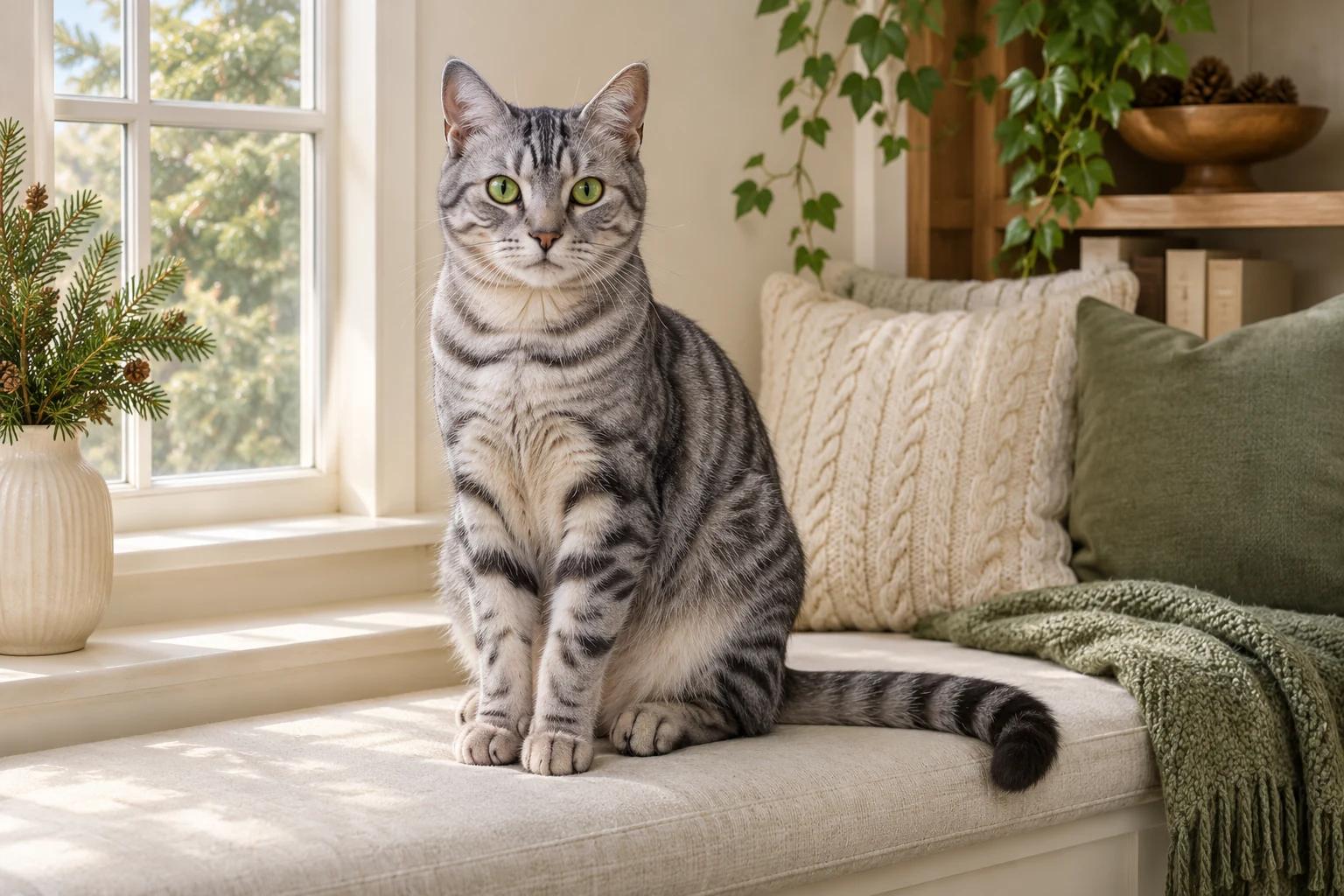
European Shorthair cat size is easiest to understand by starting with the adult figures, then asking what those figures actually describe. The current European Shorthair profile lists females at 11–13 pounds and males at 13–15 pounds. These are weight ranges, not dimensions, and the distinction matters when comparing a kitten, an adult female and an adult male.
European Shorthair cat size: read the female and male ranges separately
For European Shorthair cat weight, the combined 11–15-pound span is a useful introduction, but it conceals the sex-specific information. A 12-pound female lies within the listed female interval; a 14-pound male lies within the listed male interval. Comparing both animals with a single supposed 13-pound breed average loses that context.
The ranges meet at 13 pounds. That does not mean every male must outweigh every female, or that two cats weighing 13 pounds are the same age or shape. Nor should the midpoint of either interval be treated as a required destination. Twelve pounds is simply halfway between the female endpoints; fourteen is halfway between the male endpoints. Those calculations describe the published ranges, not an individual cat's ideal weight.
For readers using kilograms, the female range is approximately 5.0–5.9 kilograms and the male range approximately 5.9–6.8 kilograms. Keep the rounding modest: converting a whole-pound breed description into several decimal places would suggest precision the original figures do not have.
The practical answer to “how big do European Shorthair cats get” therefore begins with adult sex, not with the largest number available. A kitten's present weight cannot be compared directly with an adult interval as though the difference were a growth target. Equally, the word “adult” on an adoption listing gives context that a photograph alone cannot supply. If that context is missing, establish it before deciding that the animal is unusually small or large.
The frame is substantial without being extremely compact
The FIFe standard describes a medium-to-large cat with a strong, muscular body and a developed, rounded chest, while specifically excluding an excessively compact build. The legs have medium length and taper toward firm, round feet. A muscular neck and a tail that narrows gradually from a thick base complete the outline.
Look beyond the torso when interpreting those proportions. The head appears rounded but is slightly longer than it is wide; the cheeks are developed without hanging jowls. Medium ears stand fairly upright, with their height corresponding to their width at the base. These are relationships between parts of the cat, not measurements in inches.
Together, those details explain why European Shorthair cat height cannot be inferred from a weight bracket. The standard describes leg proportions rather than supplying a numeric shoulder height. A cat's mass and the distance from floor to shoulder answer different questions. When considering the breed's appearance, look at the chest, legs and head as a connected structure rather than treating one conspicuous feature as a shortcut to total size.
A kitten's growth curve is not an adult breed specification
Research by Salt and colleagues developed separate male and female growth charts using domestic shorthair cats, with reference curves spanning 8–78 weeks. That population is not the pedigree European Shorthair breed. The authors specifically identified pedigree growth patterns as an area needing further study.
The useful distinction is between a weight at one age and a sequence over time. An adult breed range supplies an endpoint description; a growth chart relates repeated weights to age within a particular reference population. Substituting one for the other would erase the very information the chart is designed to include.
For a young European Shorthair, do not turn those domestic-shorthair curves into a promised finishing weight or a breed-specific birthday for maturity. Bring existing weights and ages to a veterinary discussion if you need individual growth guidance. The study also lacked body-length and circumference measurements, so its weight curves cannot supply a missing height chart. A graph can be useful without answering every question about how a kitten's frame will develop.
Weight and body condition are separate assessments
The WSAVA body condition chart considers features such as fat covering, waist definition and the abdominal area rather than assigning condition from pounds alone. Its purpose differs from a breed profile's size range.
This distinction prevents a common mistake: assuming that an animal is appropriately conditioned merely because its weight fits the published interval. Two European Shorthairs at the same weight need not have the same body composition. Likewise, exceeding a descriptive endpoint does not, by itself, establish an individual assessment.
Use the breed figures to understand scale, and ask a veterinarian to interpret the particular cat's condition. Do not use the upper endpoint as a reason to increase food, or the lower endpoint as a target for reducing it. A broad description of adult size is not a feeding prescription. Keeping those questions separate allows the European Shorthair's individual frame to remain part of the discussion rather than disappearing behind a number.
For the wider ownership decision, the cat breed quiz considers more than size. If you are meeting an adult whose background is incomplete, our European Shorthair adoption guide addresses that separate situation.
FAQ
How much does an adult female European Shorthair weigh?
The current profile lists adult females at 11–13 pounds, approximately 5.0–5.9 kilograms.
What is the listed adult male weight range?
The current profile lists adult males at 13–15 pounds, approximately 5.9–6.8 kilograms.
Is 13 pounds an average for the breed?
It is the point where the listed female and male ranges meet, not a measured population average or a target for every cat.
Sources behind this article
- FIFe European breed standard ↗
- Salt et al., kitten growth standards ↗
- WSAVA cat body condition chart ↗
Article source checked: November 16, 2026. Source checked 2026-11-16
Keep reading
European Shorthair cat temperament: activity and interaction
Read article →