Donskoy cat temperament: company, contact and curiosity
Understand Donskoy cat temperament through companionship, voluntary contact and everyday behavior, with breed accounts separated from general cat research.
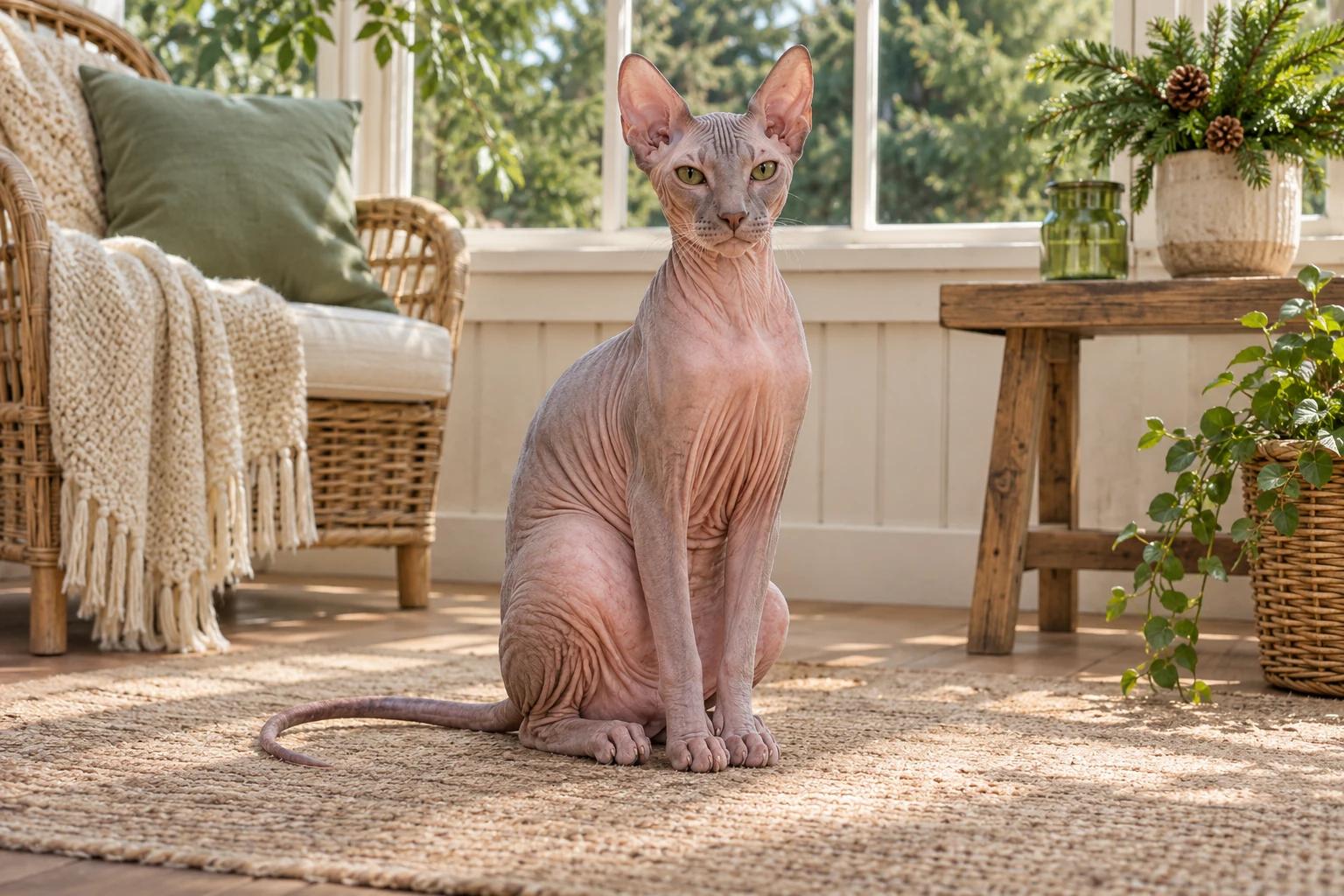
Donskoy cat temperament is best understood through everyday interactions rather than a photograph or a single personality label. When considering this breed, separate three questions: what the breed account suggests, what an individual actually does, and how you respond. Those questions are related, but they are not interchangeable. A description of Donskoy cat characteristics is a starting point for meeting a cat, not a script that every individual must follow.
Donskoy cat temperament: expect a participant
TICA's Donskoy account emphasizes affectionate companionship, curiosity and activity. It describes cats that enjoy involvement with people and benefit from regular interaction, rather than being left alone for long periods. Its activity discussion also highlights exploration and interactive toys.
The useful implication is to consider what you actually enjoy doing with a cat. Do you want an animal involved in your day, or mainly a companion you admire from across the room? A Donskoy cat personality described this way calls for more than appreciating its appearance.
Offer an opportunity to investigate and an opportunity to interact, then watch which the individual chooses. Following you into a room, examining something new and engaging with a toy are different expressions of involvement. They need not all happen together.
Nor does an active, curious description mean every waking minute must become a game. It means leaving room in your expectations for an interested participant. TICA's account is breed guidance, not evidence that every Donskoy will approach every person or enjoy every activity equally.
Affection does not require a hug
RSPCA Australia's guidance on hugging pets explains that restraint can make cats feel afraid or frustrated. It recommends allowing animals to initiate interaction and watching whether they remain willing participants. Gentle face or chin contact is an alternative to enclosing a cat in your arms.
For a Donskoy, translate that into a concrete distinction: welcoming a cat beside you is different from holding it against you. The first permits movement; the second can remove that choice. A cat approaching your chair has not automatically requested to be gathered up.
Pause during contact. If the cat leans into you or actively asks for more, that is useful information. If it moves away, let that end the exchange instead of immediately reaching after it.
This is general cat-handling guidance, not a claim that Donskoys are especially fearful of touch. It helps you avoid turning a friendly approach into an unwanted restraint. The successful interaction is one the cat continues to choose, not one that lasts longest because your arms prevent departure.
Notice the situation, not just the label
Woodgreen's explanation of feline behavior cautions against interpreting cats through human ideas of spite or guilt. It instead emphasizes emotions and the resources available to the animal. Food and water areas, resting places, scratching facilities, access routes and time with people can all matter when cats share a home.
That perspective is useful when describing Donskoy cat behavior. Calling a cat “jealous” because it appears when another cat receives attention tells you less than describing who approached, where each animal stood and whether either could leave.
Consider two cats at a narrow doorway. One remaining outside the room is not necessarily an independent personality choosing solitude. The doorway itself may be part of the interaction. Likewise, the only desirable resting place beside a person can create a different situation from several usable places.
These are general environmental considerations, not proof that the Donskoy needs another cat. Before making a personality judgment, distinguish the animal's response from the arrangement that produced it. Changing a label does not change that arrangement.
A response can be smaller than coming when called
The published abstract of Saito and Shinozuka's voice-recognition study describes twenty domestic cats hearing unfamiliar voices followed by their owners' voices while the owner remained out of sight. The researchers found responses involving head and ear orientation rather than vocal replies or tail movements. Cats that became less responsive to successive unfamiliar voices showed a renewed response to their owner's voice.
This was not a Donskoy study, and it does not establish a special breed ability. It does provide a reason not to equate a quiet response with complete inattention.
When speaking to your own cat, notice whether its head or ears turn before deciding it has ignored you. Looking toward a sound is not the same behavior as walking across the room. Neither observation, alone, measures affection or obedience.
You do not need to recreate the experiment at home. Its practical value here is the distinction between noticing and approaching. A conversation about temperament becomes more accurate when those separate responses are described separately rather than combined into “listens” or “doesn't listen.”
Put the description alongside the individual
The Donskoy profile is a useful reference when comparing this breed with other candidates. Our cat breed quiz can organize that broader comparison. Neither replaces spending time with the particular cat you may bring home. Keep personality decisions separate from care decisions; the existing Donskoy bathing-plan article addresses a different part of ownership.
Frequently asked questions
Is a Donskoy mainly a decorative companion?
TICA describes the Donskoy as an involved, curious companion, not a cat chosen only for appearance.
Does approaching mean a cat wants a hug?
A Donskoy's approach is not permission to restrict movement; allow the cat to choose whether contact continues.
Does not coming when called prove indifference?
A Donskoy noticing a voice need not approach its speaker.
Sources behind this article
- TICA Donskoy ↗
- RSPCA Australia: Should I hug my dog or cat? ↗
- Woodgreen: Understanding your cat ↗
- Saito and Shinozuka: Vocal recognition of owners ↗
Article source checked: November 16, 2026. Source checked 2026-11-16
Keep reading
Donskoy Cat Size: Weight, Height and Build Explained
Read article →