Cymric cat temperament: company, play and individual preferences
Explore Cymric cat temperament through household involvement, floor play and individual preferences, keeping breed accounts and general research distinct.
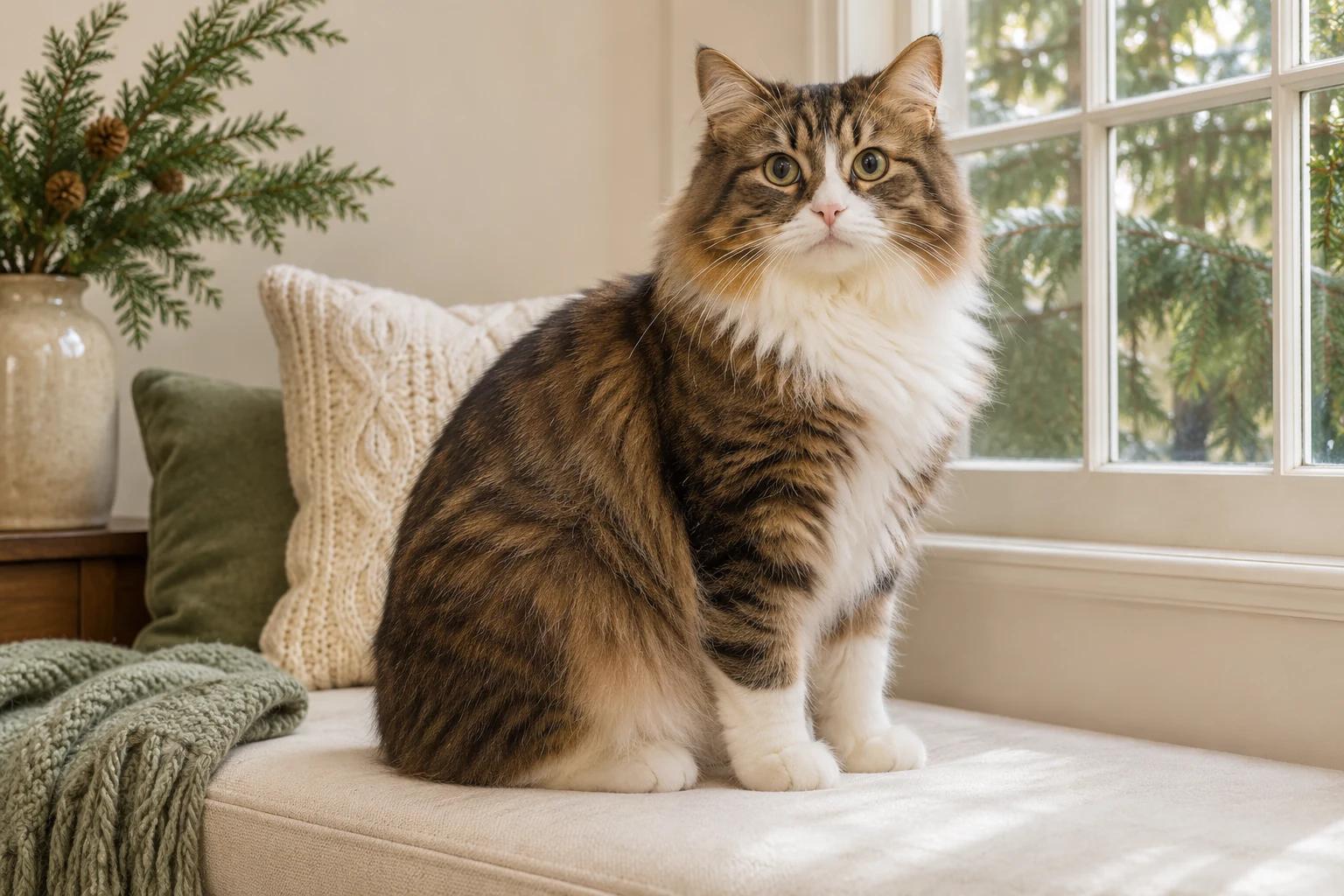
Cymric cat temperament is more useful as a guide to interactions than as a collection of flattering labels. What does the cat do when you start an activity, offer a game or simply sit nearby? Those are different questions. This guide separates breed-family descriptions from general feline research so that neither becomes a promise about your own cat.
Cymric cat temperament in everyday company
VCA's Manx account, which includes the longhaired form, describes a cat interested in people's activities, including typing and telephone conversations. It also notes enjoyment of household routines and a preference for chasing wand toys along the floor rather than swatting at them overhead.
Those details suggest two practical starting points. During desk time, distinguish joining you from occupying the exact place where your hands need to move. Company can happen beside a keyboard rather than on it. The useful question is what the individual actually chooses when both positions are available, not whether its involvement looks sufficiently affectionate.
For play, begin with the toy moving across the floor instead of making every invitation an aerial challenge. A low chase can be the whole game rather than a warm-up for jumping. That preference is not a claim that the cat cannot jump, nor a reason to compel a particular movement. VCA's description supplies an option to offer, not a physical test. Cymric cat behavior becomes easier to understand when participation is allowed to take more than one form.
What “dog-like” can mean, and what it cannot
The GCCF Manx profile uses the familiar dog-like comparison for loyalty and enjoyment of interactive play. This is Manx-family context, not a separate study of longhaired cats. Keep the comparison attached to those particular interactions rather than turning it into a statement that a Cymric behaves like a dog in every situation.
For example, a game involving both you and the cat is different from leaving an object nearby and expecting it to provide the same experience. Your participation is part of the activity described. Equally, the loyalty comparison does not establish that the cat will follow instructions, accompany you everywhere or welcome every visitor.
When thinking about Cymric cat personality, replace the broad label with the concrete interaction you want: a shared game, a familiar companion or a cat that seeks your involvement. These are intelligible expectations. “A dog in a cat's body” is not. It can obscure the difference between enjoying a person's company and agreeing to every activity that person proposes. Treat the metaphor as shorthand, not an ownership specification.
Let a returning toy remain the cat's game
Forman and colleagues' fetching study surveyed owners of cats that already fetched. It did not measure how common fetching is in all cats, and it does not predict that a Cymric will retrieve. The useful finding here concerns variation within an apparently simple game.
Owners described cats that returned objects only partway, preferred particular objects or played only in certain circumstances. Cats also commonly initiated and ended sessions themselves. A toy left halfway across the room is therefore not automatically evidence of a failed lesson: the interaction may simply differ from the tidy throw-and-return sequence a person expected.
If your Cymric already brings back a toy, notice where it places it and whether it actually restarts the exchange. Let a pause remain a pause instead of repeatedly demanding another return. This is an application of general feline research, not a special Cymric rule. The study's owner reports are valuable descriptions, but they cannot tell you why your particular cat stopped or prove that every incomplete return has the same meaning. Shared play need not be perfectly standardized to be enjoyable.
Read the whole interaction, not one expression
PDSA's body-language guide advises considering the situation and several signals together. A crouch can occur during play as well as unease; a single posture is not enough to identify the cat's experience.
Look at the body, ears and eyes together. PDSA describes a relaxed body, ears pointing up and forward, and partly closed eyes or slow blinking among signs of contentment. It also cautions that rolling onto the back does not normally invite a belly rub. Seeing more of the cat's underside is not the same thing as receiving permission to touch it.
For an owner comparing Cymric cat characteristics, this matters more than assigning a permanent personality label after one encounter. A cat crouching near a moving toy and a cat crouching in an unfamiliar situation need not be communicating the same thing. Observe what is happening around it before deciding that it is playful or withdrawn. These are general feline communication principles, not a breed-specific decoding system. They help you respond to an interaction without pretending that one gesture explains the whole cat.
Size is information, not a personality score
The current Cymric profile lists females at eight to ten pounds and males at ten to twelve pounds. Neither interval tells you which individual will be more sociable. A ten-pound cat can fall within either sex-qualified reference, so weight alone cannot even establish which reference applies, much less predict its personality.
Keep practical ownership questions separate, too. Planning an accessible Cymric toilet area addresses a different part of living together. For choosing among breeds, use the cat match quiz to clarify your own preferences rather than treating a match result as a forecast of every interaction.
Frequently asked questions
Does “dog-like” mean automatic obedience?
Calling a Cymric dog-like describes loyalty and interactive play, not automatic obedience.
Must play involve jumping?
Cymric play need not involve jumping: VCA describes floor-level wand chasing.
Does adult weight predict sociability?
Adult Cymric weight references describe size, not sociability. Ten pounds falls within both sex-qualified intervals, but cannot predict how an individual will respond to company.
Sources behind this article
- VCA Manx behavior ↗
- GCCF Manx personality ↗
- Forman, Renner and Leavens: Fetching felines ↗
- PDSA cat body language ↗
Article source checked: November 16, 2026. Source checked 2026-11-16
Keep reading
Cymric cat size: adult weight, rounded build and development
Read article →