Cymric cat size: adult weight, rounded build and development
Understand Cymric cat size with current female and male weight ranges, rounded anatomy, coat effects and the distinction between age and adult development.
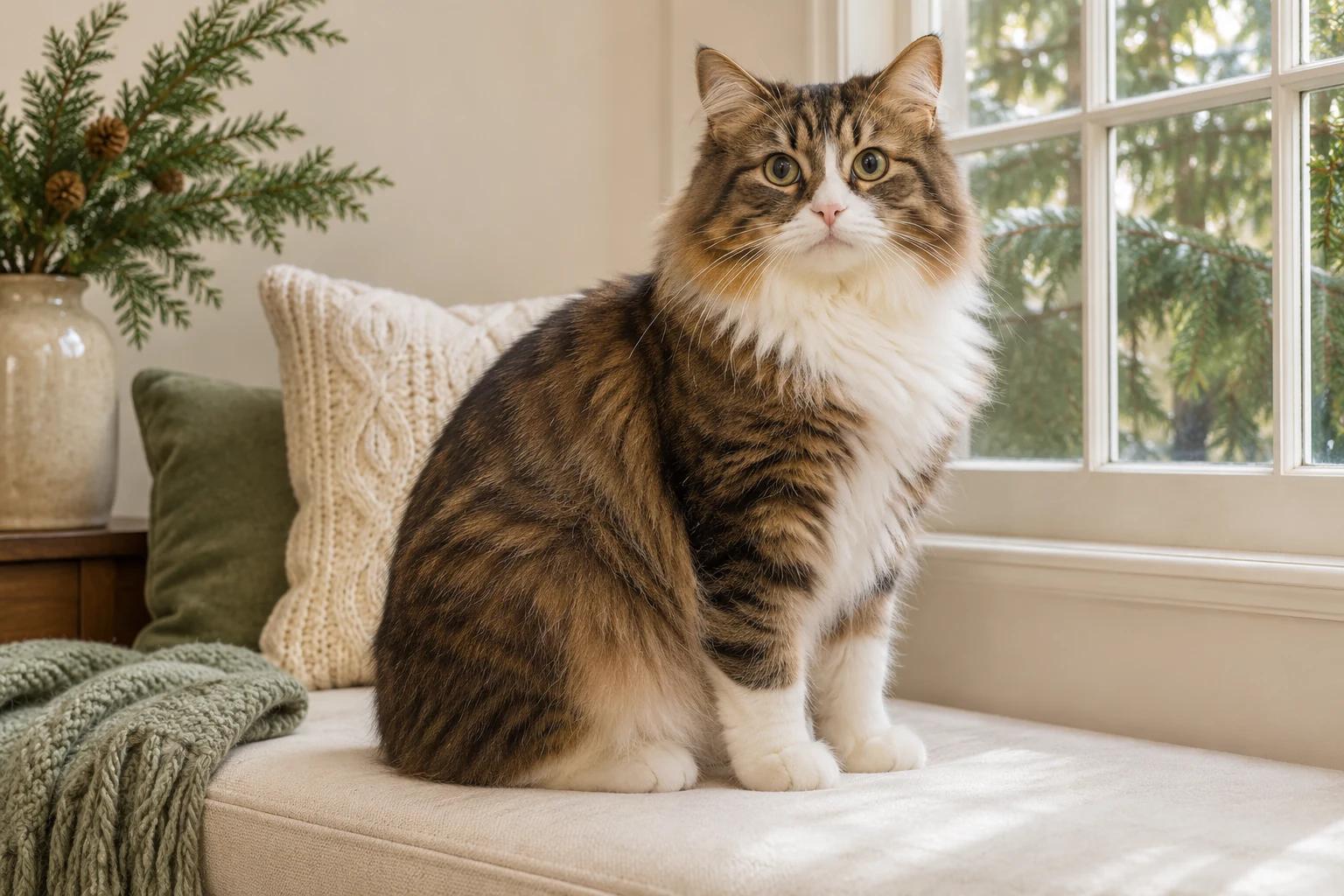
Cymric cat size is easiest to understand by separating adult weight from appearance and development. Start with the current sex-qualified weight references, then look at what the breed's outline actually means. A number on a scale and a description of shape answer different questions; neither should be used alone to judge an individual cat.
Cymric cat size: the adult weight references
The current Cymric profile lists 8–12 pounds overall, with females at 8–10 pounds and males at 10–12 pounds. In kilograms, those are approximately 3.6–5.4 overall, 3.6–4.5 for females and 4.5–5.4 for males.
The two sex-qualified intervals meet at ten pounds. A ten-pound adult therefore fits both references; the overall interval does not identify sex. Nor does the twelve-pound upper endpoint mean that every male should reach twelve pounds. The figures describe a breed reference, not a target to pursue.
An eight-pound female and a twelve-pound male sit at opposite ends of the overall interval, but that comparison combines sex and individual variation. It cannot establish how two same-sex adults will compare. If you are asking about Cymric cat weight because you are considering a particular adult, its own measured weight is more useful than assigning it the highest number in the breed description.
The kilogram equivalents are conversions, not a second set of independently measured data. Rounding them makes them easier to read; it does not make the original reference more precise. Ask your veterinarian to interpret an individual's weight rather than using a breed interval as a feeding or weight-change instruction.
A rounded body is more than a missing tail
CFA's Manx description and standard include the longhaired form. They describe a muscular, compact body with a broad chest, substantial bone and depth through the flank. The hind legs are longer than the front legs, placing the rump above the shoulders; the back curves toward that rounded rump.
Look at those relationships rather than treating “round” as a description of one isolated feature. The chest, body depth and hindquarters contribute to the outline. A face-only portrait leaves most of that structure out of view.
The long coat changes the outline further. CFA describes coat length increasing toward the rump, with fuller breeches, a neck ruff and a substantial cheek coat. That can make the longhaired body appear longer. The visible edge of the fur is therefore not a precise boundary of the underlying frame. When comparing two individuals, distinguish a full coat from the body it covers rather than assuming the one with the larger silhouette must have the larger frame. This is an explanation of breed anatomy, not a method for assessing body condition at home.
Development does not follow the scale alone
TICA's Cymric account describes full maturity taking about five years. This is a statement about completing development, not a promise of continuous weight gain until a particular birthday.
For someone asking how big do Cymric cats get, the distinction matters. A young adult and an older adult can weigh the same without being at identical stages of development. Conversely, an individual's later weight does not need to equal the upper endpoint of the published adult reference just because more time has passed.
Use age and weight as different pieces of information. A kitten's current weight is not the adult breed interval, and the maturity description does not supply a formula for multiplying that kitten's weight into a future prediction. It also does not specify a required increase each month or establish that every individual finishes developing on the same date.
The practical conclusion is modest: leave room for development when comparing a youngster with a mature cat. Do not turn a breed maturity description into a growth schedule or use it to explain an individual's weight change without veterinary advice.
Tail length is a separate part of the description
FIFe's Manx and Cymric profile distinguishes several tail forms: completely tailless, a very short rise, a short tail and a longer-tailed form. It identifies Cymric as the longhaired sister breed to Manx. That vocabulary explains why “Cymric” should not be treated as a complete measurement of the tail.
For a size comparison, separate the main body from any tail that is present. A total nose-to-tail measurement answers a different question from body length. Comparing the total lengths of two cats with different tail forms can create an apparent difference that says little about their trunks.
This also keeps descriptive words in their proper place. A longer tail does not establish a larger torso, and absence of a tail does not establish a smaller one. Tail terminology describes a physical feature, not the individual's weight or an assessment of its health. Use the actual cat's description rather than trying to infer all dimensions from a breed name or a silhouette.
What to do with a height question
If Cymric cat height matters for a particular opening, identify the dimension you need rather than substituting body weight. Height at the shoulders, total standing height and the height of an opening are different measurements. A weight reference cannot be converted into any of them by arithmetic.
Keep this distinct from toilet-area planning, covered in giving a Cymric a quiet, accessible toilet area. For the broader ownership choice, the cat match quiz can help organize your preferences without pretending to predict an individual's dimensions.
Frequently asked questions
How much does an adult Cymric weigh?
The current adult Cymric weight reference is eight to twelve pounds overall: females eight to ten and males ten to twelve. These intervals are references, not individual targets.
Is ten pounds the breed's measured average?
Ten pounds is the midpoint of the Cymric's overall eight-to-twelve-pound reference, not a measured breed average. An average requires observations from a defined group.
Can a weight figure tell me the cat's height?
A Cymric's weight does not reveal its height. These are different dimensions; use the actual measurement relevant to your question rather than inventing a height from pounds.
Sources behind this article
Article source checked: November 16, 2026. Source checked 2026-11-16
Keep reading
Cymric cat temperament: company, play and individual preferences
Read article →