Colorpoint Shorthair size: weight, proportions and adult build
Understand Colorpoint Shorthair size, the current adult weight reference, body proportions and why a weight range cannot supply a height measurement.
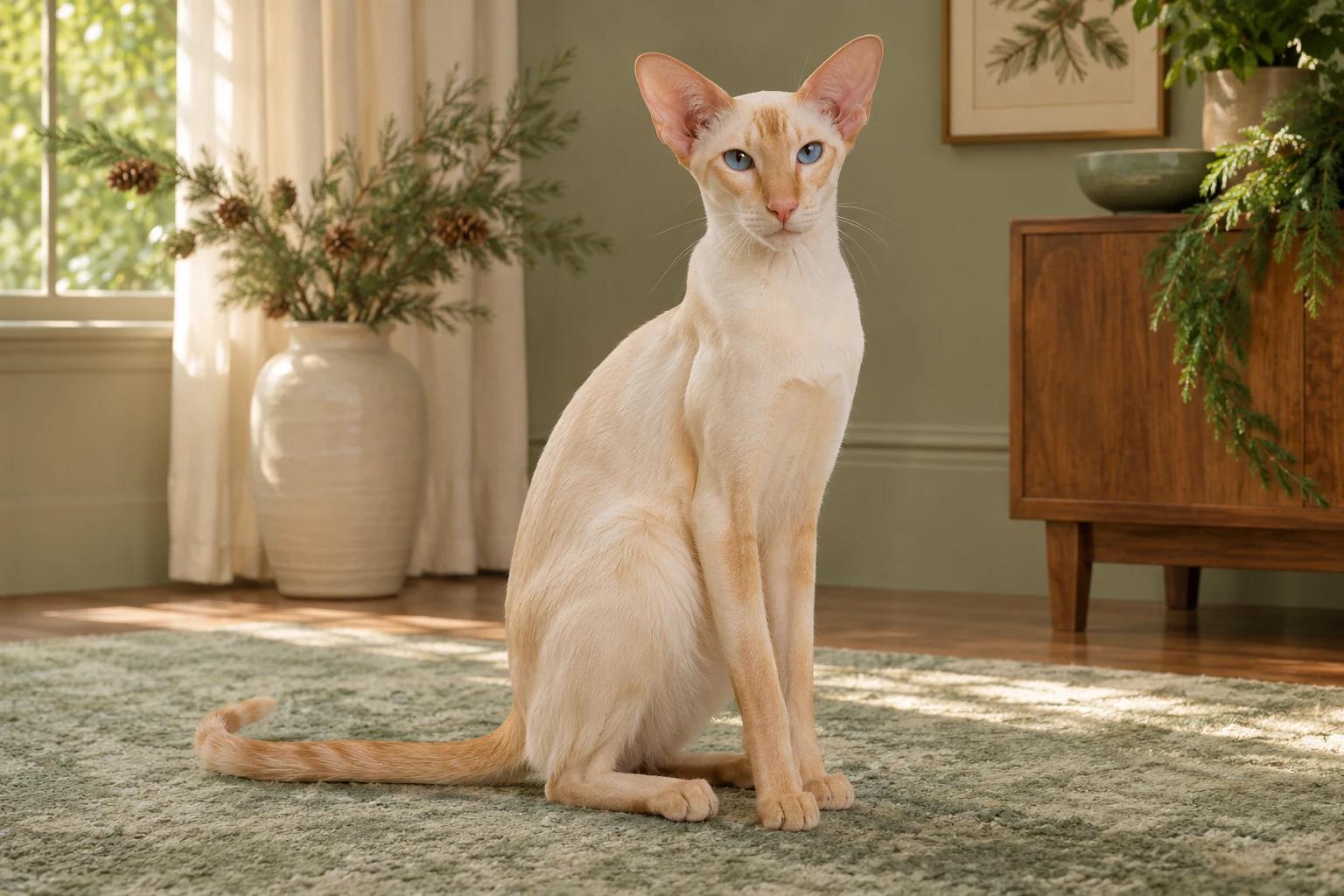
Colorpoint Shorthair size is best understood by separating an adult weight reference from the shape of the individual cat. The current breed profile lists 5–9 pounds, without separate female and male ranges. That is useful starting information, but it is not a height chart, a predicted weight for every kitten or a target that every adult should reach.
Colorpoint Shorthair size: what the current weight range means
The Colorpoint Shorthair profile gives the adult interval in pounds. Five to nine pounds is approximately 2.3–4.1 kilograms, using rounded conversions. Changing units does not create a second, broader range: a figure in kilograms should describe the same quantity as the corresponding figure in pounds.
An adult weighing seven pounds falls inside that displayed interval. This does not mean seven pounds is the breed's average, or that a five-pound individual needs to gain two pounds. The midpoint is simply halfway between the published endpoints. To calculate an average, you would need measurements from a defined group of cats, not just the two limits of a reference.
The same distinction matters at the upper end. Nine pounds is not a compulsory destination for every growing Colorpoint. A kitten's present weight and an adult reference describe different stages.
For a specific cat, use its measured weight and your veterinarian's individual assessment. Do not alter its feeding just to match a preferred number in a breed description. The breed interval supplies context; it does not replace an assessment of that animal.
Read the whole outline, not one feature
The Canadian Cat Association standard describes a medium-sized, fine-boned cat with a firm, muscular body. Its emphasis is on length and proportion rather than excessive bulk. A Colorpoint can therefore have a considerable outline without being a heavy, broad-bodied cat.
The legs are long and slim in proportion to the body, with the hind legs longer than the forelegs. Small oval feet complete that outline. The tail is long, narrow at its base and tapering, balanced against the rest of the animal. The neck also contributes length; looking only at the trunk misses part of the characteristic silhouette.
These details belong together. Long legs alone do not describe the breed's build, and a long tail should not be mistaken for extra torso length. When looking at an adult, distinguish the body between the shoulders and hips from the neck and tail extending beyond it. This makes a side view more informative than a tightly cropped head portrait. The standard is a description of proportions, not a set of inch measurements that can be recovered from a photograph.
Why ancestry is not an adult-size calculation
In her CFA historical account, Debbie Kusy describes the breed's beginnings with Siamese and red American Shorthair ancestry. She explains that early cats resembled their American Shorthair forebears more closely, while successive selective breeding brought their type closer to the Siamese. The account was published in 1992; it is a history of development, not a contemporary survey of adult weights.
That history answers a useful question about size descriptions. An ancestor's breed name is not a formula for averaging two present-day weight ranges. A modern Colorpoint is not assigned half of one ancestor's size and half of the other's. The historical change in type is precisely why that shortcut would be misleading.
Similarly, an old photograph of an early animal should not be treated as a promise about a kitten available today. Historical examples help explain how a breed developed, while the current profile and the actual adult describe different, present-day questions. Use the history to understand the breeding objective, not to calculate a numerical growth forecast or to impose an ancestor's proportions on the cat in front of you.
What general skeletal research can and cannot add
A University of Sydney study's published abstract reports measurements from radiographs of forty mature domestic shorthair cat cadavers. The researchers examined several lower-limb bones, comparing lengths, widths and proportions. Male cats generally had longer and wider measured bones than females, although the pattern was not identical for every comparison.
This is useful background for understanding why sex can matter in a size study. It is not a Colorpoint Shorthair sample and does not supply a female or male weight interval for this breed. It also does not turn a broad population tendency into a rule that every male must exceed every female.
For someone asking how big do Colorpoint Shorthairs get, the practical distinction is between a measured population result and an individual prediction. A study can describe differences in its sample without predicting the final dimensions of a particular kitten. Here, the current profile's unsexed range remains unsexed; the general research is not permission to invent separate numerical limits.
For a different ownership question, see preparing a Colorpoint Shorthair for household noise. The cat match quiz can help you consider size alongside your other preferences.
Frequently asked questions
What is the current Colorpoint Shorthair weight reference?
The current Colorpoint Shorthair profile lists adult weight at five to nine pounds, without separate male and female intervals. In rounded metric units, that is approximately 2.3 to 4.1 kilograms.
Can Colorpoint Shorthair height be calculated from weight?
Colorpoint Shorthair height cannot be calculated from weight. Pounds and kilograms describe mass, not a vertical distance, and cannot be converted into inches or centimeters of height.
Is seven pounds the ideal adult weight?
Seven pounds is the midpoint of the Colorpoint Shorthair adult weight interval, not an individual assessment or measured breed average. Ask your veterinarian about the appropriate weight for your particular cat.
Sources behind this article
- Canadian Cat Association Colourpoint Shorthair standard ↗
- CFA: Debbie Kusy, The Colorpoint Shorthair ↗
- University of Sydney feline skeletal study abstract ↗
Article source checked: November 16, 2026. Source checked 2026-11-16
Keep reading
Colorpoint Shorthair cat personality: voice, play and company
Read article →