Rough Collie training for clear household communication
Make Rough Collie training practical with clear signals, doorway manners, settling, social learning and cooperative handling.
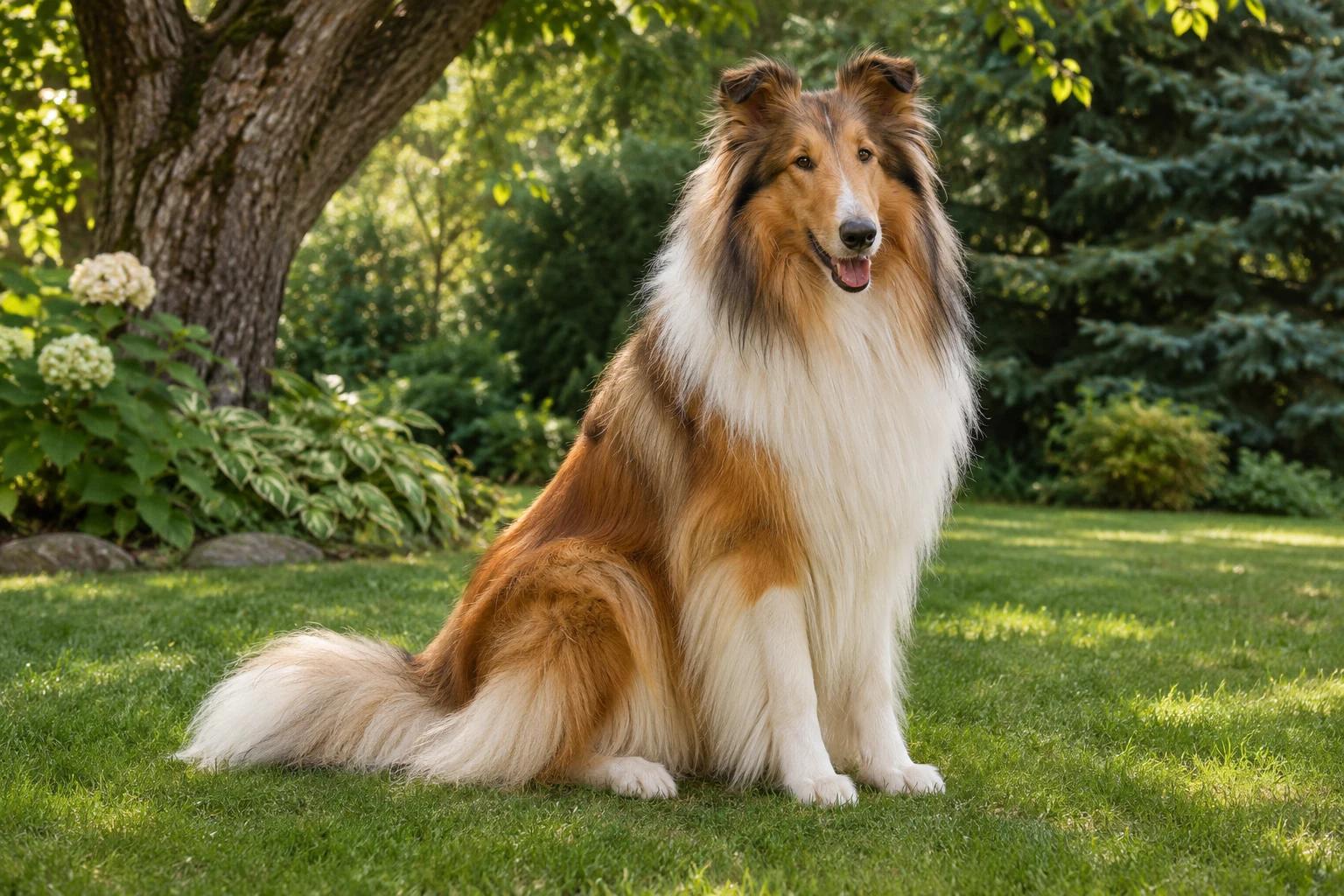
Rough Collie training should make everyday communication clearer, not turn a willing companion into a dog waiting for constant instructions. Start with the actions that give the household room to function: stepping aside, waiting at an entrance, moving onto a resting place and returning attention when something interesting happens.
The Collie profile describes a relatively responsive learner. That makes thoughtful teaching worthwhile, but it does not remove the need to show the dog what you mean. A cue learned in one room is a beginning, not evidence that the same behavior will appear beside a visitor or an open garden gate.
Rough Collie training needs clear household signals
The AKC Collie page distinguishes the full-coated Rough variety from the Smooth. “Rough” is not an instruction to use rough training methods. VCA's Collie guide recommends reward-based learning using things such as games, food or praise.
Choose a few words that everyone will use consistently. If “down” sometimes means lie on the floor and sometimes means get off the sofa, the dog has to infer which action you intended. Give different jobs different signals, and make sure the person rewarding the dog recognizes the same finished behavior.
A useful household note can be very short: the word, the action and what counts as success. For “bed,” success might initially mean placing feet on a particular mat, not staying there while the whole family eats dinner. Write the current step rather than the eventual ambition.
Teach moving aside before you need the doorway
The Rough Collie's coat can make its outline look especially substantial, but the practical issue in a passageway is where the whole dog stands. Teach a hand target or another simple invitation to move toward you in an open room. Reward the arrival at a position that leaves space for both of you.
Then rehearse near a closed doorway. Invite the dog to the chosen position, reward and release. Only after that arrangement is familiar should you add the movement of a door or another person passing through. Avoid squeezing past while repeatedly asking the dog to move somewhere it has never been taught to go.
This is a useful answer to how to train a Rough Collie for daily manners: break a messy household moment into visible parts. Waiting, stepping aside and following are separate actions. Teaching each one lets you build a sequence without turning every arrival or departure into a negotiation.
Make a resting place more than a command
Put a comfortable mat where the dog can rest without blocking traffic. Let the dog investigate it, reward stepping onto it and gradually recognize relaxed pauses there. Do the earliest practice when the house is quiet and the dog is not already trying to join an exciting activity.
Stay nearby at first. Walking out of the room, increasing the time and adding a visitor are three different challenges. Change one feature at a time so you can tell which part needs more practice.
A resting-place cue should not mean “remain there no matter what.” Allow sensible breaks and make release clear. The aim is a familiar option for settling while you answer a message or prepare a bag, not a test of how long the dog can suppress movement.
Work with the moment before the noise
If barking is part of your training concern, start by observing when it begins. Can the dog still turn toward you when someone appears at the far end of the path? Does the response start only when the doorbell rings? That distinction helps you find a manageable starting point.
Rehearse an attention turn and movement toward the mat before involving a real visitor. A helper can then introduce a mild version of the situation, with enough distance and pauses for the dog to respond. Do not repeatedly trigger the full reaction and call that practice.
Rough Collie obedience is not measured by whether the dog stays silent through every event. A more practical goal might be noticing a sound, turning back and moving away from the doorway. If the reaction is intense, persistent or accompanied by distress, a qualified reward-based trainer and your veterinarian can help establish an appropriate plan.
Social learning does not require a busy crowd
Rough Collie socialization can be a quiet lesson in sharing space. Watch people from the edge of a park, walk past a stationary bicycle at a comfortable distance or let a visitor sit down without requesting a greeting. The dog can learn about an ordinary situation without becoming its center of attention.
Give yourself an exit route. If the dog cannot respond or seems uncomfortable, move farther away or finish. A shorter, manageable experience is more informative than staying until everybody is frustrated.
Try to vary one feature of an outing at a time. A familiar path with a new walking companion is different from a new town center, unfamiliar dogs and a café visit all on the same afternoon. Keep notes about what the dog actually handled rather than collecting a list of places visited.
Teach care participation before the full grooming job
A Rough Collie will need handling that ordinary sit-and-stay practice does not cover. Work on standing comfortably, allowing brief touch and returning to position after a pause. Introduce tools without immediately launching into a complete grooming session.
Ask a groomer to demonstrate positions suited to the dog's coat and your setup. Do not improvise a raised platform or restrain the dog through a long lesson because a video made the task look quick. Training and coat maintenance can be separate appointments while skills develop.
For the coat background, see Rough or Smooth Collie: what changes in the coat?. If you are choosing a breed rather than training a dog already at home, the breed match quiz can help you consider whether regular cooperative work fits your schedule.
FAQ
What is a useful first Rough Collie training goal?
Choose an action that solves a real household problem, such as moving to a mat or stepping aside at a doorway. Teach it in an easy setting with a clear reward. Increase difficulty only after the dog understands the basic action.
How do I practice around distractions?
Start far enough from the distraction that your Collie can still respond. Change one feature at a time, such as distance or movement, rather than adding several challenges together. If the dog struggles, simplify the next repetition instead of repeating the cue more forcefully.
Does a Rough Collie need harsh correction to stop barking?
A useful plan begins with the context of the barking and a manageable alternative behavior. Practice that alternative before the full trigger appears, and reduce avoidable rehearsal of the problem. Seek qualified help for persistent reactions or distress rather than escalating force.
Sources behind this article
Article source checked: November 15, 2026. Source checked 2026-11-15
Keep reading

Affenpinscher Training: Build Useful Everyday Habits
Read article →