Rough or Smooth Collie: what changes in the coat?
Compare Rough and Smooth Collie coats, including the undercoat both share, and translate the visible differences into realistic care expectations.
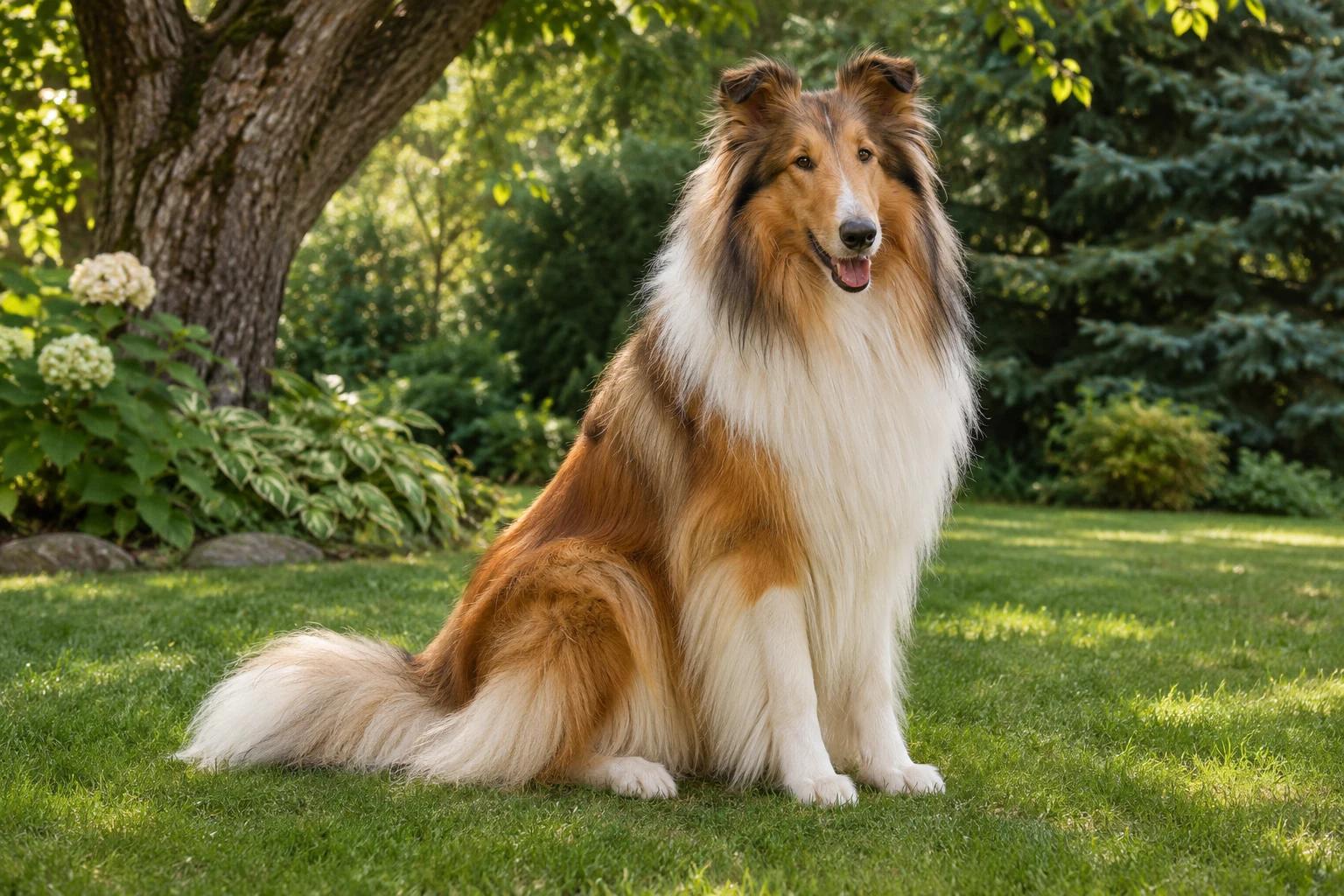
One U.S. standard, two coat varieties
In the AKC standard, Rough and Smooth are Collie varieties described together. The Smooth section applies the same standard apart from the coat's quantity and distribution. That is the U.S. registry context for this comparison; naming conventions elsewhere should not be assumed identical. Neither variety is the Border Collie, which has its own breed identity.
A photograph of a Rough and a Smooth side by side can make them seem more different than that shared standard suggests. Look past the silhouette and the coat labels become more useful. They describe a meaningful physical difference, without offering a shortcut to an individual dog's personality or compatibility with a household.
Short does not mean single-coated
The Rough coat has a straight, harsh outer layer over a soft, dense undercoat. Its fuller mane and frill, feathering and tail contribute to the familiar abundant outline. The Smooth coat is short, hard, dense and close-fitting, but it too has an abundant undercoat. Smooth therefore does not mean an absent underlayer hidden beneath the shorter surface.
The practical comparison begins there: the Rough presents more long coat to work through, while the Smooth still has a substantial coat to maintain. A shorter silhouette is not a promise of no loose hair or no grooming. The Collie Club of America identifies regular grooming as part of care for both varieties.
Plan around the coat in front of you
Before choosing a routine, have someone experienced show you the actual dog's coat rather than only a finished show photograph. For a Rough, include the fuller areas in that demonstration so you understand the work beyond a quick pass across the back. For a Smooth, ask to see how routine care reaches the undercoat without treating the skin roughly.
Set aside a comfortable place and enough unhurried time to learn. If you are comparing two prospective dogs, consider who will do that work and what help is available, rather than trying to declare one variety universally easy. Coat condition, the dog's comfort with handling and your own experience all affect the practical arrangement. The visible contrast is real; a workable care plan still belongs to an individual dog and an individual home.
Sources behind this article
Article source checked: October 20, 2026. Source checked 2026-10-20
Keep reading
Rough Collie temperament in everyday home life
Read article →