Chiweenie Training: Small-Dog Skills for Daily Life
Make Chiweenie training practical with doorway, carrier and everyday cooperation skills, plus thoughtful socialization and clear household cues.
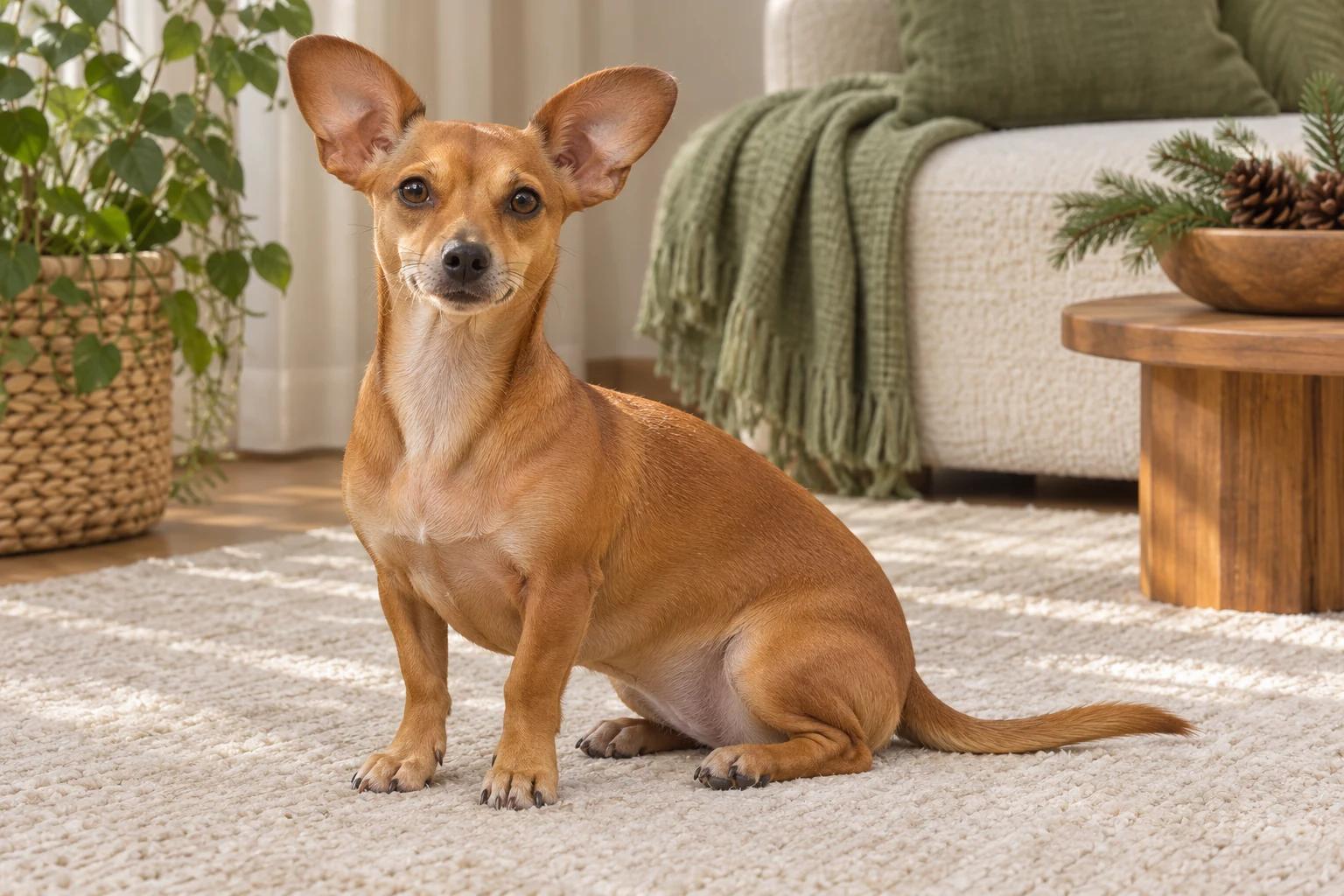
Chiweenie training should give a small dog more ways to participate in daily life, not simply more ways for a person to move it around. Coming when called, entering a carrier and waiting clear of a doorway are useful skills precisely because they reduce the need for repeated grabbing or improvisation. Start with one everyday difficulty and teach an alternative that both of you can recognize.
The Chiweenie profile describes this Chihuahua–Dachshund cross. Its name is useful background, but it does not tell you which training task your own dog will find easiest or which reward will hold its attention today.
Chiweenie training from the dog's viewpoint
The AKC describes the parent Chihuahua as alert and the Dachshund as bold and lively. These are descriptions of two parent breeds, not a recipe for a Chiweenie's behavior. Resist explaining every difficult moment as “the Chihuahua side” or “the Dachshund side.” You still need to work out what the dog is responding to.
Look around the area where you practice. Can the dog see your hand signal without someone looming over it? Is the floor clear? Is another pet walking through the lesson? A tiny training space can still be confusing if feet, chair legs and dangling bags keep moving through it.
The AKC's small-dog training guide emphasizes giving small dogs genuine learning opportunities and considering how human posture affects them. For a simple setup, sit comfortably beside a clear floor area and keep everything you need within reach. You do not need an elevated platform to make a lesson accessible.
Choose a task you will use this week
Suppose your Chiweenie stands directly beside the front door whenever you reach for your shoes. Instead of starting with a long stay, choose a nearby waiting place outside the door's swing. Practice approaching that place while the exterior door remains securely closed. Reward the dog for joining you there, then finish the exercise.
Once the location is familiar, add a small piece of the departure sequence: picking up a shoe, putting it down, then returning your attention to the dog. Build toward the real routine without introducing keys, coat, lead, visitors and an opening door all at once.
This is an original planning example, not a required sequence for every Chiweenie. Your first useful project might instead be coming away from the kitchen, moving to a resting mat or approaching the lead willingly. Choose the one that removes the most recurring confusion from your household.
Carrier practice is more than getting inside
A carrier can be part of a small dog's normal travel arrangements, but being able to place the dog inside is different from teaching participation. Put a suitable carrier where it cannot shift and let the dog investigate while its entrance is open. Begin without a departure deadline.
Break the goal into separate questions. Can the dog approach it? Enter? Rest briefly with you beside it? Remain comfortable while you touch the fastening? Each version is a different task. Work on the easier pieces before adding movement or travel, and follow the manufacturer's instructions for the carrier itself.
If your Chiweenie backs away, make the next attempt easier rather than arranging a chase. A reward-based trainer can help when the carrier has become a source of distress. The practical aim is a predictable travel routine, not winning an argument about who controls the bag.
Make Chiweenie obedience consistent across people
Agree on what common words mean. “Down” should not sometimes mean lie down and sometimes mean move off a person. A household note with the cue and the expected action can prevent a surprising amount of repetition.
Also decide which habits you want to encourage outside a formal session. If one person invites jumping for attention and another is frustrated by it, the dog is receiving mixed information. Pick an alternative greeting the whole household can support and practice before expecting it during excited reunions.
Keep the lesson small enough that you can notice success. A few clear attempts are more informative than a long session in which the dog wanders away and you keep repeating a word. When something is not working, ask whether you changed the location, added a distraction or forgot to make the goal obvious.
Chiweenie socialization does not require every greeting
For a small dog, an approaching person or dog can occupy much of the available space. Plan experiences where your Chiweenie can observe without being surrounded. The AKC's small-dog guidance distinguishes socialization from greeting every animal encountered; distance and controlled situations have a place in the process.
Ask a class instructor how they organize movement and any play. Do dogs wait in separate areas? Can a handler step out? Are greetings optional? A class should offer more than a roomful of dogs and the hope that everyone becomes friends.
Outside class, choose one manageable experience rather than several exciting stops in succession. Watching a quiet street from a comfortable distance may be a complete outing for that purpose. Record what the dog could handle, then use that observation to plan the next visit.
Address barking as a situation, not a nickname
If barking is the concern, write down what happens immediately before it. Is the dog watching the window, hearing the building entrance or reacting when someone reaches toward it? These are different teaching problems. A label such as “yappy” tells you little about which part of the environment to change.
For example, a resting place with less exposure to corridor traffic may be a useful management step while you seek help with the response itself. Do not rely on startling or punishing the dog into silence. Repeated distress, escalating reactions or handling difficulties deserve individualized professional guidance.
If behavior changes suddenly or touch appears uncomfortable, consult a veterinarian. The separate article on Chiweenie back pain and sudden weakness addresses that health question; it is not an obedience problem to work through. For broader ownership planning, use the breed-match quiz.
FAQ
How to train a Chiweenie that loses interest quickly?
Start with one useful action in a quiet setting and keep attempts brief. Notice which part becomes difficult instead of simply repeating the cue. Change the setup, choose an engaging reward and ask a reward-based trainer to observe if progress remains unclear.
Are Chiweenies too stubborn for obedience classes?
A crossbreed name cannot predict how a dog will learn. Look for a class that uses reward-based methods, allows space and adapts to the individual. Describe your dog's actual responses to the instructor rather than assuming a parent-breed label explains them.
Should I carry my Chiweenie instead of teaching recall?
Carrying may be necessary in some situations, but it does not teach the dog to come when called. Practice recall in a secure, manageable setting and retain appropriate lead control elsewhere. Treat transport, handling and recall as separate skills rather than substitutes for one another.
Sources behind this article
Article source checked: November 15, 2026. Source checked 2026-11-15
Keep reading

Affenpinscher Training: Build Useful Everyday Habits
Read article →