Chiweenie back pain and sudden weakness: when to call the vet
Put Dachshund ancestry in context, recognize possible spinal warning signs, and prepare for veterinary advice without diagnosing a Chiweenie or promising prevention.
Know why the back deserves attention
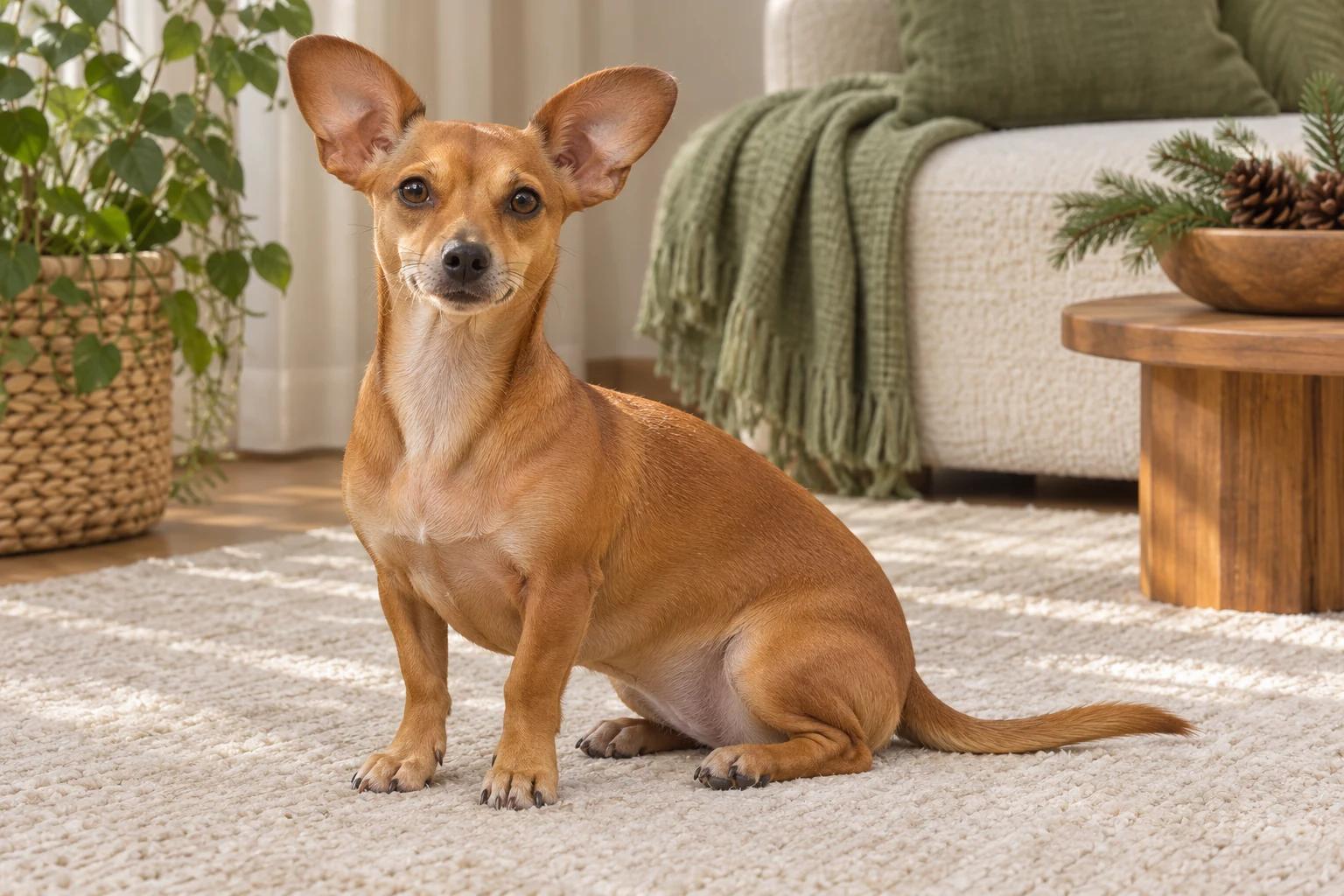
The Chiweenie brings together Chihuahua and Dachshund ancestry; Purina's breed guide describes the usual Dachshund parent as a Miniature. PDSA identifies Dachshunds among breeds prone to intervertebral disc disease, or IVDD. That parent-breed connection makes spinal warning signs worth understanding, but it does not establish a Chiweenie-specific risk percentage.
Intervertebral discs cushion the bones of the spine. PDSA explains that diseased discs can lose their normal resilience and that a slipped disc can press on the spinal cord, causing pain and neurological problems. A crossbreed label cannot diagnose that process, and a dog should not be assumed protected simply because its outline differs from a Dachshund's.
Treat a sudden change as a reason to call immediately
Possible signs include back pain, wobbliness, weak legs, difficulty rising and dragging the feet. PDSA advises contacting a veterinarian for symptoms of a slipped disc and calling immediately for pain or signs that develop suddenly. Do not wait for paralysis before asking for help. The veterinarian must determine the cause; other problems can also affect movement.
For example, if a previously steady Chiweenie suddenly struggles to stand, describe that change to the clinic now. Explain when it began and whether the dog seems painful. Do not repeatedly make the dog walk for comparison, manipulate its back or try an online exercise to decide whether the problem is serious. Ask the team how to move and transport it safely.
Keep an equipment plan separate from a treatment plan
A ramp or a rearranged room is not a diagnosis, treatment or guarantee against disc disease. If your dog has been assessed, ask for instructions specific to its condition, including permitted activity and signs that require another urgent call. Do not borrow a recovery schedule from another Chiweenie's story.
Keep the clinic's instructions available to everyone providing care, and tell the veterinarian about changes rather than adjusting the plan independently. An owner can contribute a clear history without trying to grade the injury at home. The practical purpose of knowing the Dachshund connection is earlier recognition and better communication, not predicting that every Chiweenie will have a spinal problem.
Sources behind this article
Article source checked: October 20, 2026. Source checked 2026-10-20
Keep reading
Chiweenie Training: Small-Dog Skills for Daily Life
Read article →