Chesapeake Bay Retriever Training: Everyday Skills
Build Chesapeake Bay Retriever training around useful skills, thoughtful retrieving rewards, walking practice and manageable socialization.
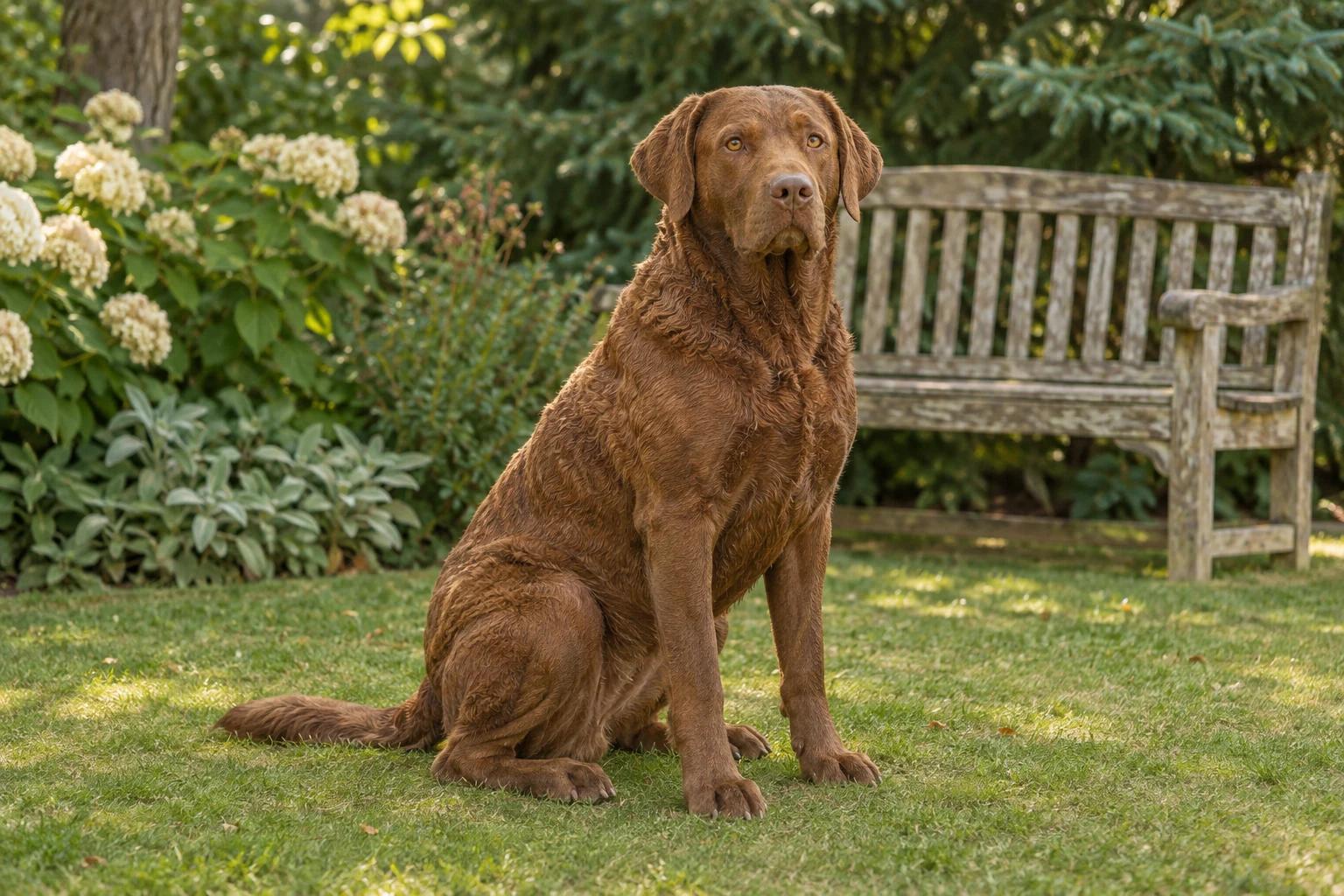
Explore the
Chesapeake Bay Retriever
Background, care, and everyday considerations.
View breed profile →Chesapeake Bay Retriever training works best when enthusiasm has a clear job. Returning a toy, moving away from a doorway and resting while people talk are different skills, even if your dog learns quickly. Build them separately before expecting a complete set of manners in the most exciting place you visit.
The Chesapeake Bay Retriever profile describes a responsive learner with substantial activity and mental-engagement needs. That is a promising starting point for someone who enjoys teaching. It is not a reason to postpone lessons until the dog is large enough to make an unplanned dash difficult to manage.
Chesapeake Bay Retriever training starts with a useful target
UKC describes the Chesapeake as an independent thinker and a willing worker. Those characteristics can coexist: the dog may be interested in the task without immediately understanding your preferred way to complete it. UKC Chesapeake Bay Retriever standard.
Choose an observable result rather than a broad ambition such as “be obedient.” For example, you want the dog to stand beside you while you attach the lead. That means practising the approach, the pause and the attachment, not correcting everything that happens during a rushed departure.
Prepare the equipment before calling the dog. Put rewards where you can reach them, remove unnecessary distractions and decide what counts as success. A short, clear lesson is easier to repeat than one that changes halfway through because you remembered another rule.
Use retrieving thoughtfully as a reward
VCA identifies food and retrieving as useful possibilities in reward-based training for Chesapeakes. Notice what your dog enjoys in the current setting rather than choosing a reward solely because it appears on a breed list. VCA Chesapeake Bay Retriever guide.
If a retrieve is rewarding, the opportunity to play can follow a simple response the dog already understands. Ask for that response in a quiet space, acknowledge it, then begin the game. Keep the sequence obvious so the dog can connect the useful choice with what happens next.
Separate the parts of retrieving when something goes wrong. Running toward a toy, picking it up, returning and releasing are not one indivisible skill. If your dog happily collects the toy but stays away, throwing it farther does not solve the missing return. Reduce the distance and work on the part that needs explanation.
Avoid turning a dropped household object into a chase around the room. Store tempting items out of reach while you teach appropriate exchanges with toys. If taking items has become tense or the dog guards them, seek qualified help rather than reaching into its mouth to prove a point.
Teach the transition out of a game
A useful Chesapeake Bay Retriever obedience plan includes what happens after exciting activity. Decide on a consistent finish: equipment goes away, the dog follows you to a familiar place and the next activity is quiet. Practise that transition before the game becomes difficult to interrupt.
Do not wait until you are late for work to introduce the ending. During a short practice, pause while the dog is still engaged and make the next step easy. A return to your side can earn a reward before you move on together.
Keep the finish distinct from punishment. You are explaining the household routine, not telling the dog that enthusiasm was wrong. If everyone uses a different phrase and one person restarts the game whenever the dog asks, the ending will remain difficult to understand.
Make walking a lesson in connection
When learning how to train a Chesapeake Bay Retriever, give everyday lead handling as much attention as the impressive retrieve. Practise a few steps with the dog near you somewhere quiet. Reward the position you want before expecting it through a crowded entrance or beside other dogs.
Add one difficulty at a time. A familiar path at a quieter hour may be a better next step than a new park full of flying balls. If the dog cannot respond, increase distance from the distraction or return to an easier setting. Repeating a cue more loudly does not clarify which part is missing.
Plan opportunities to investigate as well as stretches of walking together. You can distinguish a relaxed sniffing pause from a section where you need the dog closer. Clear changes of activity are more understandable than asking for constant attention and then allowing pulling whenever you are distracted.
Chesapeake Bay Retriever socialization is not a greeting contest
Build familiarity with the situations your dog will actually encounter: people passing, vehicles at a distance, grooming equipment and different ordinary surfaces. The goal is not to collect the largest number of introductions. It is to help the dog experience manageable situations and remain able to engage with you.
An outing can succeed without anyone touching the dog. Watch from enough distance that it can observe, then move away before the experience becomes too much. Ask visitors to allow space rather than crowding around because they recognise the breed.
Keep a practical list of settings, not just people. A dog that knows neighbours in the garden may still need help with a busy building entrance. A dog comfortable on a familiar walk may find a group training class distracting. Start with what the dog can manage and build from there.
Choose support that matches your goal
For companion manners, look for a trainer who can explain rewarded learning, handling and progression clearly. If you want to explore retrieving activities, ask whether the instructor works with novice handlers and can teach the component skills without rushing into difficult field situations.
Observe a class before committing when possible. Are dogs given space? Can an exercise be made easier? Does the instructor explain what to practise at home? You want a plan that you can repeat, not a performance that works only in the instructor's hands.
Appearance is a separate subject. Our Chesapeake and Labrador coat comparison explains why a brown coat is not a training or identity shortcut. Use the breed match quiz to think about your interest in daily practice alongside exercise and care.
FAQ
Are Chesapeake Bay Retrievers capable learners?
The breed profile describes a responsive learner, and breed references pair willingness to work with independence. Plan clear lessons and worthwhile rewards rather than assuming that learning ability means the dog already understands household expectations.
Can retrieving be used during training?
Yes, if the individual Chesapeake enjoys it. A short retrieving game can reward a response the dog understands. Teach collecting, returning and releasing separately when necessary instead of assuming enthusiasm supplies every part of the exercise.
What should a companion Chesapeake learn first?
Prioritise useful daily skills: responding to you, cooperating with lead attachment, walking together and moving from activity to rest. Choose an easy setting for each skill before adding busy entrances, other dogs or exciting toys.
Sources behind this article
Article source checked: November 15, 2026. Source checked 2026-11-15
Keep reading

Affenpinscher Training: Build Useful Everyday Habits
Read article →