Chesapeake or chocolate Lab? Look beyond the brown coat
Compare Chesapeake Bay Retriever and Labrador coat standards, including texture, undercoat and allowed waves, before drawing conclusions about the dog.
Explore the
Chesapeake Bay Retriever
Background, care, and everyday considerations.
View breed profile →Brown is a color, not a breed identification
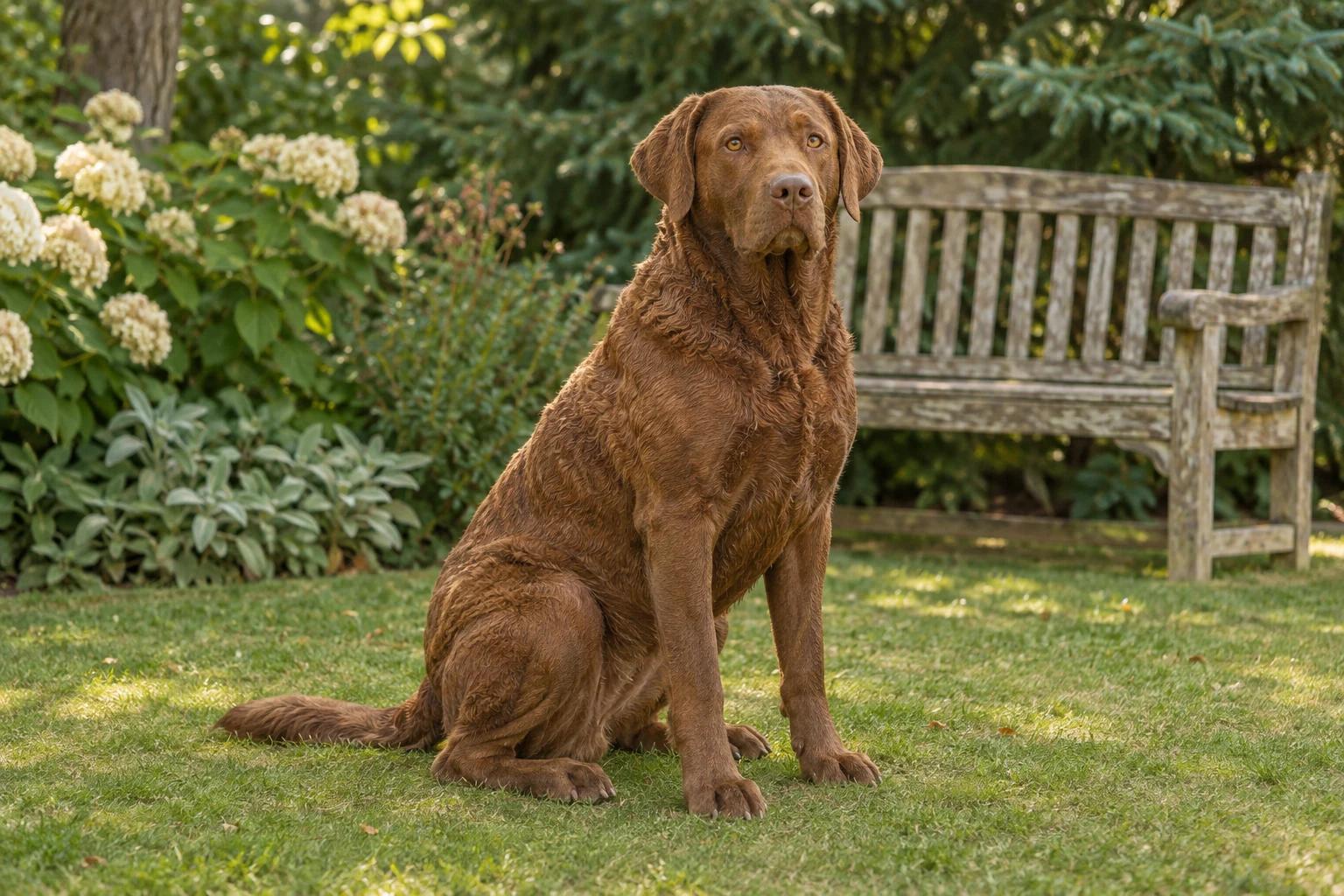
A brown retriever in a photograph may prompt an immediate guess: chocolate Labrador. Chesapeake Bay Retrievers can also be brown, and the resemblance can hide useful differences. Their breed standards describe coats suited to retrieving work in demanding conditions, but the descriptions are not identical. Looking at texture is more informative than choosing a breed name from color alone.
The Chesapeake standard also allows sedge and deadgrass shades. The Labrador standard names black, yellow and chocolate. These are conformation descriptions used to evaluate dogs against their respective standards; they are not a reliable ancestry test for an unfamiliar dog, especially one whose background is unknown.
Compare the layers and the waves
The Chesapeake standard calls for a short, thick coat with a dense, fine, woolly undercoat. It describes a harsh outer coat with natural oil and a tendency to wave over the shoulders, neck, back and loins, while the face and legs have very short, straight hair. A coat curling all over is not what that standard describes.
The Labrador standard describes a short, straight, very dense outer coat with a soft, weather-resistant undercoat. Crucially, it permits a slight wave down the back. The familiar shortcut that a wave means Chesapeake and a straight coat means Labrador therefore goes too far. You need more than one visible feature, and even a detailed photograph cannot replace reliable background information.
Use the comparison to ask better ownership questions
For someone choosing between these retrievers, the coat comparison corrects two expectations: a Chessie is not simply a Labrador color option, and a Labrador is not a thin, single-coated alternative. Both standards describe an undercoat. Meet dogs with permission and ask caregivers what brushing, loose hair and cleanup after outdoor activity look like in their actual homes.
Do not turn a coat preference into a conclusion about temperament or suitability with children, visitors or other animals. Ask about those matters separately and observe the individual. For example, liking the Chesapeake’s textured coat may justify learning more about the breed, but it cannot establish that a particular dog will enjoy the busy social life you imagine. Start with the visible distinction, then give behavior, training and everyday care their own attention before choosing.
Sources behind this article
Article source checked: October 20, 2026. Source checked 2026-10-20
Keep reading
Chesapeake Bay Retriever Training: Everyday Skills
Read article →