Chartreux cat size: female and male weights and body shape
Chartreux cat size explained with current male and female weights, structural features, measurement guidance and realistic kitten-size expectations.
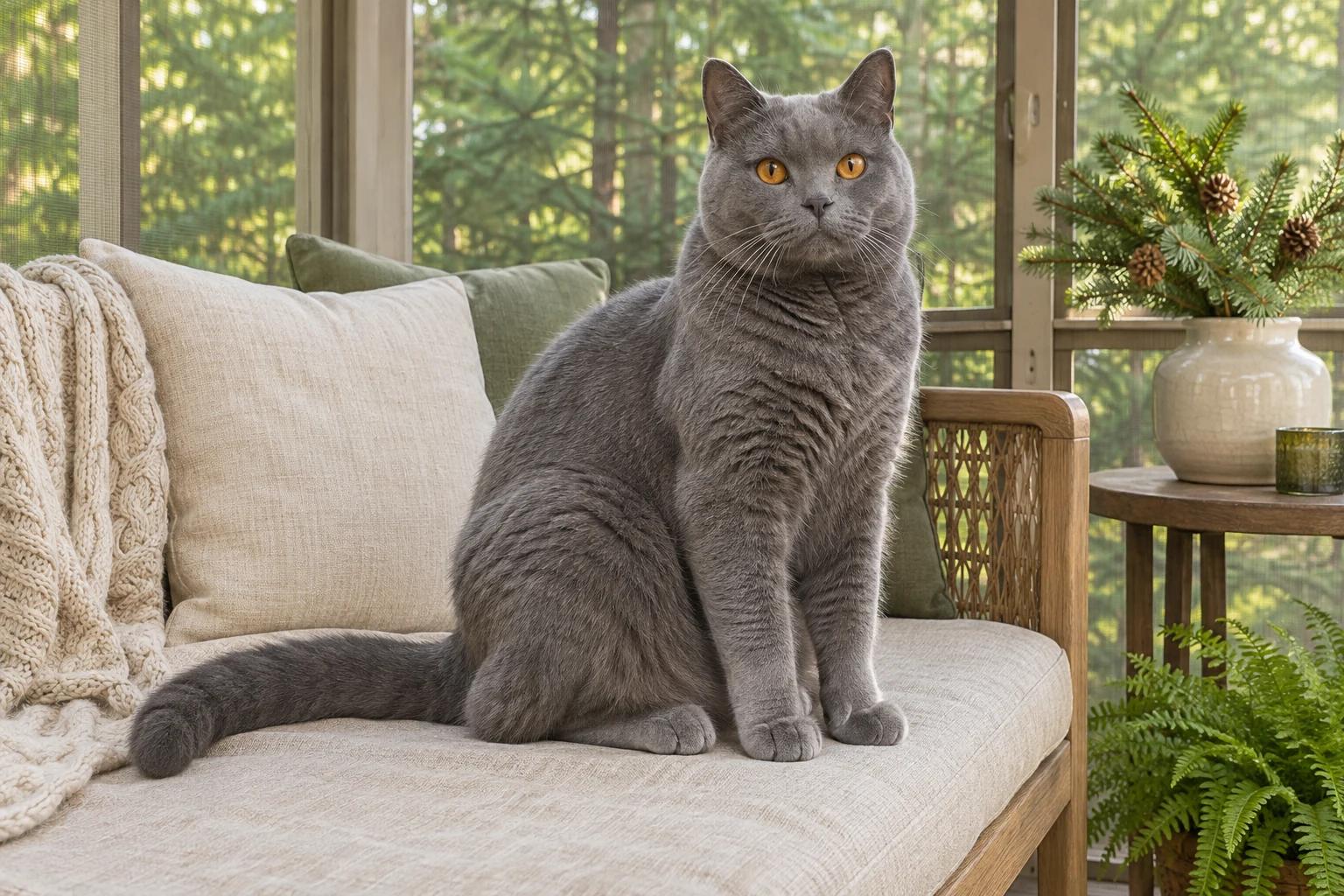
Chartreux cat size needs a male–female distinction: the current adult reference is 6–9 pounds for females and 10–14 pounds for males. Those figures explain more than the overall 6–14-pound interval by itself. They describe the Chartreux breed reference, not the final size guaranteed for a particular kitten.
Chartreux cat size: read the sex-qualified numbers
The female interval converts to approximately 2.7–4.1 kilograms, while the male interval is approximately 4.5–6.4 kilograms. Keep the sex and units attached when comparing records. A four-kilogram female and a six-kilogram male are not equivalent examples simply because both have been described as adult Chartreux.
The midpoint of the female range is 7.5 pounds; the midpoint of the male range is 12 pounds. Neither is a measured population average. These midpoints are arithmetic summaries of the displayed reference intervals, not recommended weights or feeding goals.
This matters when asking how big do Chartreux cats get. Quoting fourteen pounds alone makes the upper male reference sound like the expected size of every adult. Quoting six pounds alone has the opposite effect. Use both qualified ranges, then bring the discussion back to the individual animal. For questions about the weight appropriate to your own cat, ask its veterinarian rather than trying to move it toward the largest number on a breed page.
The body has contrasting proportions
CFA's structural description emphasizes a medium-long body with broad shoulders, a deep chest and substantial musculature. The legs are comparatively fine-boned, so the limbs can look more delicate than the torso above them. This contrast is part of the breed's outline, not evidence that the animal is simply a rounded ball of fur.
The head adds another dimension. It is broad with a smaller, tapering muzzle; mature males can develop fuller jowls. A portrait dominated by those cheeks may create a different impression of size from a side view of the same cat's body.
Consider those features together rather than choosing one as a substitute for all the others. A broad head does not directly tell you the length of the torso, and a deep chest does not describe the thickness of every limb. The useful visual picture is an animal with specific proportions, not one that should be enlarged uniformly in every direction. Structure and overall weight are related aspects of size, but they are not interchangeable descriptions.
A kitten's weight is not a calendar
Research by DiGangi and colleagues examined how well body weight could estimate kitten age. A simple weight-based rule worked better for younger kittens than for older ones in the study. The investigators concluded that other information should be considered when estimating age beyond the early weeks. This was not a Chartreux-specific adult-size prediction study.
For someone meeting a young Chartreux, the distinction is important: knowing a weight does not automatically establish a precise age, and neither number alone supplies a final adult measurement. Do not turn a general kitten rule into a guaranteed growth schedule for this breed.
A documented birth date is different from an age estimate. If the date is known, there is no reason to replace it with an age guessed from the scales. If it is uncertain, a veterinarian can interpret the available developmental information. The study's value here is its warning against overconfidence in one measurement, not a formula owners should use to decide whether a kitten is progressing correctly.
Weigh the cat, not the carrier and contents
Exclusively Cats Veterinary Hospital explains that an animal weighed in a carrier needs the carrier's weight removed from the result. Either zero the scale with the empty carrier in place or subtract its weight afterward. Recheck the empty setup each time because blankets and other contents may have changed.
For example, if a suitable scale reads 13.2 pounds with a cat and carrier, and the empty carrier with the same bedding weighs 3.2 pounds, the cat's measured weight is ten pounds. Treating the combined reading as Chartreux cat weight would introduce a substantial error.
Use an appropriate scale and a method the cat can tolerate comfortably; your veterinary team can help if home weighing is impractical. The hospital also cautions against assuming that subtracting two readings from a bathroom scale is sufficiently precise for a small animal. Do not keep restraining an unwilling cat to chase a display number. A reliable measurement obtained with professional help is more useful than an improvised result that looks precise but is not.
Keep height, length and weight in separate columns
Chartreux cat height refers to a vertical dimension, whereas pounds and kilograms describe mass. There is no unit conversion that turns a twelve-pound measurement into inches. Similarly, a nose-to-tail measurement cannot be substituted for the usable length of the body without saying what was measured.
If you are comparing two descriptions, check that they refer to the same thing before deciding that the cats differ greatly. “Twelve” could be a weight, a length, an age or a number copied without its unit. That is especially easy to miss when moving between an adoption listing and a veterinary record. Clear labels prevent a simple transcription problem from becoming an invented breed fact.
For everyday observations rather than size comparisons, see Chartreux behaviour changes. The cat match quiz puts size alongside other ownership preferences.
Frequently asked questions
How big do Chartreux cats get?
The current adult Chartreux weight reference is 6–9 pounds for females and 10–14 pounds for males. In kilograms, those intervals are approximately 2.7–4.1 and 4.5–6.4 respectively.
Is fourteen pounds the correct weight for every Chartreux?
Fourteen pounds is the upper end of the current male Chartreux weight reference, not a universal target. Your veterinarian can assess the appropriate weight for your individual cat.
Is a seven-and-a-half-pound female the breed average?
Seven and a half pounds is the midpoint of the displayed female Chartreux weight interval, not necessarily the breed average. Establishing a population average would require measurements from an appropriate sample of cats.
Sources behind this article
- CFA Chartreux breed and structural standard ↗
- DiGangi and colleagues: kitten weight and age ↗
- Exclusively Cats Veterinary Hospital: weighing cats ↗
Article source checked: November 16, 2026. Source checked 2026-11-16
Keep reading

American Bobtail cat temperament
Read article →