Noticing changes in a quiet Chartreux’s everyday behaviour
Notice changes in your Chartreux’s ordinary habits with a simple observation record, so quiet behaviour does not replace a conversation with your vet.
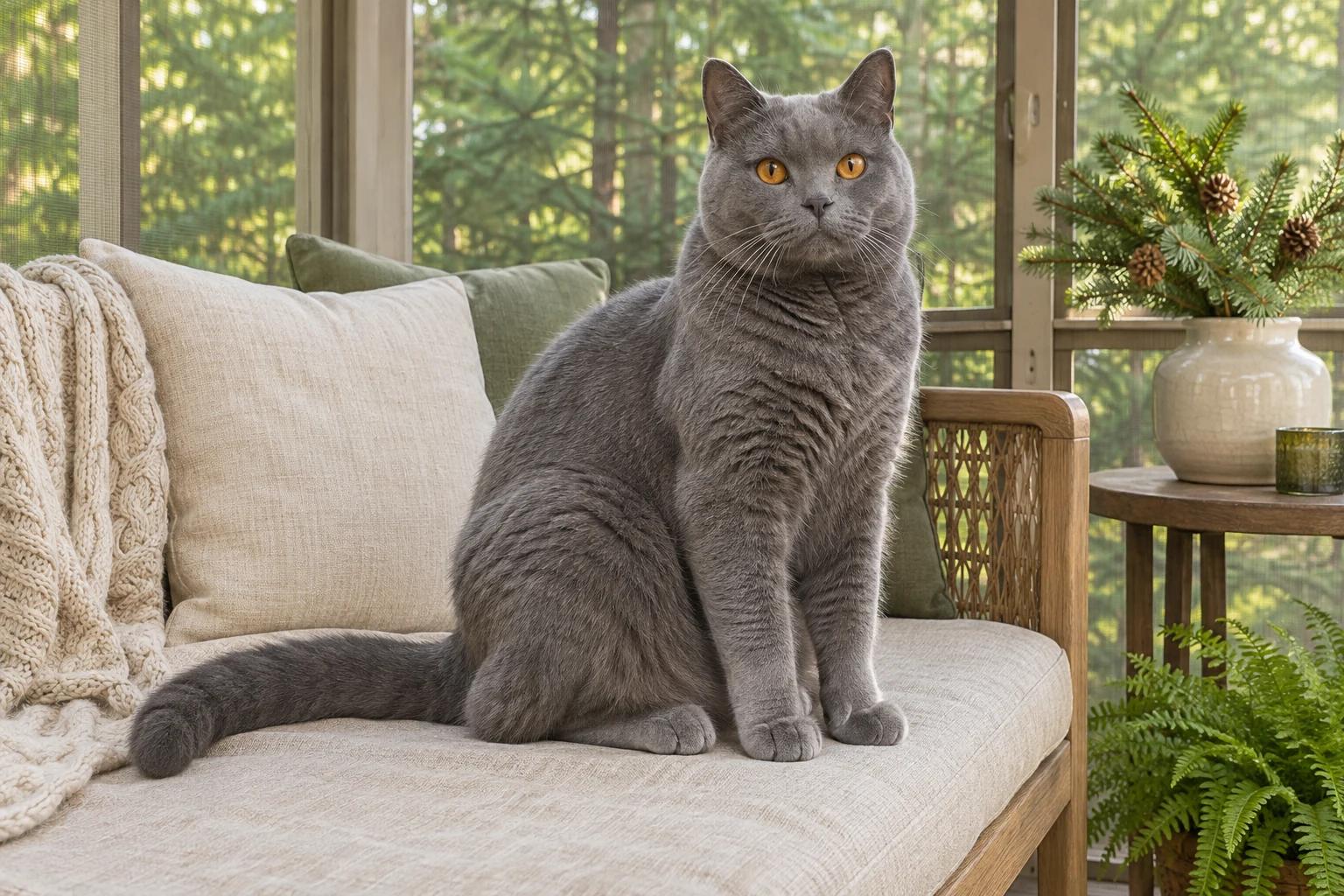
Learn what quiet looks like for this cat
CFA describes many Chartreux as having a small, infrequently used voice and communicating in other ways. That makes volume an unreliable shortcut for judging wellbeing. A quiet cat may still be seeking play, choosing a different resting place or changing the way it approaches food. Begin with your own cat’s ordinary pattern rather than an idea of how the breed should behave.
Pick a few moments you already share, such as the morning meal or evening return home. Note what the cat normally chooses at those times. This should fit ordinary care rather than become constant surveillance. If several people live with the cat, compare observations so one person’s familiar routine does not hide a change another person has noticed.
Describe the change before explaining it
FelineVMA’s guidance on veterinary visits highlights changes in eating, litter use, sleep and other behaviour as reasons to contact the vet. Use specific descriptions in your notes: left part of the usual meal, stopped using a familiar resting place or began waking at a different time. Avoid translating these directly into a medical label.
A simple entry can contain the date, what differed and any recent household change. Record what you know and leave room for uncertainty. If the bowl was shared, for example, you may not know how much this Chartreux ate. Tell the vet that limitation instead of turning an estimate into a measurement.
Share observations rather than waiting for a pattern
Contact your veterinary team about a concerning change; do not delay asking for advice until a notebook is complete. FelineVMA emphasises that even subtle departures from usual habits can matter. Explain what prompted the call and ask how soon the cat should be seen. The practice can give guidance based on the individual circumstances.
If a short video would help explain an unusual movement or behaviour, take one only when you can do so without provoking or repeating it. Do not make the cat climb, jump or tolerate handling to demonstrate a concern. Bring existing records and any care instructions to the conversation so the team can interpret your observations in context.
Use notes to support a plan, not a home diagnosis
After the conversation, write down what the veterinary team wants you to watch and when to report back. Distinguish those instructions from your original observations. Avoid changing food, medication or activity based on a breed story or another owner’s experience; the point of the record is to help the professional understand this cat.
Keep the approach light enough to maintain: a few useful notes beat a detailed chart abandoned after two days. If no change concerns you, continue ordinary care and the checkups agreed with your vet. A Chartreux’s quiet manner can be part of its individuality, but it should never become a reason to dismiss a new difference or wait for a loud complaint.
Sources behind this article
Article source checked: October 22, 2026. Source checked 2026-10-22
Keep reading
Persian eye care: what to notice before reaching for a wipe
Read article →