British Longhair cat temperament
Understand British Longhair cat temperament through nearby companionship, voluntary contact, confidence-building and normal scratching behavior.
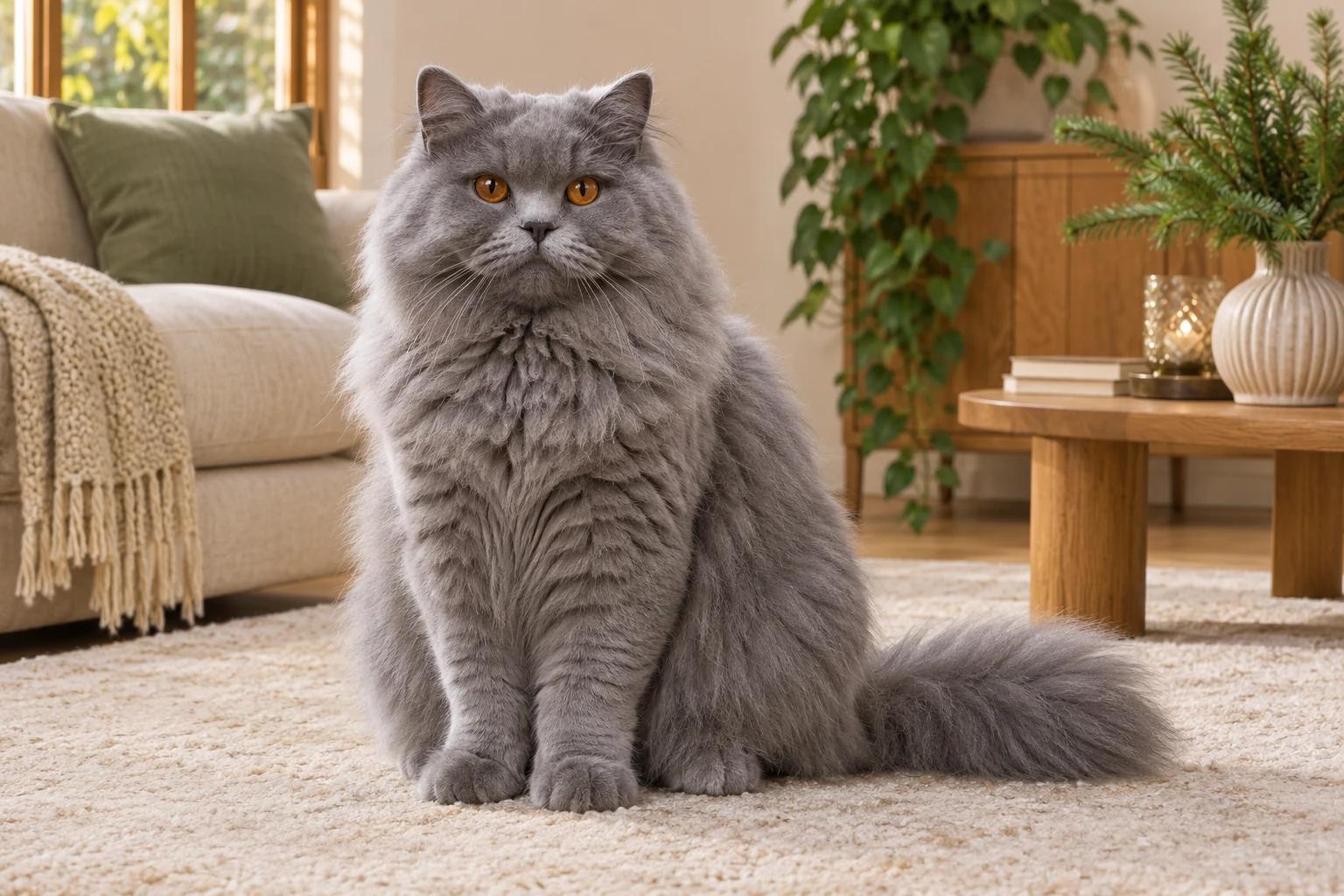
British Longhair cat temperament is not a score that can be read from the cat's weight, sex or photograph. The British Longhair profile gives a breed overview; getting to know a particular companion involves separating its physical description from what it actually chooses to do. A male and a female can fall into different adult weight ranges without those measurements explaining their personalities.
British Longhair cat temperament: company beside you
TICA's British Longhair account describes an initially reserved companion that can become affectionate with familiar people. Nearby company is an important theme: spending time alongside a person need not mean occupying their lap. The account also describes occasional lively bursts amid quieter periods.
For a prospective owner, this is a useful alternative to demanding constant physical closeness. A cat that settles beside your chair is participating in the household even if it does not climb onto your knees. Likewise, a sudden interest in a toy does not contradict an otherwise calm pattern of life.
Think about whether that form of companionship appeals to you. If the pleasure you want is sharing a room, watching a brief game and enjoying contact when offered, the description may resonate. If your imagined companion must remain in your arms whenever you choose, a breed label cannot promise that arrangement. British Longhair cat personality should leave room for the animal's own way of being present, rather than requiring it to perform an owner's preferred picture of affection.
A sniff and an invitation to touch are different
RSPCA NSW's interaction guide distinguishes investigating a hand from inviting petting. Let the cat approach and offer a relaxed hand. A sniff can simply be information-gathering; rubbing against the hand provides a clearer invitation to begin gentle contact.
Pause during petting rather than assuming the first approach grants unlimited handling. If the cat moves away or turns its attention elsewhere, let the interaction finish. If it leans or rubs into the offered hand again, that gives you information about whether more contact is welcome.
This is a practical way to learn British Longhair cat behavior without turning every encounter into a test of friendliness. You do not have to keep a hand moving simply because the cat initially approached. Nor should you follow it around the room to complete a cuddle it has already left. The useful skill is noticing the animal's current choice. A short interaction that ends voluntarily is a complete social exchange, not a failed attempt at a longer one.
Give a hesitant newcomer something easier than a greeting
Cats Protection's shy-cat guidance recommends calm, patient company and places to retreat. Sitting quietly while reading can let a hesitant cat experience a person without being the focus of constant attention. Do not pursue it into a hiding place or require visitors to retrieve it for introductions.
As confidence develops, a gently moved fishing-rod toy can offer interaction at a little distance. This differs from putting a hand close to the cat and expecting immediate touch. The activity gives it a choice about participation while the person remains predictable.
For a British Longhair arriving in a new home, avoid making the first afternoon an audition. The newcomer does not need to prove the breed description by approaching every visitor. Start with a manageable setting and allow familiarity to develop. If you need help with persistent fear, consult your veterinarian or an appropriately qualified behavior professional. Patience here is an active decision to reduce pressure, not a requirement to ignore a cat that needs support or to wait indefinitely without advice.
Scratching is an ordinary need, not a personality defect
FelineVMA's positive-habits guide explains that scratching is normal feline behavior and recommends both upright and horizontal options. A sturdy post or scratching surface near a favorite resting place can be useful because cats often scratch after waking. The material and orientation should suit the individual.
A British Longhair's reputation as a calm companion does not make scratching disappear. Instead of interpreting it as spite or a contradiction of the breed, provide an appropriate place for the behavior. A tall post that rocks under pressure and a stable post present very different opportunities, even if both are sold under the same product name.
Offer choices and reward use of the suitable surface. Do not punish the cat for having the underlying need. For a cat already favoring a particular location, placing an acceptable scratcher there is more relevant than hiding every scratching option in an unused corner. The aim is a usable alternative where the behavior occurs, not simply a decorative object that satisfies a shopping checklist.
Body measurements cannot answer a social question
Among British Longhair cat characteristics, the current adult weight references are 8–11 pounds for females and 10–16 pounds for males. These are physical descriptions. They do not establish which adult will approach first, which one has previously lived with you, or which animal has learned a particular spoken cue.
For example, an eleven-pound female and an eleven-pound male both fit their respective references. The identical number does not make them identical companions. Conversely, different numbers do not prove that their personalities are opposites. Use a scale to answer a weight question and an actual encounter to begin learning about the individual.
Professional coat-care arrangements have their own considerations, covered in the British Longhair groomer-questions guide. The cat quiz can help clarify what you want from living with a cat without assigning a personality to one you have not met.
FAQ
Does sex determine which adult will suit me?
A British Longhair’s sex qualifies adult weight references, not personality predictions or suitability for you.
Can two British Longhairs of the same weight behave differently?
British Longhairs of equal weight can differ in experience, familiarity with your home or previously learned cues.
Is a photograph enough to evaluate temperament?
A British Longhair photograph records an instant of appearance, not the animal's experience or its behavior across ordinary situations.
Sources behind this article
Article source checked: November 16, 2026. Source checked 2026-11-16
Keep reading
British Longhair cat size
Read article →