Belgian Tervuren training: building useful everyday skills
Build Belgian Tervuren training around clear cues, practical handling, movement and rewarding practice that fits everyday life.
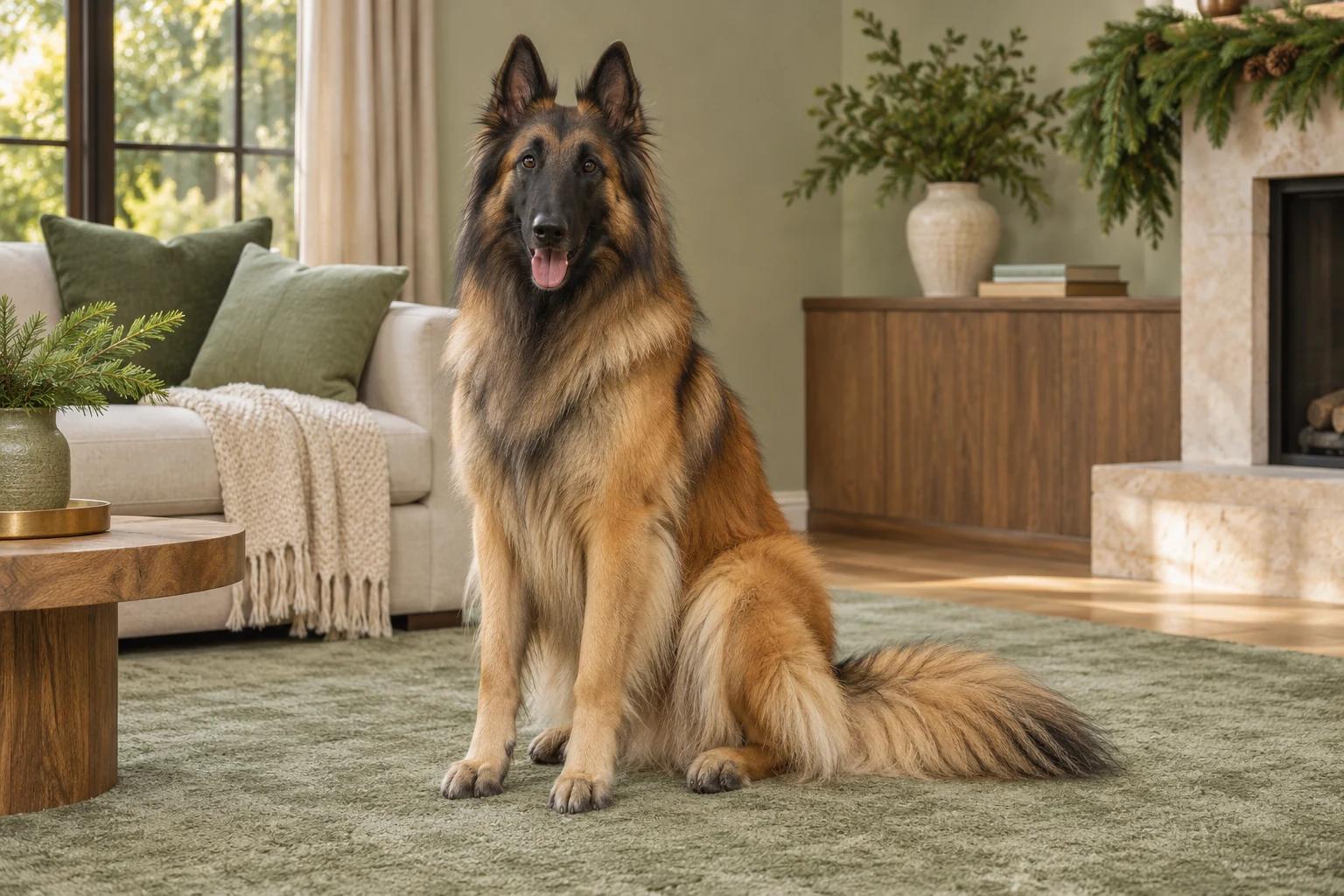
Belgian Tervuren training works best as a collection of useful skills, not a contest to see how many commands you can add. A dog that can move with you, pause when asked and participate in everyday handling has learned something valuable. An impressive trick list is optional.
The Belgian Tervuren profile describes a responsive learner with high activity and mental-engagement needs. That combination makes training part of daily ownership rather than an occasional repair job. Individual dogs vary, so begin with what your dog understands today and build from there.
Belgian Tervuren training starts with a practical syllabus
The American Belgian Tervuren Club's flyer places early household learning and familiarity with handling alongside later formal obedience. Use that distinction to build two lists: skills you need now and activities you might enjoy later.
Your first list might include approaching for a lead, moving to a resting place, turning with you on a walk and standing briefly for brushing. The second could include a sport or more precise obedience exercises. Keeping them separate stops ambitious goals from crowding out the tasks that make ordinary days run smoothly.
For each skill, write one observable result. “Walk beside me for this short section” is clearer than “behave.” “Stand while I touch the brush to the shoulder” is clearer than “accept grooming.” These descriptions help you notice progress and explain the task to another person.
Teach movement before expecting polished walks
Rather than starting with a long walk full of corrections, practise small pieces of movement in a manageable space. Choose a clear cue for moving together, reward a few successful steps, then release the dog to another permitted activity. You are teaching a pattern that can later travel with you.
A turn can be its own lesson. Begin where you have room to make a gentle change of direction. Let the dog discover that staying connected to your movement leads to a reward. Add a busier setting only after the familiar version makes sense.
The goal is not to keep the dog staring at you for an entire outing. A walk can include sniffing and exploration as well as short sections of coordinated movement. Decide which section you are asking for and make the transition understandable.
Give each cue a distinct job
If one word means hurry up, come closer, stop sniffing and leave the gate, its meaning becomes difficult to follow. Choose a small vocabulary that everyone can use consistently. A cue should identify the action you want, not merely announce that you dislike the current action.
When a response fails, check the setting before repeating the word. Is the dog facing away? Has another dog just appeared? Are you asking for a longer performance than you practised? Make the next attempt easier enough to teach, rather than louder enough to express frustration.
Make handling a skill with a beginning and an end
A double coat needs regular care, so handling deserves a place in Belgian Tervuren obedience work. Arrange a stable surface or nonslip floor space, gather the tools first and keep initial practice simple. The dog should not have to learn stillness while you search for a missing comb.
Try one small component at a time: standing in the chosen place, a brief touch, seeing the brush or a gentle pass through an easy area. Reward participation and end the exercise clearly. Later, those pieces can become a more complete grooming routine.
Ask a groomer to show you the appropriate technique before working through difficult coat areas. If touching or brushing seems painful, talk with your veterinarian rather than treating the response as a training problem. A lesson should not require the dog to endure discomfort to prove cooperation.
Practise attention around movement thoughtfully
VCA's breed overview notes the relevance of basic manners and managing herding behavior toward people. Apply that background by planning what you want the dog to do when movement attracts its attention.
For example, watching a distant jogger and then returning attention to you can be a separate exercise from walking past one on a narrow path. Start with enough space to make the task workable. Use a lead and a suitable location; do not create a chase opportunity to test the lesson.
If the dog cannot engage with you, change the distance or setting. That information helps you choose the next practice step. It does not mean you must complete the original plan at any cost. A qualified reward-based trainer can help you design exercises around situations you encounter regularly.
Keep records that improve the next session
When considering how to train a Belgian Tervuren, a short record can be more useful than a long list of commands. Note the task, setting and result. “Stood for three brush passes in the kitchen” gives tomorrow's practice a starting point.
Record changes separately. If you make the exercise longer, add a new person and move outdoors at the same time, it becomes hard to identify what caused confusion. Change one important feature, observe the result and adjust from there.
You can also record what the dog found rewarding. A reward needs to matter in that particular situation. The option that works during quiet indoor practice may not hold the same interest outside. Notice the response instead of assuming that one choice should work everywhere.
Find instruction that fits your goals
Belgian shepherd training is a broad search term covering different dogs, settings and ambitions. Before joining a class, explain the everyday skills you want and ask how the instructor handles distraction, uncertainty and different learning speeds.
Look for a setting where you can ask questions and practise at a workable level. If your eventual interest is a sport, learn the foundation exercises before rushing toward a complete performance. Training can be enjoyable without every session becoming a competition rehearsal.
The dog breed quiz can help prospective owners assess how much ongoing teaching they want in their lives. For a separate look at appearance, read why Tervuren coats can look darker with age. Training progress, unlike coat appearance, is something you build together through repeated, understandable experiences.
FAQ
Are Belgian Tervuren easy to train?
Belgian Tervuren are generally responsive learners, but they still need clear teaching and practice in different settings. A high training rating does not supply manners automatically. Start with useful, manageable skills and progress according to the individual dog.
What should I teach first?
Begin with skills needed in daily life: approaching for equipment, moving with you, settling in a chosen place and participating in gentle handling. Define each task clearly so you can reward the action you actually want.
How do I handle distraction during training?
Reduce the difficulty by increasing distance, shortening the task or choosing a quieter setting. Repeating a cue does not explain it better. Work at a level where the dog can participate, then add challenges gradually.
Does Belgian Tervuren training have to involve a sport?
No. Useful household skills and enjoyable learning can form a meaningful training routine. A sport is an optional additional interest, not a requirement to compete. Choose activities that suit the individual dog and your available support.
Sources behind this article
Article source checked: November 14, 2026. Source checked 2026-11-14
Keep reading

Affenpinscher Training: Build Useful Everyday Habits
Read article →