Why a Belgian Tervuren can look darker as it matures
Black-tipped hairs create the Tervuren’s overlay, and its AKC standard accounts for age and sex. A puppy photograph is not a fixed adult color forecast.
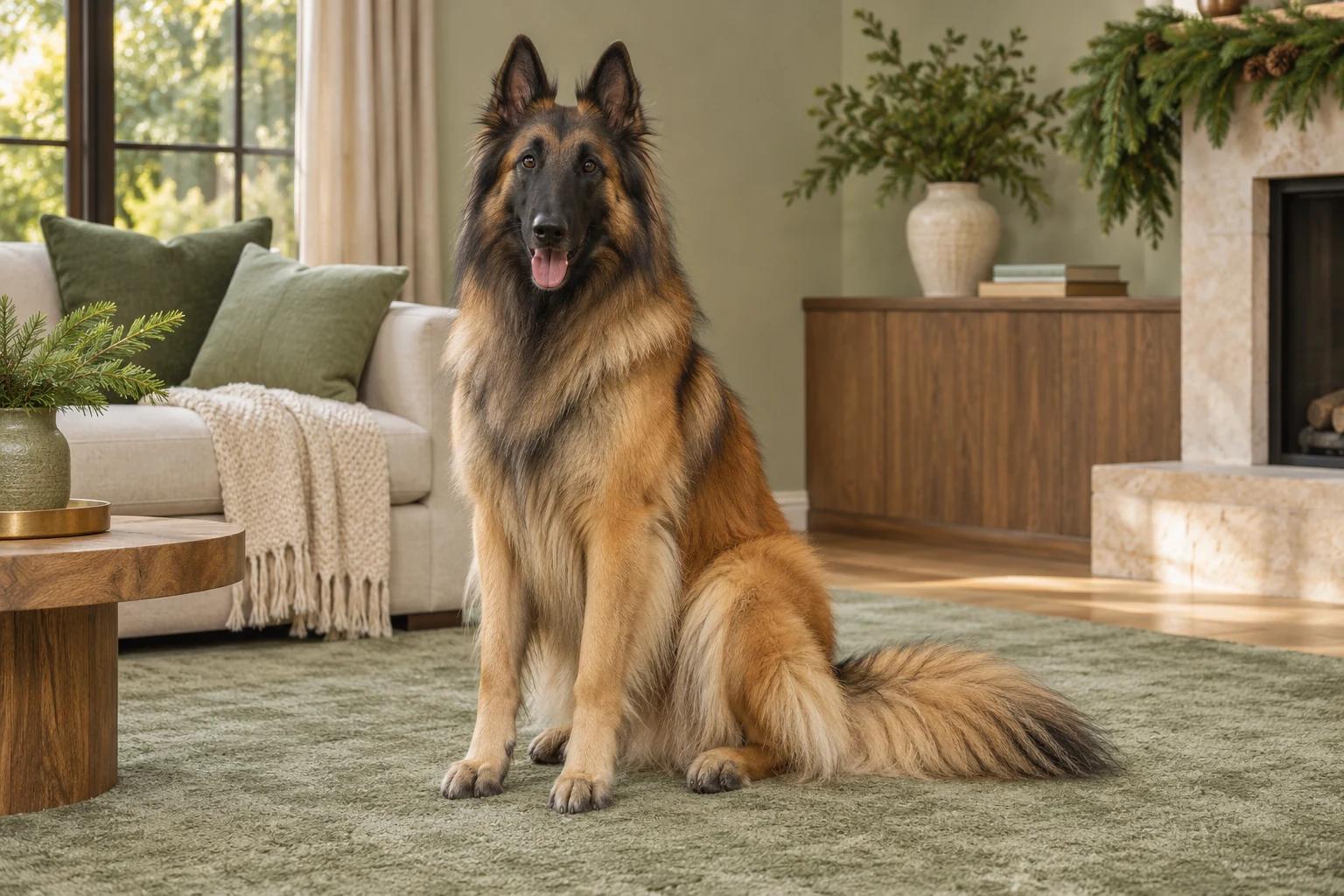
The dark layer is in the hairs
The Belgian Tervuren’s AKC standard describes fawn hairs with black tips. Together, those tips create a dark overlay on the body’s warmer color. This is a different description from a solid black coat or separate black patches. The standard prefers a rich fawn-to-mahogany base and treats patchy blackening as a fault.
Age changes the comparison
The standard says Tervuren characteristically darken with age, especially mature males over the shoulders, back and ribs. It also makes allowances for females and young males when assessing blackening. A light-looking youngster should therefore not be compared with a mature male as though both were at the same stage.
That matters when choosing a reference photograph. An adult male’s heavily shaded back can illustrate one mature appearance; it cannot promise how dark a particular puppy will become. A sequence of photographs of the same dog, labeled with age, answers a more useful question than an unlabeled collection of the darkest adults.
Read the whole pattern
The black facial mask, mostly black ears and darker tail tip are other parts of the description. Lighter underparts and breeches can coexist with the body overlay, while pale hairs on the muzzle or chin are allowed. Those local differences do not contradict the overall tendency to darken.
When describing a Tervuren, separate the base color, the black-tipped overlay and the location of lighter areas. “Getting darker” then has a precise meaning instead of suggesting that every part of the dog must become uniformly black.
Sources behind this article
Article source checked: October 20, 2026. Source checked 2026-10-20
Keep reading
Belgian Tervuren vs Belgian Sheepdog: choosing your match
Read article →