Australian Cattle Dog Training: Give Attention a Direction
Build Australian Cattle Dog training around clear tasks, manageable movement, rewards, and useful everyday transitions.
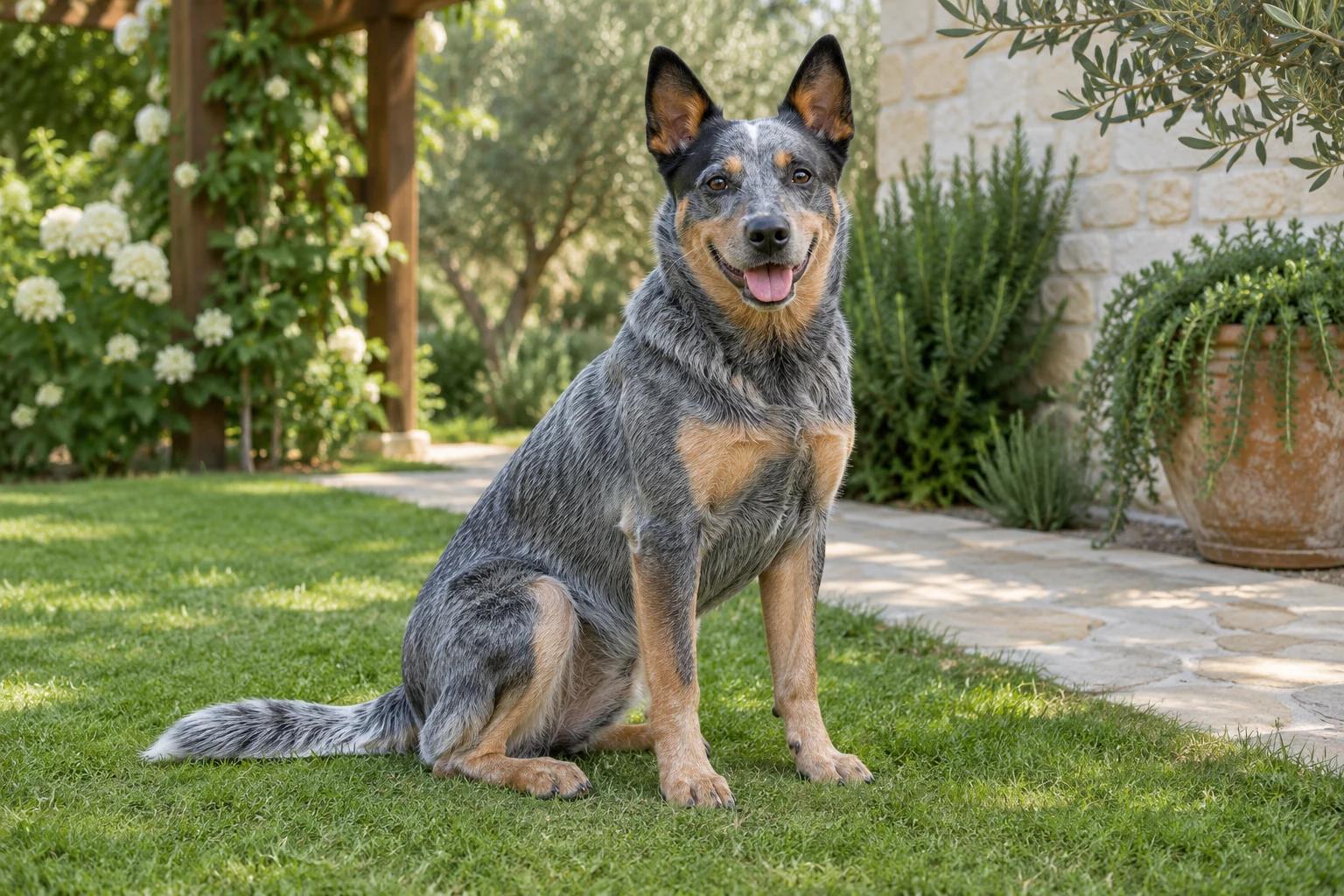
Australian Cattle Dog training is most useful when it gives an observant, active dog a clear task. That does not mean inventing a difficult job for every moment. It means explaining what you want in the everyday situations where attention, movement, and excitement can compete.
The Australian Cattle Dog profile describes substantial activity and mental engagement. Start with practical cooperation, then build a hobby around the individual dog's interests. A working background is context for learning, not evidence that the dog already understands your home.
Australian Cattle Dog training: define the task before adding movement
The AKC standard describes a compact working dog developed to move cattle. In a companion setting, you are teaching different tasks: walking with you, responding to a familiar signal, or remaining in an appropriate place while ordinary life happens nearby.
Choose the desired action before arranging practice. “Look toward me when I give the cue” is something you can teach and observe. “Ignore everything” is much less clear. Specific goals also help you recognize useful progress before the entire situation is effortless.
Begin where the task is understandable. If the dog is absorbed by a busy environment, simplify the setting rather than repeating a cue more loudly. A quieter starting point gives you information about what has actually been learned.
How to train an Australian Cattle Dog around everyday movement
When thinking about how to train an Australian Cattle Dog, separate real-life management from teaching practice. A busy cycle path or a gathering with running people is not a convenient laboratory for discovering what the dog will do.
Use appropriate physical management and seek qualified help if movement is difficult for your dog. Describe the situation precisely: what moved, how far away it was, and what response occurred. That gives a trainer something more useful than a broad label such as “too much instinct.”
Practice an alternative response in easy circumstances before expecting it during a challenging encounter. The alternative might be moving with you to another area or responding to a familiar attention cue. The correct choice depends on the individual and should be manageable for the handler too.
Do not turn every outing into a test
You need ordinary outings as well as lessons. Choose routes and times that allow you to manage the dog without constantly pushing into the hardest situations. A predictable route can be useful while you work on specific skills elsewhere.
If a setup repeatedly produces difficulty, change it. Repeating the same overwhelming encounter is not automatically productive practice. Ask your trainer what an easier version would look like and how you should recognize readiness to progress.
Blue Heeler training: make the reward clear
Blue Heeler training uses the same need for understandable feedback as training any dog. VCA's predictable-reward guidance explains that rewarding a chosen behavior helps it become more frequent. Select a response you can identify clearly and reward at the useful moment.
Think about where the reward will be delivered before starting. If you need to search a bag or change your position substantially, the sequence may become confusing. Preparing the lesson lets you watch the dog rather than your equipment.
Choose rewards the individual values in that setting. Something interesting indoors may be less useful outside. If the dog is unable to engage with the lesson, consider the difficulty of the environment rather than assuming you simply need a more elaborate reward.
Keep the meaning consistent
Decide what a cue means and avoid using it casually for several unrelated actions. If “back” sometimes means step away and sometimes means return to you, the word is doing conflicting jobs.
A small vocabulary used clearly is better than a large collection of ambiguous signals. Explain the important cues to everyone who handles the dog so practice does not change meaning from person to person.
Australian Cattle Dog obedience includes stopping and changing tasks
Australian Cattle Dog obedience can be especially useful at transitions: finishing a game, moving from the car to an outing, or changing from activity to rest. Teach those moments rather than assuming they happen automatically after the exciting part.
Choose one transition and make its sequence predictable. For example, a familiar game can end with equipment being put away and a known next activity. Do not keep restarting the game unpredictably while also asking the dog to understand that it is finished.
If the dog struggles at a transition, identify which part is unclear. Is it the end signal, the next task, or the setting? A specific question gives you a teachable problem instead of treating the whole dog's personality as the problem.
Give learning interests a constructive outlet
A regular class or a modest home-learning project can provide shared focus. Start with foundations and choose a format that suits the dog's current experience. Advanced-looking equipment is not necessary for a meaningful lesson.
For a home project, you might practice recognizing different familiar objects or moving between clearly designated positions. Keep the initial choices easy enough to understand and ask an instructor for help breaking the task down if needed.
Do not confuse complexity with value. A reliably useful everyday skill may matter more than a long sequence performed only in one room. Choose projects you enjoy maintaining while preserving time for appropriate physical activity and rest.
Review progress without expecting a finished dog
Look for changes in the specific tasks you are teaching. An easier transition, more consistent response in a familiar setting, or a clearer routine between caregivers all count. Training is not limited to impressive public demonstrations.
Our article on herding assessments and trials explains a separate working topic. The dog match quiz can help compare your lifestyle with the breed's profile, while a qualified trainer helps tailor the practical teaching plan to your individual dog.
FAQ
What should Australian Cattle Dog training focus on first?
Focus on useful cooperation: clear attention cues, manageable walking, and transitions between activities. Define the action you want and practice an easy version first. A working background does not mean the dog already understands household expectations.
Is Blue Heeler training different from Australian Cattle Dog training?
Blue Heeler is a commonly used name associated with the Australian Cattle Dog. The useful training plan still depends on the individual dog's experience and needs. Choose clear tasks and suitable practice rather than relying on a label.
Should I test my dog around fast movement?
Do not create difficult encounters simply to see what happens. Use appropriate management and seek qualified guidance if movement triggers a problematic response. Teach manageable alternatives in easier settings before expecting them during challenging situations.
Does an Australian Cattle Dog need complicated tricks?
No. Meaningful learning can involve ordinary skills and simple projects. Clear transitions, comfortable handling, and useful responses are valuable accomplishments. Choose activities that fit the individual and that you can practice consistently.
Sources behind this article
Article source checked: November 14, 2026. Source checked 2026-11-14
Keep reading

Affenpinscher Training: Build Useful Everyday Habits
Read article →