Aussiedoodle Training: Build Clear Everyday Habits
Build Aussiedoodle house training, grooming cooperation, greetings, and useful obedience with clear everyday routines.
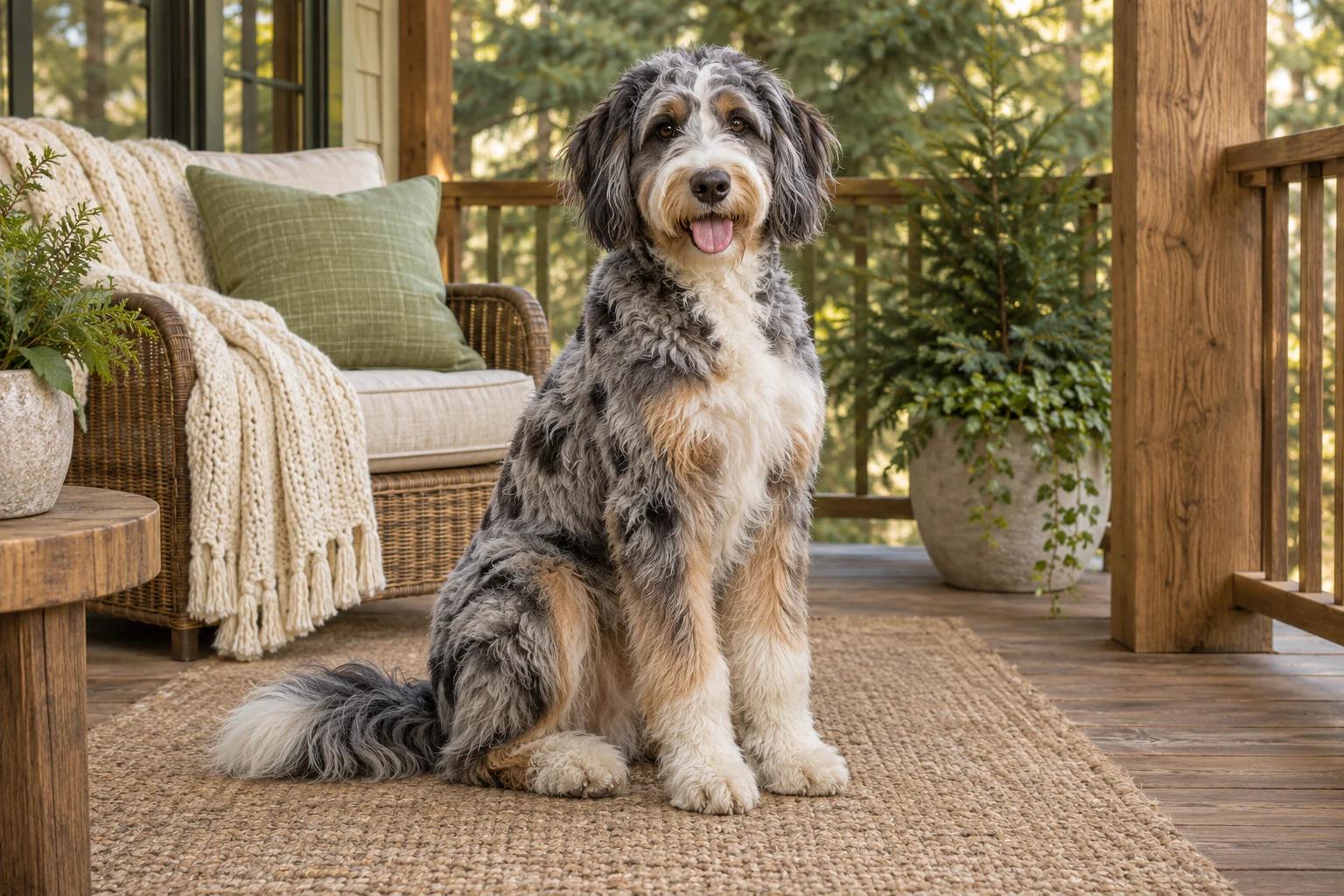
Aussiedoodle training works best when you stop expecting ancestry to do the teaching. The site's profile describes a dog that enjoys learning, but that does not mean a puppy understands your household routines or an adult knows what you want in a new setting. Clear experiences still matter.
The Aussiedoodle profile puts daily learning alongside substantial activity and close company. Begin with the habits that make living together easier, then add hobbies and tricks as you learn what the individual enjoys.
Aussiedoodle training starts with a clear result
VCA's reward guidance explains that rewarding a desired behavior encourages it to occur again. The practical question is therefore what you want to recognize and reward, not only what you want the dog to stop doing.
Choose an observable result. “Stand with paws on the floor while I prepare the brush” is clearer than “be calm.” “Come to the familiar resting area” is clearer than “settle down somewhere.” Specific goals make it easier to tell whether the lesson is working.
Keep the first version simple. You may initially practice in a quiet room with one person before expecting the same response while several things happen nearby. Difficulty should be added deliberately, not accidentally because the household became busy.
How to train an Aussiedoodle for the life you actually share
When deciding how to train an Aussiedoodle, list the ordinary events the dog needs to understand. These might include toileting, coat care, walking, resting while you work, or greeting someone without jumping.
Prioritize the events that happen often and cause confusion now. You do not need to teach an entire catalogue of cues before making daily life easier. One clearly learned routine can improve several repeated moments in the week.
For example, if grooming happens frequently, practice the beginning of that routine separately from a full session. A dog comfortable approaching the care area and briefly participating has a useful foundation. Ask your groomer or trainer to show an appropriate progression.
Teach the people the same plan
Agree on the words and actions everyone will use. If one person rewards jumping during greetings and another expects four paws on the floor, the dog receives inconsistent information.
Keep the agreement short enough to remember. State the behavior you want, how it is rewarded, and what to do when the situation becomes too difficult. A complicated set of household rules is less useful than a few consistent ones people actually follow.
Aussiedoodle house training: organize the opportunities
Aussiedoodle house training needs a practical arrangement rather than a promise that a smart dog will learn immediately. AKC's housetraining guide emphasizes supervision, predictable opportunities to toilet, and positive reinforcement. Do not punish accidents after the fact.
Choose the intended toilet location and make access understandable. If reaching it involves stairs, a lift, or a shared entrance, account for that extra time in the plan. The route is part of the routine, not an incidental detail.
Keep a simple record while you learn the dog's pattern. Note successful trips and when accidents occur. The purpose is to improve the arrangement, not assign blame. A recurring difficulty may reveal that the opportunities or supervision need adjustment.
Avoid gaps between caregivers
If more than one person is involved, make the handoff explicit. “Last trip was after breakfast; next person is responsible now” is clearer than assuming someone else has noticed. A shared note can prevent long gaps caused by uncertainty.
For an unexpected change in toileting or a physical concern, talk with your veterinarian. Do not assume every accident is solely a training issue. The useful response depends on understanding what has changed.
Aussiedoodle obedience includes context
Aussiedoodle obedience is not measured only by whether a cue works in the easiest room. A familiar action may need practice when the person is sitting instead of standing, when another person is present, or when the setting changes.
Keep track of what the dog actually knows. If it can respond beside you in the kitchen, begin from there rather than testing the same cue from across a noisy park. A smaller next step gives you a clearer lesson.
Do not add every challenge together. Distance, duration, distraction, and location can each change the task. Adjusting one element at a time makes it easier to understand why a repetition worked or became confusing.
Build a useful greeting routine
Decide what a greeting should look like before the visitor arrives. That may mean the dog remains in a familiar area until the initial excitement has passed, or practices a known behavior with someone it already knows.
Tell the other person how to help. A lesson becomes harder when a guest repeatedly changes the rules with enthusiastic attention. Start with a cooperative person and an easy version rather than treating every real arrival as an unplanned training test.
If the dog is distressed or struggling with unfamiliar people, ask a qualified professional for an individual plan. The goal is a manageable experience, not forcing a greeting to prove that a sociable crossbreed description is correct.
Choose a learning hobby without losing the basics
Tricks, classes, and games can be enjoyable, but they should not crowd out the everyday habits you still need. A dog can learn an impressive sequence while remaining confused by an ordinary care routine.
Choose a hobby you can practice consistently and an instructor who explains the steps. Ask what the dog should already know and what beginners work on first. You may discover that simple foundations are more interesting than they initially sound.
Keep room for rest and suitable physical activity alongside learning. Training is part of the daily picture, not a reason to keep the dog busy continuously. Review the routine with appropriate professionals when a persistent difficulty needs more than a general tip.
Assess progress in ordinary moments
Look for practical changes: an easier handoff between caregivers, a clearer toilet routine, or more comfortable participation in coat care. Those improvements matter even when they are not impressive on video.
Use the dog match quiz to compare your preferred routine with the site's profile. Our article on merle appearance and genetic information covers a separate topic; training should focus on observed learning rather than assumptions from appearance.
FAQ
Are Aussiedoodles automatically easy to train?
No ancestry combination removes the need for teaching. The site's profile supports an interest in learning, but individual experience and the setup matter. Choose clear behaviors, reward useful responses, and make new challenges manageable.
What should I prioritize in Aussiedoodle house training?
Prioritize supervision, understandable access to the toilet area, and regular opportunities that fit the individual. Coordinate between caregivers and reward successful toileting. Discuss unexpected changes or physical concerns with your veterinarian rather than assuming every accident is behavioral.
Why does a cue work at home but fail elsewhere?
A new setting can add distractions and change the task. Practice an easier version in the new environment instead of assuming the dog fully understands every variation. Build from what has already been learned.
Can grooming be part of training?
Yes. Comfortable participation in coat care is a useful everyday skill. Introduce the routine in manageable steps and ask a groomer or trainer for a demonstration. Do not wait for a difficult full session to begin teaching it.
Sources behind this article
Article source checked: November 14, 2026. Source checked 2026-11-14
Keep reading

Affenpinscher Training: Build Useful Everyday Habits
Read article →