An Aussiedoodle coat photo cannot tell you its merle genotype
Understand why visible merle markings and a laboratory result answer different questions, and avoid using an Aussiedoodle color label to predict health or breeding outcomes.
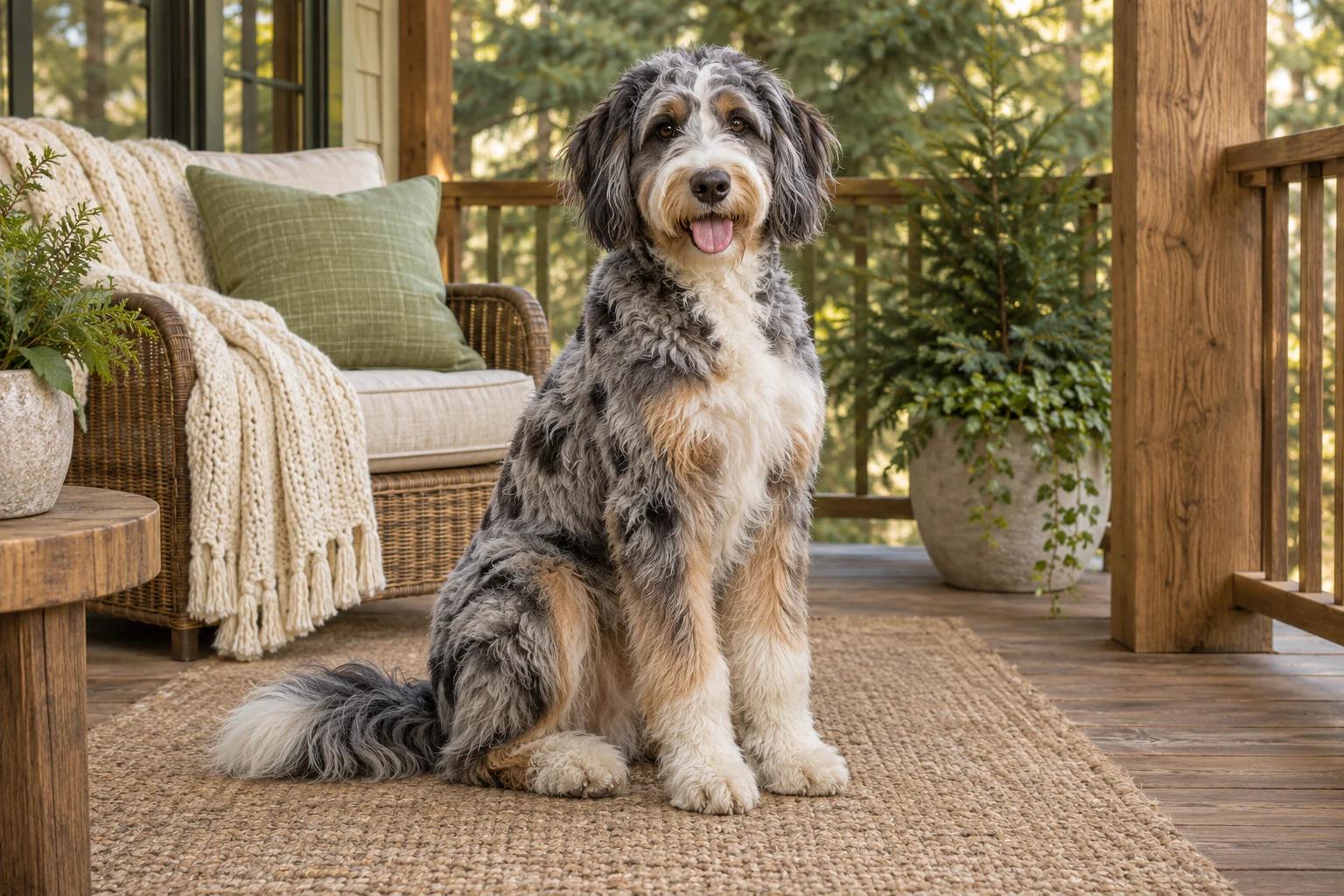
Merle is a pattern with more than one expression
Aussiedoodles combine Australian Shepherd and Poodle ancestry, and PetMD describes a range of coat colors that includes blue merle. The label can help describe a dog's appearance. It does not tell you every detail of the genetic variation behind that appearance, even when a photograph looks clear and well lit.
UC Davis's Veterinary Genetics Laboratory explains that merle expression varies with the particular merle variants present and with other pigmentation genetics. Some dogs described as cryptic merles show little or no visible merle pattern. A dog that looks unpatterned therefore cannot be declared genetically non-merle simply by inspecting its coat.
Read the laboratory's explanation with the result
The laboratory reports merle variants by size and explains that terminology has changed as knowledge has developed. If you receive a report, keep the complete document and its interpretation together. A cropped screenshot or a color nickname repeated in a message may omit exactly the information needed to understand the result.
For an illustrative example, imagine two adults described as solid-colored in a litter announcement. Those words describe what someone sees; they are not a substitute for genetic information. Ask what testing supports any claim about merle status, and have the laboratory or a qualified veterinary adviser explain an unfamiliar report rather than translating it from an online color chart.
Color information is not a clinical examination
UC Davis warns that dogs with two merle variants can have health problems, including hearing and eye abnormalities, and discourages breeding two merle dogs. The genetics are complex. This brief explanation is not a mating plan, a forecast for a particular litter or a way to diagnose a dog from its markings.
If hearing, vision or another health concern arises, seek veterinary assessment regardless of the color description. Conversely, do not assign an individual dog a disability solely because it is merle. Keep appearance, genetic results and clinical findings as separate pieces of information. That distinction lets an Aussiedoodle owner appreciate a striking coat while asking more precise questions about what is known, what has been tested and what remains uncertain.
Sources behind this article
Article source checked: October 20, 2026. Source checked 2026-10-20
Keep reading
Aussiedoodle Grooming: Choose a Coat Plan You Can Maintain
Read article →