American Staffordshire Terrier Training for Everyday Life
Build useful AmStaff training habits for walking, play, and daily life with clear goals and manageable practice.
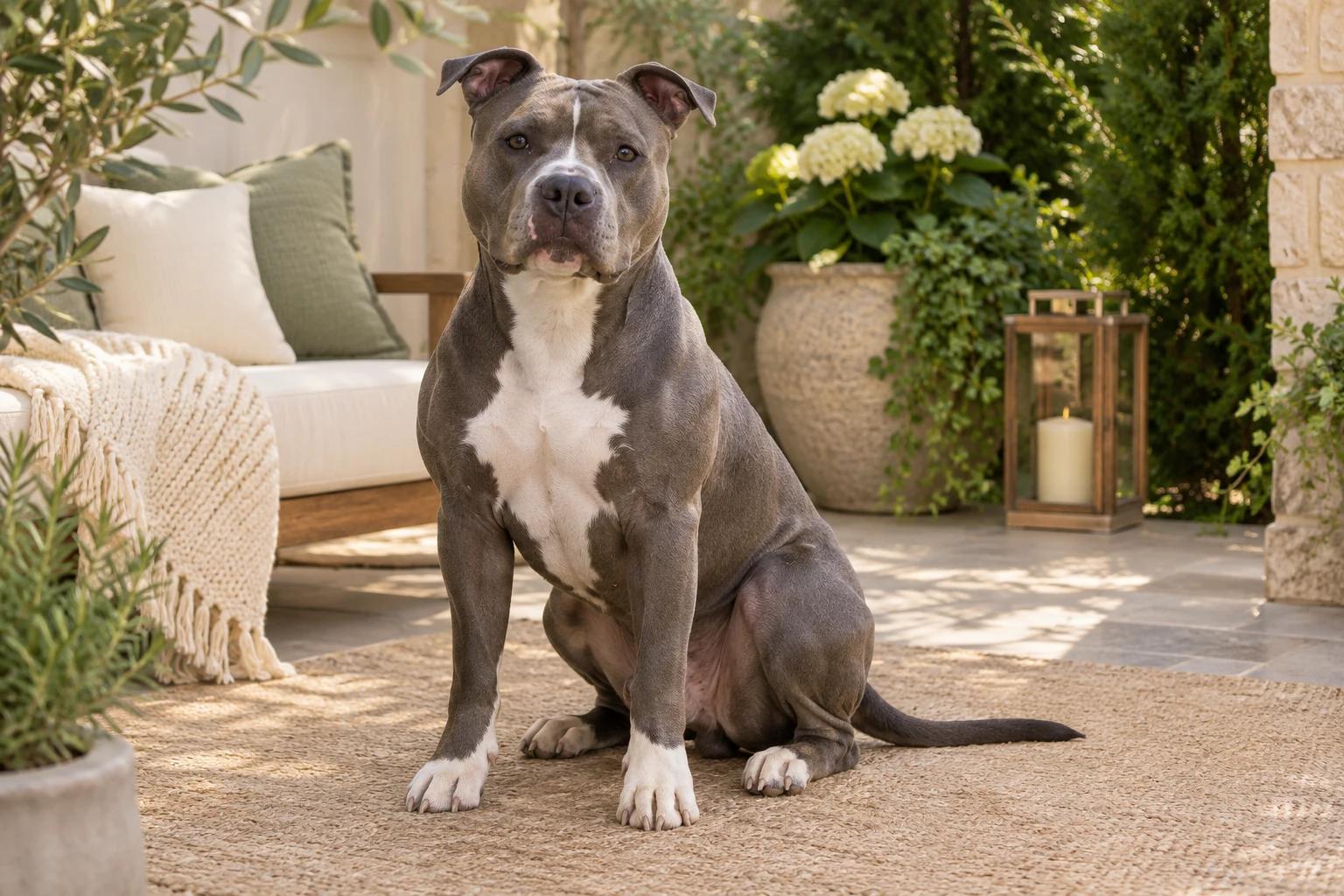
Explore the
American Staffordshire Terrier
Background, care, and everyday considerations.
View breed profile →American Staffordshire Terrier training is most useful when it makes shared activities easier: walking together, responding during play, and moving through a familiar place without a struggle. Start with practical skills you want to use, then make their first versions simple enough for your dog to understand.
The American Staffordshire Terrier profile describes a dog that benefits from daily learning games. You do not need to turn every interaction into a formal lesson. You do need to make the important expectations clear and give the dog opportunities to practice them successfully.
American Staffordshire Terrier training: choose useful outcomes
The AKC standard describes a compact, muscular dog. In everyday life, that makes comfortable handling worth teaching early rather than postponing it until a difficult situation occurs.
Write a goal as something you can observe. “Walk from the car to the park entrance with a loose leash” is clearer than “behave outside.” It identifies a setting, a task, and a result. You can then make a simpler practice version before expecting it at a busy park.
Choose a small number of priorities. If every outing introduces a completely new expectation, you may struggle to see what is improving. Repeating a useful skill in a familiar place gives you a better basis for deciding when to add complexity.
Separate learning from reaching a destination
A walk with an appointment at the end is not always the best lesson. You may feel pressured to keep moving while the dog is still working out what earns a reward. Make room for practice without a deadline when you can.
For example, use a quiet stretch near home to rehearse walking together, then finish before you need to hurry anywhere. The success measure is the quality of those repetitions, not how far you traveled. Longer routes can come later as the skill becomes more familiar.
American Staffordshire Terrier leash training
For American Staffordshire Terrier leash training, begin with a setting where you can notice and reward the behavior you want. UC Davis's loose-leash guidance recommends rewarding walking without pulling and increasing distractions gradually. Equipment supports management; it does not replace learning.
Think about the first few yards of your usual route. Is there a narrow gate, a busy pavement, or an exciting patch of grass? If that beginning is consistently difficult, do not make it the only place you practice. Find an easier version of the task first.
Keep rewards accessible before you start. Fumbling through a bag after the useful moment has passed makes the lesson less clear. Arrange your supplies so you can pay attention to the dog and your surroundings rather than sorting pockets while moving.
Plan where to pause
Select places with enough room to step aside without crowding someone else. A wider section of path or an open area can give you time to reorganize. Trying to conduct an entire lesson in a narrow bottleneck adds pressure that neither you nor the dog needs.
If passing another dog is difficult, seek help with that specific situation rather than simply practicing closer and closer encounters on your own. Describe what happens to a qualified professional. Questions involving fear, distress, or aggression need more than a generic walking tip.
How to train an AmStaff during play
When considering how to train an AmStaff, look at the games you already share. Can the dog recognize when a game begins, when you are pausing, and when it has finished? Those transitions are useful learning opportunities because they occur in ordinary life.
Choose a familiar game and keep the first practice uncomplicated. Decide what you want the pause to look like, then ask a trainer to help you break that behavior into teachable steps if needed. Do not begin by testing the dog in its most exciting situation.
Avoid changing the rules between people. One person may enjoy vigorous play while another expects a quieter interaction. Agree on how each activity is offered so the dog is not left guessing which version applies at a particular moment.
A successful game does not need to become progressively more intense. Sometimes the useful improvement is a clearer ending or a smoother return to another activity. Keep the goal connected to life together rather than chasing an impressive performance.
AmStaff obedience training beyond a list of cues
AmStaff obedience training can include familiar cues, but the context matters as much as the vocabulary. A response in the kitchen and the same response beside a busy path are different learning situations. Notice the conditions under which your dog understands the task.
You can make a simple practice map with three columns: familiar place, slightly different place, and future goal. For example, responding while you stand nearby may be familiar; responding while you sit down may be a small change; responding in a class may be the later goal.
Change one part at a time where possible. If you add distance, movement, new people, and a new location together, it becomes difficult to identify what caused confusion. A smaller adjustment gives you more useful feedback.
Give the dog a clear way to succeed
If a lesson repeatedly stalls, examine the setup before labeling the dog stubborn. Is the reward useful in that setting? Is the requested action already familiar? Have you made the task harder than intended? These questions lead to changes you can actually make.
A trainer can help observe details you miss while handling the dog. Ask for an explanation of what to practice between sessions and what improvement should look like. A demonstration is most useful when you can reproduce the manageable first step at home.
Build a training routine you enjoy maintaining
Choose learning activities that fit your interests as well as your dog's responses. You may enjoy careful walking practice, simple trick work, or a structured class. The best starting hobby is one you can attend consistently and understand well enough to practice between visits.
Keep the site's broader activity profile in view. Training is part of daily engagement, not a reason to remove ordinary outings and play. Similarly, a long outing does not automatically explain the household skills you want the dog to learn.
Use the dog match quiz to compare your preferred routine with the breed's profile. Our article about the AmStaff name covers the separate historical question; training decisions should focus on the individual dog you are teaching now.
FAQ
Is an American Staffordshire Terrier easy to train?
Learning depends on the individual dog, the task, and the teaching setup. The site's profile supports daily training games rather than assuming instant obedience. Start with clear, useful behaviors and add new settings or distractions gradually.
What should I teach an AmStaff first?
Prioritize skills that make ordinary life easier, such as comfortable leash walking and clear transitions during play. Define the action you want instead of using a broad goal like “be good.” Practice an easy version before expecting it in a busy setting.
Does a harness teach an AmStaff not to pull?
No. Equipment can help manage a walk, but it does not replace teaching. Reward walking without pulling and choose a setting where practice is manageable. Ask a trainer to help with fit, handling, and a plan suited to your dog.
Why does my dog respond at home but not outside?
A new location adds distractions and changes the learning situation. A familiar cue may need practice in easier outdoor conditions before it works reliably in a busy place. Reduce the difficulty and build from the version your dog already understands.
Sources behind this article
Article source checked: November 14, 2026. Source checked 2026-11-14
Keep reading

Affenpinscher Training: Build Useful Everyday Habits
Read article →