Why an old AmStaff record may say Staffordshire Terrier
Follow the American Staffordshire Terrier name from AKC recognition in 1936 to the 1972 change, and distinguish historical records from present-day breed identification.
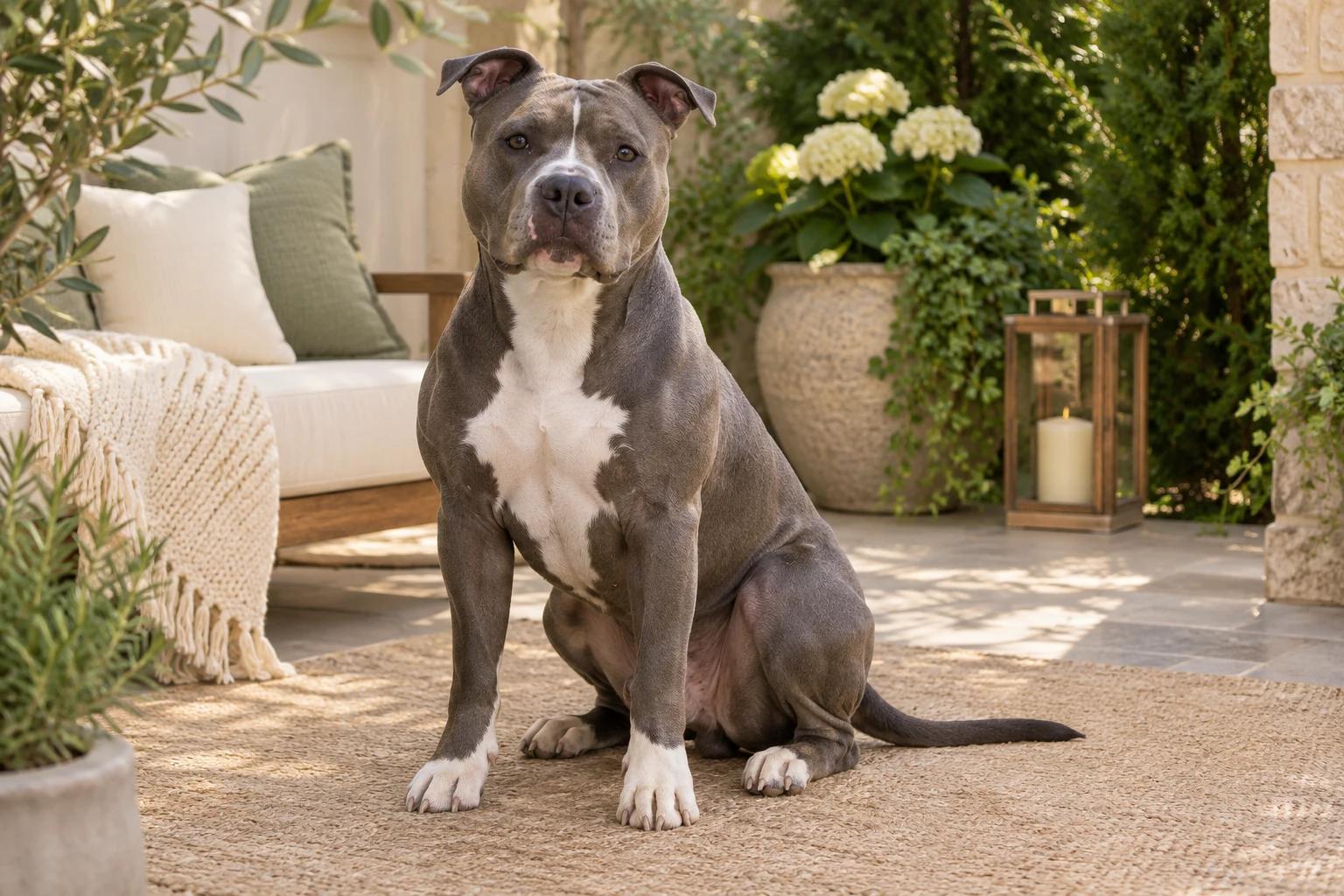
Explore the
American Staffordshire Terrier
Background, care, and everyday considerations.
View breed profile →Two dates explain the missing word
An old photograph captioned Staffordshire Terrier can be confusing beside a modern American Staffordshire Terrier profile. In AKC records, the shorter name has a historical explanation. The club recognized the breed in 1936 under the name Staffordshire Terrier; American was added in 1972 to distinguish it from the related Staffordshire Bull Terrier.
The date matters as much as the wording. A historical caption is not necessarily an incomplete modern label or evidence that the photograph shows a Staffordshire Bull Terrier. Before correcting an archive entry, check when the caption was written and which registry's terminology it uses. The missing word may be entirely consistent with its period.
Related names are not interchangeable
AKC's historical account describes the American Staffordshire Terrier and Staffordshire Bull Terrier as related but distinct breeds. Its recognition timeline belongs to that registry. It should not be stretched into a universal rule for every registry, rescue description or everyday use of broader labels. Those contexts may be answering different questions.
For example, someone researching an ancestor's dog might find a dated show record, a handwritten family album and a recent social-media caption. Keep those sources separate. The show record may establish how a dog was entered at that event, while the family caption may only preserve a nickname. A modern comment does not automatically resolve the difference.
Use the history without guessing an individual dog
When organizing records, preserve the original wording and add an explanatory note with the date and source. That makes the history understandable without silently rewriting it. If you are looking at a current dog's paperwork, ask for the complete registered name and the organization that issued the record instead of relying on an abbreviation alone.
Appearance cannot fill every gap in an undocumented background, and a registry name cannot promise a particular temperament or household fit. Ask separately about the individual dog's behavior, experience and care needs. The useful lesson from the name change is modest but concrete: read an old AmStaff label in its historical setting, and read a present-day record in the setting of the organization that produced it.
Sources behind this article
Article source checked: October 20, 2026. Source checked 2026-10-20
Keep reading
American Staffordshire Terrier Training for Everyday Life
Read article →