Terrier Group · Ireland
Kerry Blue Terrier
Alert · Smart · People-oriented
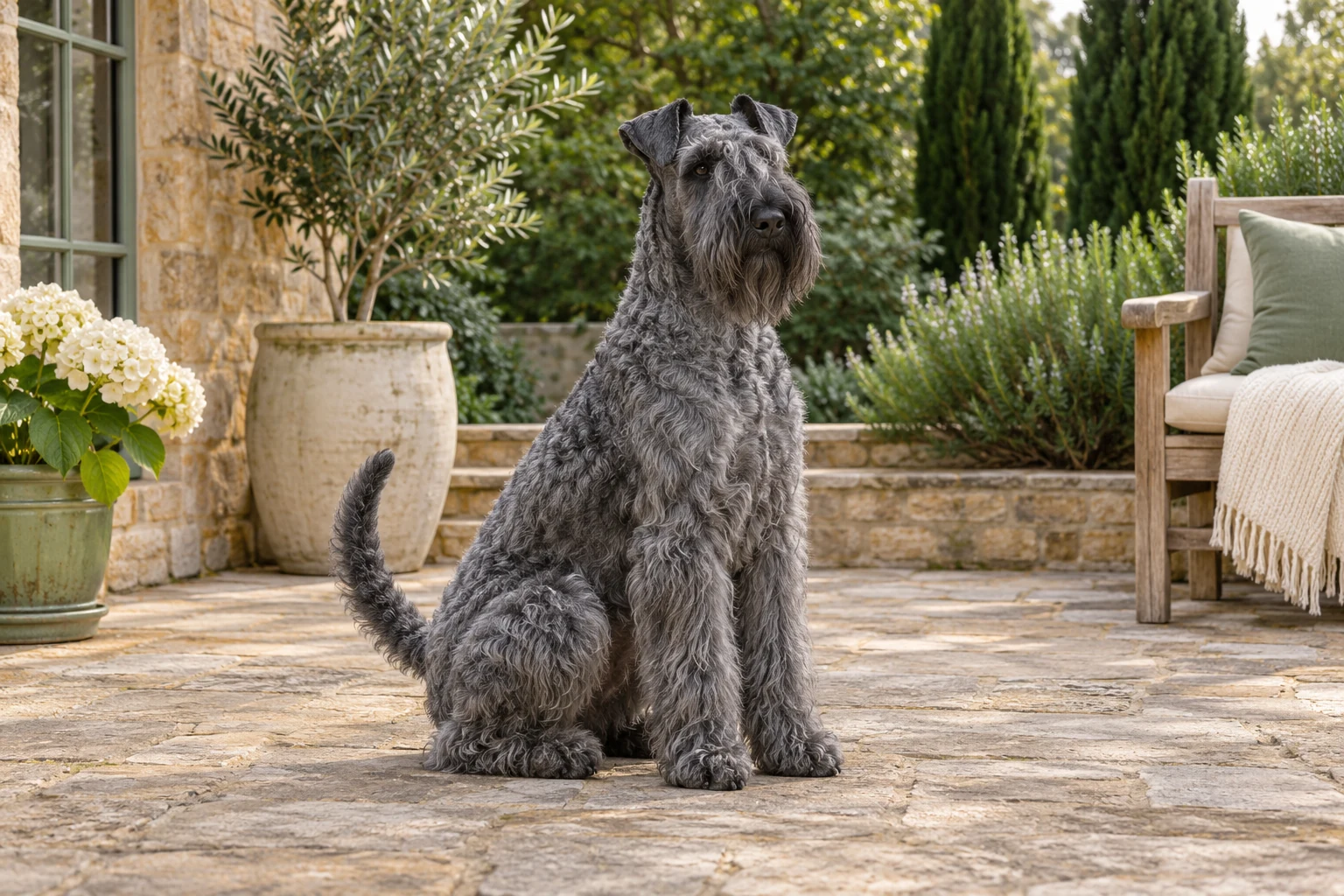
- Adult weight
- Female: 26–36 lb; Male: 33–40 lbSome published weights are estimates. Check the source notes; individual animals vary.
- Reference lifespan
- 12–15 years
- Coat
- Wavy
Life with a Kerry Blue Terrier
- Company
- Many like to share the room without constant contact.
- Activity & learning
- About an hour of active time fits the described day.
- Coat care
- Weekly brushing/combing plus regular clipping and scissoring are described.
Loose hair tends to stay light.
Health to keep in mind
Health topics include “The rear feet become harder to place”. Read the owner observations, questions for your veterinarian and advice on when to seek help. Read the full Health guide.
Rescues & sheltersPrint or citeBreed articles
Read the complete profile and family fact sheet
Life with a Kerry Blue Terrier
Many like to share the room without constant contact.
Explore home life →About an hour of active time fits the described day.
Explore daily care →Weekly brushing/combing plus regular clipping and scissoring are described.
Explore daily care →Print or cite this breed
Kerry Blue Terrier family fact sheet
Breed-level references are a starting point. Ask about the individual animal’s routine and care needs.
- Female
- 26–36 lb
- Male
- 33–40 lb
- Adult height
- 18–19.5 in (male), 17.5–19 in (female)
- Reference lifespan
- 12–15 years
- Coat
- Wavy
- Adult size
- Female: 26–36 lb; Male: 33–40 lb Some published weights are estimates. Check the source notes; individual animals vary.
Company
Many like to share the room without constant contact.
Activity & learning
About an hour of active time fits the described day.
Coat care
Weekly brushing/combing plus regular clipping and scissoring are described.
Everyday responsibilities
Plan food, supplies, routine care and veterinary visits. Agree who handles the everyday jobs and who covers absences.
Adult help
An adult should remain responsible for care, supervise children’s interactions and arrange help when needed.
My Breed Atlas. Kerry Blue Terrier breed profile. https://mybreedatlas.com/breeds/kerry-blue-terrier
Read this profile’s sources →Adult ranges and source qualifications
- Female
- 26–36 lb
- Male
- 33–40 lb
- Adult height
- 18–19.5 in (male), 17.5–19 in (female)
- Reference lifespan
- 12–15 years
- Coat
- Wavy
Reference ranges describe the breed, not a prediction for an individual.
Daily care
Activity & learning
About an hour of active time fits the described day.
More about everyday care
The activity rating is toward the higher end of the reference scale. Consider whether your everyday schedule can support activity, learning, and safe outlets for energy.
Mental engagement is an important part of the ownership plan. Training, scent games, or suitable dog sports can provide purposeful challenges. Physical exertion alone may not fill that need.
Coat care
Weekly brushing/combing plus regular clipping and scissoring are described.
More about everyday care
Plan a regular coat-care routine and ask an experienced groomer which tools and technique suit this coat.
The shedding rating is at the lower end of the scale. This does not guarantee that a dog will be suitable for someone with allergies.
Coat colors & markings
Standard colors recorded in the reference: Black, Blue, Blue & Black, Blue & Silver, Blue & Gray, Silver, Silver Blue, Slate Blue.
Color alone does not establish breed identity, health, or quality. Ask about the dog’s background and care needs.
Training & communication
Expect learning to depend on motivation and consistent practice. Work on small skills in easy environments before adding distractions.
Vocal tendency is relatively high. Consider neighbors and housing rules, and plan thoughtful management of triggers alongside training.
Food, routine & costs
The everyday ownership plan
Food & routine
Ask your veterinarian about food appropriate to the dog’s life stage, body condition, and health history. Ask the breeder what the dog currently eats and how to approach any transition. Keep feeding and care records rather than relying on a generic breed portion chart.
Time & budget
Allow for regular care, training, equipment, grooming, veterinary visits, and unexpected costs. Make a plan for workdays, travel, and changes in your schedule. The adult size and coat-care profile above can help you identify practical demands.
Bringing a dog home
Prepare a safe sleeping area and a predictable routine. Arrange veterinary care, agree on household rules, and introduce new situations gradually. Get written information about the dog’s routine, registration where applicable, and ongoing breeder support.
Home life
Company
Many like to share the room without constant contact.
More about everyday care
The reference points to a strong interest in family interaction. Make room for shared activities and company in the daily routine.
Introductions can vary with the individual and situation. Give the dog time and space to become comfortable.
Family life, other dogs & housing
The reference rates interaction with young children relatively highly. This still does not establish that a particular dog is safe with children.
Take particular care when considering a home with other dogs. Discuss social history and arrange appropriate introductions.
Always supervise interactions with children and provide a quiet retreat. Apartment suitability involves noise, outdoor access, stairs, time alone, and building rules as well as size. No rating measures the compatibility of a particular pair of dogs or a dog and another species.
Time alone and workdays
Personality & care details
Personality & care profile
These 1–5 reference ratings offer a comparison of breed tendencies. A higher number means more of the named tendency; it is not a quality score or an endorsement.
What everyday life tends to involve
These notes describe a tendency for the breed. Every animal is an individual.
- Activity
- About an hour of active time fits the described day.
- Training
- Training games, puzzles, or a sport give this breed the mental work it wants.
- Coat care
- Weekly brushing/combing plus regular clipping and scissoring are described.
- Loose hair
- Loose hair tends to stay light.
- Voice
- Barking can be a frequent part of the day.
- Company
- Many like to share the room without constant contact.
- Adult size
- Female: 26–36 lb; Male: 33–40 lb
Some published weights are estimates. Check the source notes; individual animals vary.
YOUR EVERYDAY LIFE
How could this breed fit your life?
See household examples or compare this breed with answers you chose to save. The examples show combinations where this breed appeared among the first five results. Other combinations can work too.
Saved matching preferences stay in this browser, never on your account. They expire after 30 days and are removed the next time this feature reads them. Health answers, children’s ages and free-text notes are not saved. This section does not reproduce those personal care notes.
Kerry Blue Terrier health
Health observations and family records
Kerry Blue Terriers were among pathology-confirmed degenerative myelopathy cases in a primary SOD1 study. Those selected cases are different evidence from merely finding the variant in a breed’s submitted DNA samples.
The rear feet become harder to place
Arrange an examination for a repeated loss of steadiness behind during normal walking. Tell the clinic whether it began gradually or abruptly and whether turning has changed. Other spinal problems can look similar, so a SOD1 result cannot identify the cause on its own.
Family history and screening
Ask whether older relatives’ neurological diagnoses were confirmed and keep copies of exact SOD1 reports with the tested dogs’ identities. A family description of a wobble is not the same as a confirmed diagnosis.
Questions for your veterinarian
- Which other causes should be considered alongside this genetic result?
- What details of ordinary walking would help show the change?
Choosing a puppy? Ask to see both parents’ results, with the animal’s name and the date on each report. If you’re adopting an adult, ask which records come with that individual.
Screenings listed for Kerry Blue Terrier
- Hip Evaluation
- Ophthalmologist Evaluation
Breeders supply these documents. My Breed Atlas does not independently verify them. Check the animal’s identity, the date and the actual result.
History & sources
Heritage & appearance
Meet the Kerry Blue Terrier
Kerry Blue Terrier has an origin listed as Ireland and is listed in the Terrier Group. Use the adult-size ranges and behavior tendencies below to understand the practical commitment, then get to know the individual dog and its family history.
Ranges describe the reference population, not a prediction for a puppy. Some sources distinguish male and female sizes. Lifespan ranges are estimates, not guarantees.
- Origin
- Ireland
- Classification
- Terrier Group
- Recognition / recording year
- 1922
- Coat length
- Medium
Heritage & classification
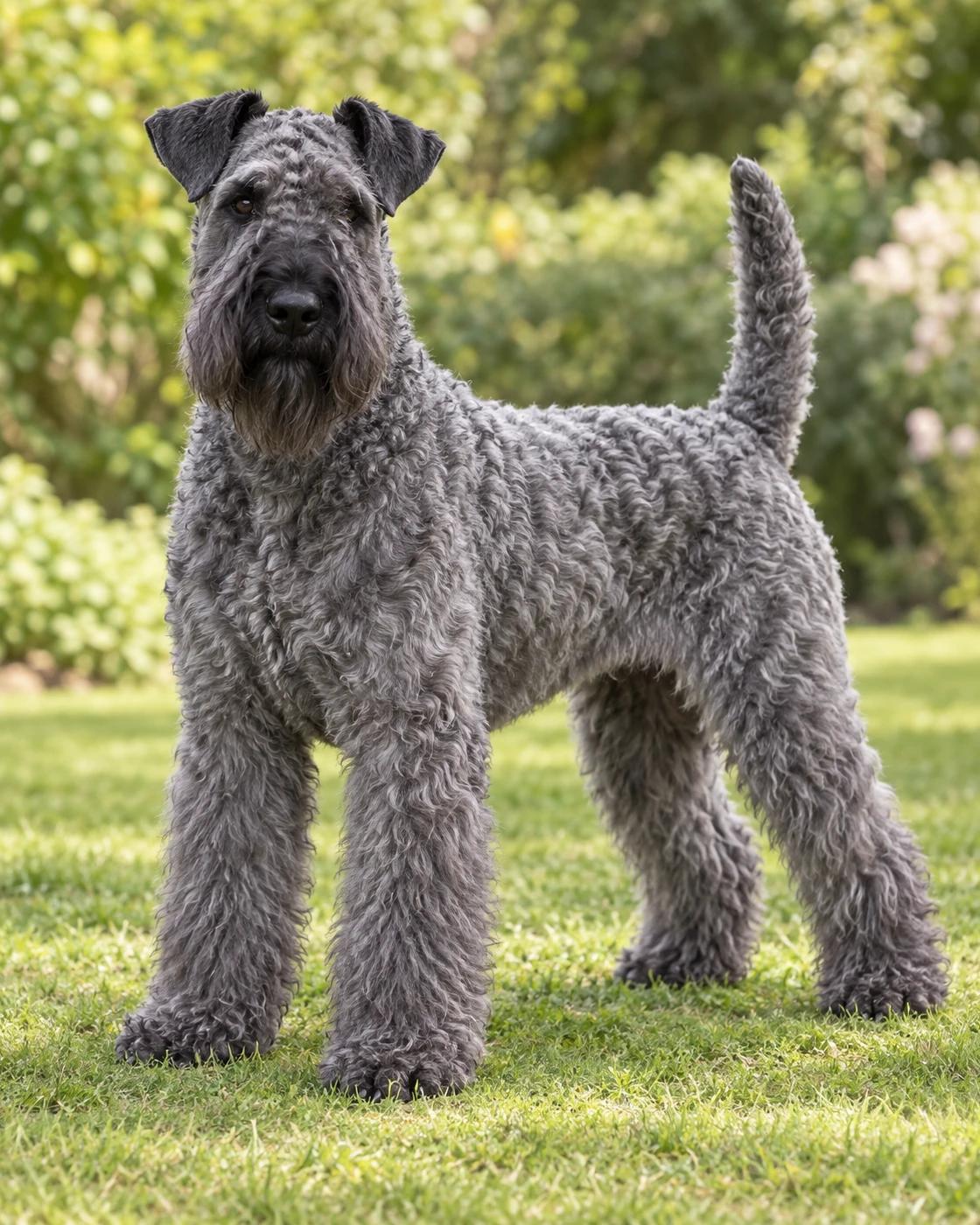
The listed origin, Ireland, gives you a starting point for researching this breed’s development. The reference records 1922 as its recognition or recording year. Recognition or foundation recording is different from the date a breed first developed. Explore the breed reference and parent club for detailed historical accounts and the current standard.
More about this breed’s history
An independent breed show
In Dublin, the Irish Blue Terrier Club counted Michael Collins and Oliver St. John Gogarty among its members. On October 16, 1920, the club held a breed show outside the English Kennel Club’s licensing system. (Irish Kennel Club, issued by AE Consulting: Festival of Dogs press release: A Very Interesting History)
Full breed details
Weight variety and source context
33-40 pounds (male), females weigh proportionately less than males
Keep the variety, sex or typical-point scope of this retained reference when using its figures. The accepted sex-specific profile references are shown above.
Retained reference sourceView all Kerry Blue Terrier articles →
View sources and checked dates →References & editorial notes
Adult-weight sources
Female: 26–36 lb; Male: 33–40 lb
educated: female 26-36 lb is the published veterinary genetics interval; male 33-40 lb follows AKC, whose female clause says proportionately less without endpoints; original genetics male 30-40 lb is reconciled with the official male range.
Breeders & rescues
Explore Kerry Blue Terrier breeders →
Questions for a breeder
- What are the parents like in everyday life?
- How are puppies raised and introduced to new experiences?
- Which screening records can I review?
- What does the contract cover, including return arrangements?
- What support is available after the dog comes home?
Before you meet a dog
- What does the coat-care routine involve?
- How does this dog handle time apart?