Kerry Blue Terrier Temperament: Living Together
Understand Kerry Blue Terrier temperament through everyday choices, visitor routines, other-dog questions and realistic training expectations.
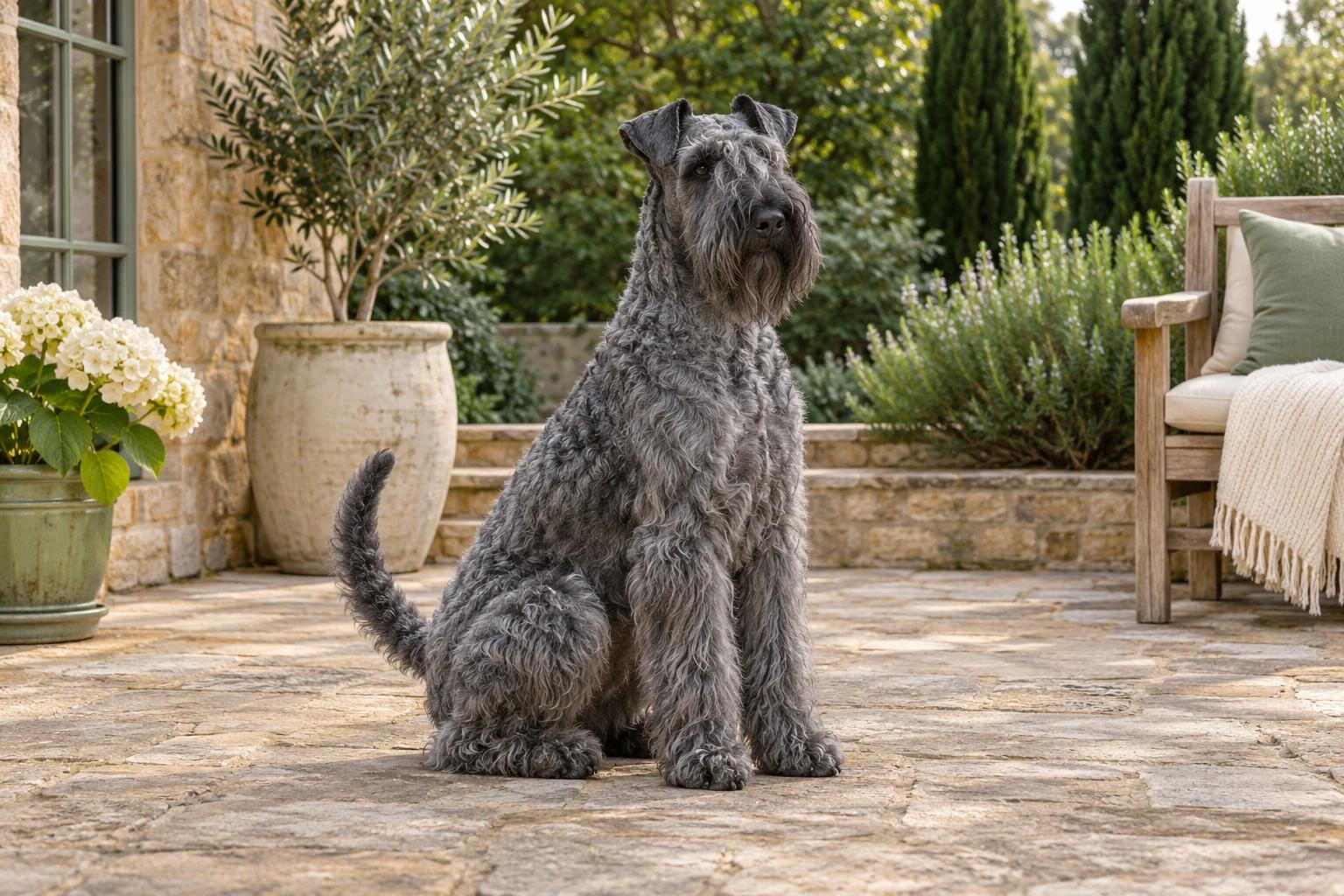
Kerry Blue Terrier temperament makes more sense when you picture a dog taking part in the household, not simply occupying it. The AKC overview describes an alert, adaptable, animated companion with a farm-dog past. For a prospective owner, the useful question is how that liveliness fits your routines. Do you enjoy involving a dog in small activities throughout the day, and can you give clear direction when excitement rises?
Kerry Blue Terrier temperament beyond a list of adjectives
The UKC standard adds determination and enthusiasm to the picture. Those traits are not a verdict that a Kerry will be difficult. They are a prompt to think about your own patience and consistency. If you ask for a behaviour, change the rule halfway through and then become frustrated, neither of you has a clear task.
A practical approach is to describe what you want in visible terms. Instead of “be sensible when I come home,” decide that the dog can meet you after you have closed the door and put down your bag. Instead of “stop being demanding,” identify the moment when a game ends and what quiet activity follows. That makes your expectations easier for everyone in the household to share.
The Kerry Blue Terrier profile supplies a useful starting point, but meet the individual dog in ordinary situations. A lively greeting at a first meeting is only one moment. Ask how the same dog behaves when the house is quiet, when an outing is delayed and when its familiar person is occupied.
Companionship is an activity, not just proximity
The United States Kerry Blue Terrier Club describes a people-oriented dog that can enjoy having a job. You do not need a farm to make room for participation. You do need a clearer plan than expecting the dog to entertain itself while you work nearby all day.
Make two lists: things you would like to do together, and times when you need the dog to be occupied elsewhere. The first might include an exploratory walk, a short training game or practising handling. The second might include work calls, meal preparation and visitors who do not want a close greeting. Both lists belong in an honest ownership plan.
Avoid filling every pause with attention. Create a familiar place where the dog can rest while you are present, and practise ordinary separations gradually with suitable guidance. Ask the current caregiver about time alone specifically: what has the dog experienced, what setup is used, and how do they know the arrangement is working? A general claim that the breed loves people does not answer those questions.
Notice determination without creating a contest
Some Kerry Blue Terrier personality descriptions use the word stubborn. Before adopting that explanation, examine the situation. Did the dog learn the cue in this location? Was the reward clear? Is the activity competing with something far more interesting? Can you make the request simpler?
If a dog keeps carrying a toy away, for example, a pursuit around the room may become the most exciting part of the interaction. The AKC drop-it guide uses voluntary exchanges: start with a low-value toy, reward its release, and return the appropriate toy during practice. Add the cue once the exchange is predictable. Do not pry at the dog's mouth or turn the lesson into a struggle. Seek qualified help before practising with a dog that guards objects.
For your household, choose a quiet practice location and agree on one cue. Keep tempting belongings out of reach while the skill develops. The goal is a repeatable exchange, not proving who can keep possession longest. If something dangerous has been swallowed, contact a veterinarian promptly rather than treating the situation as a lesson.
Other dogs deserve their own conversation
Kerry Blue Terrier characteristics do not include a guarantee of easy group play. The club leaflet cautions that Kerries may not suit dog parks. That makes social history an important part of choosing a dog, especially if your daily routine depends on crowded exercise areas or group daycare.
Ask about named situations rather than asking only whether a dog is friendly. How does it pass dogs on a lead? Has it shared a home with another dog? How are meals, toys and resting places managed? What happens when a familiar dog visits rather than an unfamiliar one?
If you already have a dog, compare both routines. A quiet resident that avoids rough play and an energetic newcomer may need substantial separation and individual attention. Arrange introductions with appropriate support, and do not assume that choosing opposite sexes or similar sizes settles compatibility.
On walks, give yourself permission to keep moving. A polite outing does not require a greeting at every encounter. Plan routes with space to pause or turn away, and tell other owners clearly when you do not want contact. That is more useful than making your Kerry practise social situations you cannot manage.
Alertness needs a household plan
For an observant companion, the front window and entrance can become busy places. Review what the dog can see from its usual resting spot. If every passer-by creates an interruption, consider a quieter resting location rather than repeatedly calling across the room after excitement has already built.
Visitors should have a simple arrival routine. Secure the dog before opening the door, let people enter without crowding and decide whether a greeting is appropriate after everyone is settled. Ask guests not to improvise games or reach over a barrier. A planned arrival reduces the number of decisions you and the dog must make at once.
Record troublesome Kerry Blue Terrier behavior in ordinary language: what happened immediately before it, what the dog did and how the event ended. “Barked when the courier came to the glass door” gives a trainer more to work with than “was protective.” Sudden or marked behavioural changes merit a veterinary conversation.
Choose the commitment, not the hairstyle
Before committing, ask yourself whether the same dog would appeal without its distinctive trim. You will live with its habits every day. Handling and grooming also require cooperation, so read the existing Kerry coat guide and arrange practical demonstrations rather than relying on pictures.
Use the breed quiz to identify lifestyle questions you still need to answer. Then take those questions to people who know the actual dog. A suitable match comes from honest expectations on both sides of the lead.
FAQ
Are Kerry Blue Terriers stubborn?
A Kerry may be persistent, but “stubborn” does not explain every missed cue. Check the setting, distractions and clarity of the lesson. Small, consistent tasks are more useful than repeating a request more loudly.
Do Kerry Blue Terriers get along with other dogs?
Compatibility needs individual assessment. Ask about the dog's specific history and arrange supported introductions where appropriate. Do not rely on a dog park or group daycare as an automatic part of the exercise plan.
What should a prospective owner ask about temperament?
Ask how the dog handles visitors, quiet time, lead walks, possessions and ordinary changes of plan. Concrete examples from its familiar caregiver reveal more than a single label such as friendly, clever or lively.
Sources behind this article
- AKC Kerry Blue Terrier overview ↗
- UKC Kerry Blue Terrier standard ↗
- United States Kerry Blue Terrier Club owner leaflet ↗
- AKC drop-it training guide ↗
Article source checked: November 15, 2026. Source checked 2026-11-15
Keep reading

Airedale Terrier Temperament: What Everyday Life Can Feel Like
Read article →