Yorkshire Terrier training
Build Yorkshire Terrier training around gradual introductions, clear stay and wait cues, optional tricks and small achievable learning steps.
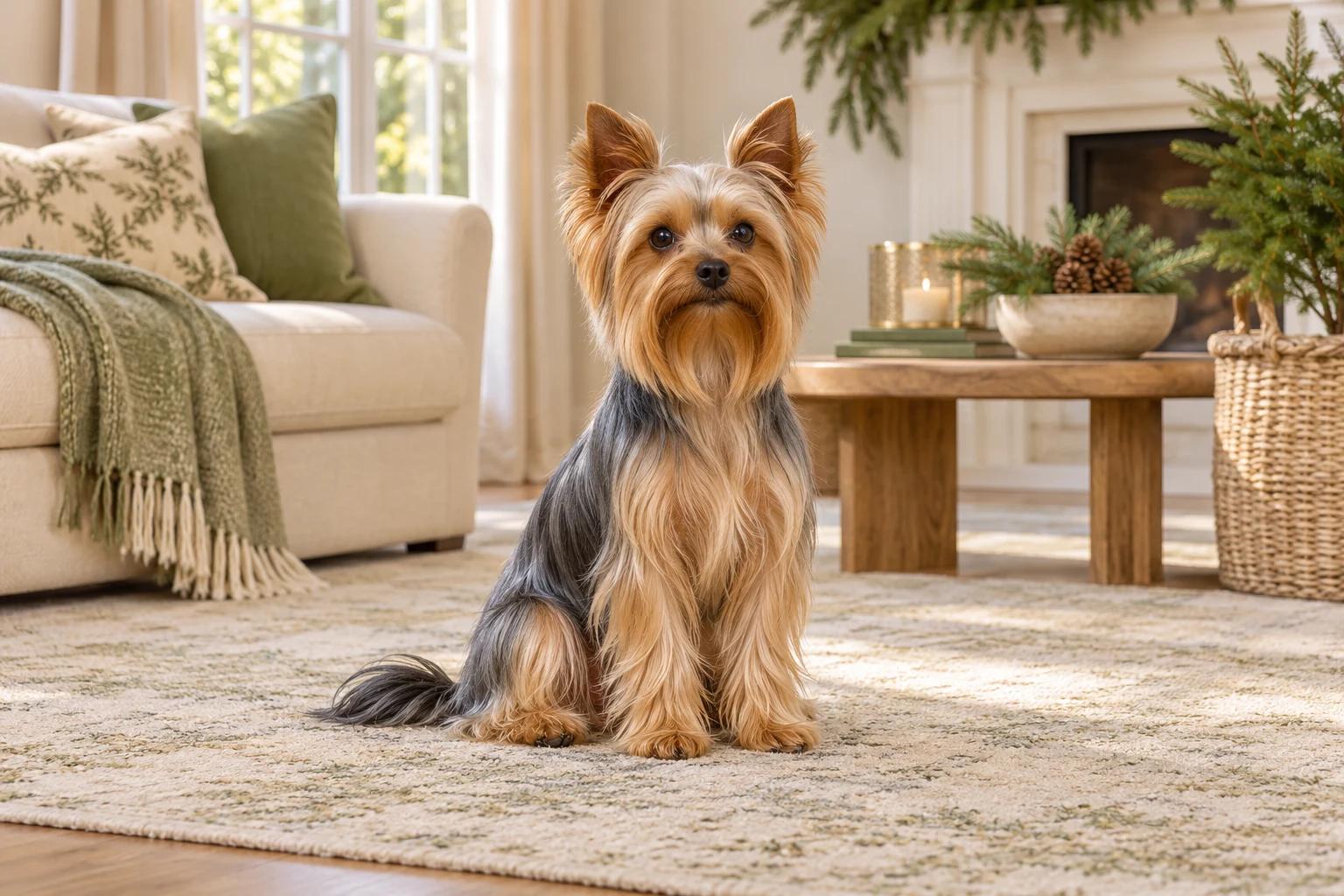
Yorkshire Terrier training gives a small companion useful ways to participate in everyday life. The current Yorkshire Terrier profile describes a relatively responsive learner that benefits from mental engagement. That does not mean a puppy arrives knowing household expectations, or that an adult has already learned the skills you would like to share.
Yorkshire Terrier training: let a newcomer settle into learning
The AKC's Yorkie puppy-training timeline recommends allowing a new arrival time to become familiar with its home and people. Introductions to experiences outside the home should be gradual, not a rush to expose the puppy to everything at once. The article also discusses reward-based introduction to a harness and walking equipment.
For Yorkshire Terrier socialization, that means separating different experiences instead of combining them into one demanding excursion. Becoming comfortable with equipment at home is different from wearing it amid unfamiliar sights and movement. Give each part attention rather than assuming that successfully completing one makes the next automatic.
The first days are an opportunity to establish a relationship, not a deadline for polished performance. Keep the setting manageable and let the puppy build familiarity. Ask your veterinarian which outings and contacts are appropriate for your puppy. This is not a prescription to avoid learning; it is a reminder that a young dog's first lessons include feeling at ease with the people and surroundings involved.
Make the difference between stay and wait clear
Cornell's training guide distinguishes a temporary pause from remaining in position until the handler returns and releases the dog. Whatever words you choose, their meaning should be consistent. Do not use one cue for several incompatible expectations.
Begin a stay with a very brief pause while you remain close. Reward the dog for holding the position, then use a separate release word. Build duration before adding distance. When you first step away, return to reward rather than expecting the dog to follow you for payment.
For a Yorkie, this can begin on the floor beside you. A single small step is enough when distance is new. More space, a longer delay and a distracting setting are different challenges, so avoid increasing all three together. If the dog moves, make the next attempt easier rather than treating the mistake as disobedience. A clear release is part of the skill: the dog needs to learn when holding the position ends, not only when it begins.
An optional roll starts with a comfortable down
The AKC's roll-over tutorial starts with the dog lying down. Move a food lure from the nose toward a shoulder so the dog follows it onto its side, and reward that first movement. Once that stage is comfortable, continue the lure so the dog follows through the roll.
Do not push or pull a Yorkshire Terrier into the position. Choose a suitable floor area and let the dog perform the movement voluntarily. Rolling is optional entertainment, not an essential obedience test. If the dog does not comfortably follow the movement, choose a different activity instead.
Add the verbal cue when the action becomes predictable, then gradually reduce the hand movement while continuing to reward successful attempts. Breaking the sequence into stages makes it easier to teach than demanding the entire roll immediately. The important lesson for the handler is how a small, achievable movement can become a more complete behavior. The value is shared learning, not collecting a trick at the expense of the dog's willingness to participate.
Shape a wave through small successes
The AKC's shaping guide describes rewarding successive steps toward a finished behavior. For a wave, the first reward might follow a weight shift or a slight paw lift. Once that action is reliable, reward a clearer lift, then a higher movement and eventually the repeated motion that resembles waving.
This gives a practical answer to how to train a Yorkshire Terrier without physically arranging its body. Watch closely enough to recognize the small action you want, and reward it. Progress comes from changing the criterion gradually, not waiting silently for the complete trick to appear by chance.
Work on one clear improvement at a time. If you start requiring a much higher paw, a longer hold and repeated movement together, the dog may lose the connection between its action and the reward. Return to an easier stage when needed. Add the cue once the behavior is taking shape. Shaping makes the handler's timing important, so consider it a learning exercise for the person as well as the dog.
Teach the small companion you actually have
The current adult reference is 4–7 pounds for female and male Yorkshire Terriers, with a height of 7–8 inches. Teaching should account for that physical scale without treating the dog as incapable. Your own position, the available floor area and the size of the surrounding objects all influence how a lesson looks from the dog's level.
A large room is not necessary for every learning activity. What matters is that the particular task fits the space. The body of a small dog can be hard to see clearly beneath a table or between furniture legs; a simple, open area lets you observe what is actually happening. That is especially useful when learning to distinguish small movements rather than expecting an obvious finished performance.
Yorkshire Terrier obedience is not the only reason to teach. The profile includes games and purposeful challenges among the breed's mental outlets. Shared learning can therefore be part of companionship rather than a separate project reserved for correcting unwanted behavior. An owner who enjoys that interaction should consider it alongside daily walks and coat care when assessing the breed.
Keep the full commitment in view. The silky coat needs daily attention, and ordinary care involves different skills from a trick lesson. Our Yorkshire Terrier dental-care article covers one such routine separately. The dog quiz can help you weigh this combination of company, care and learning against your preferences.
FAQ
Does the Yorkshire Terrier profile mean every dog arrives trained?
No. It describes a tendency toward responsiveness, not an individual's education. Find out what the particular dog already knows and what experiences it has had rather than assuming the breed label supplies finished skills.
Is a Yorkshire Terrier too small for meaningful learning activities?
No. The current profile specifically includes training games and mental challenges. Its 4–7-pound adult reference describes physical size, not the importance of giving the dog opportunities to learn and interact.
Should training replace everyday coat care?
No. Daily brushing remains part of the current care profile. Teaching, companionship and grooming are complementary parts of ownership, not interchangeable ways to complete the same obligation.
Sources behind this article
- AKC Yorkshire Terrier training timeline ↗
- Cornell teaching stay versus wait ↗
- AKC teaching roll over ↗
- AKC shaping new behaviors ↗
Article source checked: November 16, 2026. Source checked 2026-11-16
Keep reading

Affenpinscher Training: Build Useful Everyday Habits
Read article →