A coated Xoloitzcuintli is part of the breed’s FCI description
The Xoloitzcuintli’s FCI standard includes hairless and coated varieties. A short, flat coat belongs in the introduction rather than being treated as a contradiction of the breed name.
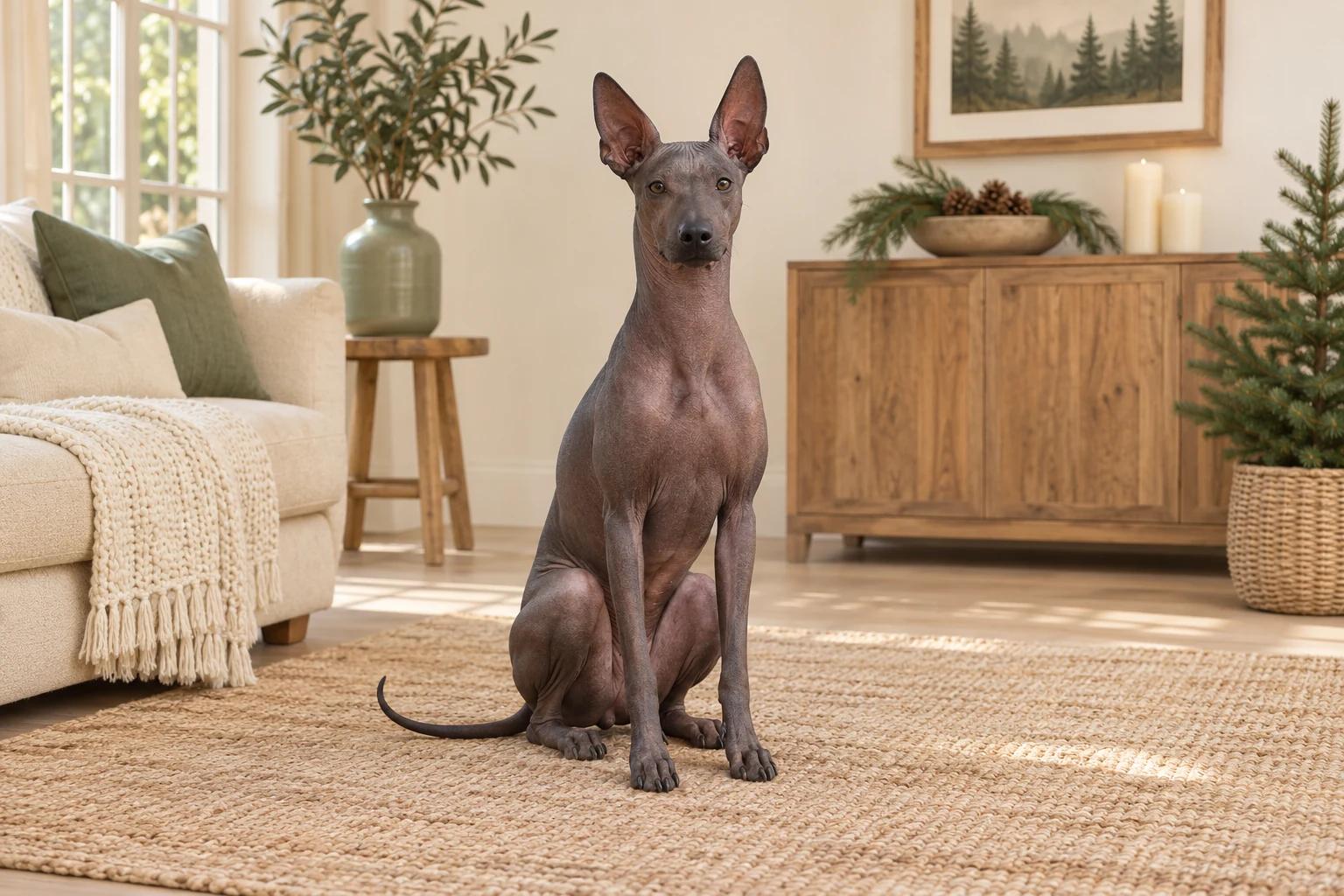
Begin with both varieties
The FCI Xoloitzcuintle standard explicitly includes hairless and coated varieties. Its appearance section describes the coated dog as having a short, close, flat, smooth coat without an undercoat. The presence of hair is therefore not, by itself, a reason to exclude a dog from the breed’s stated appearance.
Label photographs without erasing the variation
For a breed gallery, identify which variety a photograph represents. A reader who has only encountered hairless examples benefits from seeing the coated variety named directly, with the same attention to the individual dog’s background.
Do not relabel an unfamiliar coated dog as a cross solely from the photograph. Equally, a short coat alone cannot verify ancestry. Ask for records and reliable context rather than expecting an image to resolve that question.
Keep appearance and practical care questions separate
At a handover, ask about the particular dog’s existing care routine, handling preferences and any professional guidance already provided. A coat category is not a complete maintenance plan or an assurance about allergies.
For an introduction, the key correction is simple: hairless is one variety, not the entire FCI description. Including the coated form gives readers a fuller starting point while leaving individual care, identity and suitability to evidence about the dog itself.
Sources behind this article
Article source checked: October 20, 2026. Source checked 2026-10-20
Keep reading
Xoloitzcuintli vs American Hairless Terrier
Read article →