Xoloitzcuintli vs American Hairless Terrier
Compare Xoloitzcuintli vs American Hairless Terrier size, outline, activity and background, with differences beyond a hairless appearance.
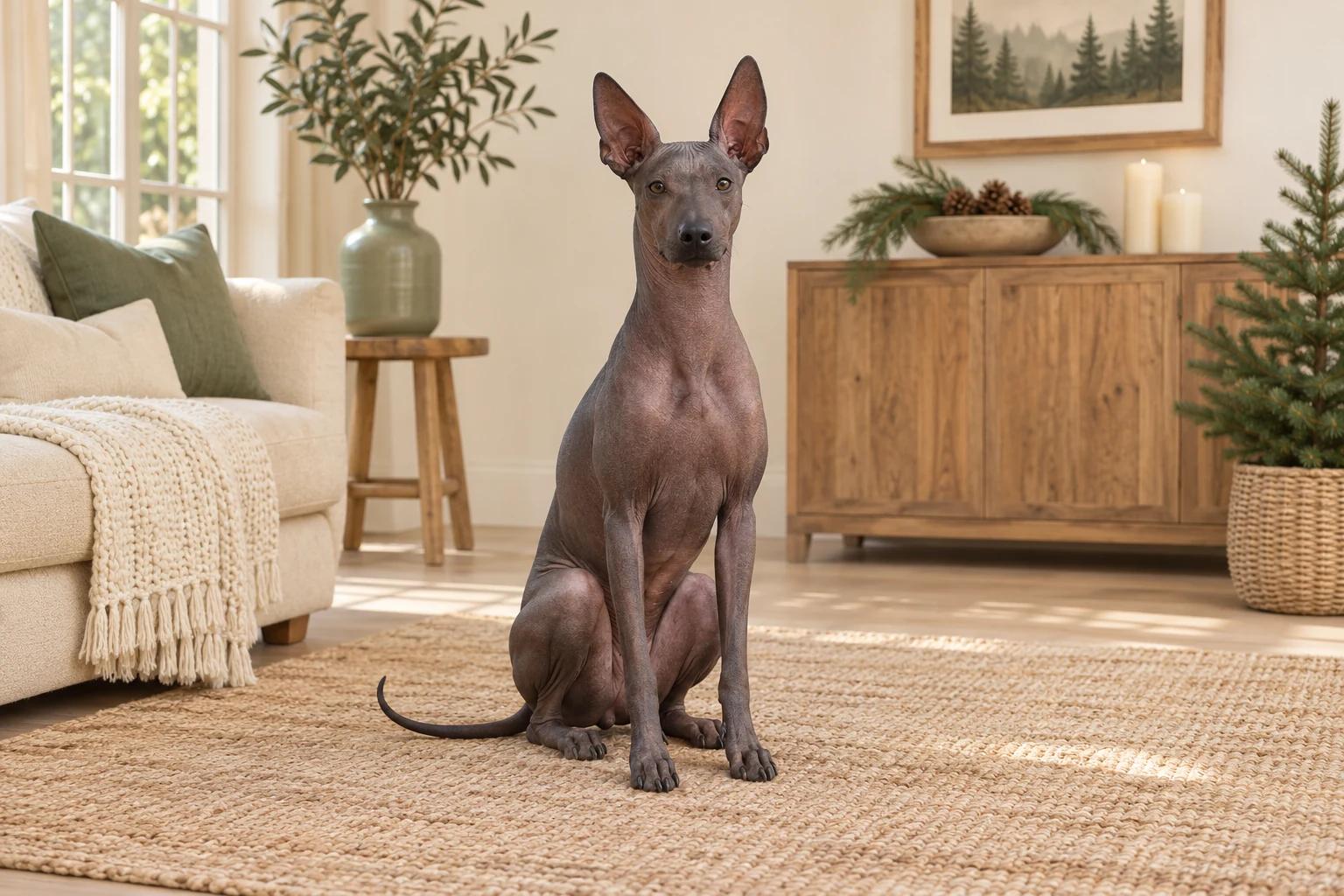
Xoloitzcuintli vs American Hairless Terrier is not a choice between two versions of the same dog. Their current profiles place the Xoloitzcuintli in the Non-Sporting Group and the American Hairless Terrier in the Terrier Group. Both need companionship and learning, but a useful comparison also considers their shape, the Xolo's three size categories and the interests of the individual. An unusual appearance is an introduction, not a complete ownership plan.
Xoloitzcuintli vs American Hairless Terrier: the Xolo outline
The AKC Xolo standard describes a lean, sturdy, rectangular dog with moderate bone and smooth muscle. Its long neck blends into the shoulders, while the ribcage is deep and oval rather than barrel-shaped. The body is slightly longer than tall. This is an outline combining substance with clean lines, not an invitation to seek exaggerated thinness.
The head has a wedge shape when viewed from above, with a muzzle longer than the skull. Large ears are carried erect when the dog is alert. Almond-shaped eyes and attention-related brow wrinkles contribute to the distinctive expression. These details explain more about the silhouette than the presence or absence of hair alone.
For a prospective owner, the important point is that the same general construction applies across the size categories. A small Xolo is not defined solely by looking like a reduced photograph of a larger individual. Look at its whole outline and movement, rather than using one striking feature to judge identity, temperament or the quality of a particular dog.
The terrier has its own recognizable head and carriage
The American Hairless Terrier standard also describes a body slightly longer than tall, but the head has its own proportions. The skull and muzzle are equal in length, the stop is moderate, and the head forms a blunt wedge. Its eyes are round and set obliquely, with a curious, alert expression.
The ears are V-shaped. Erect carriage is preferred, while matching tipped or button ears are also accepted in the standard. The back remains level in standing and movement, and the tail tapers from a thicker base. The description emphasizes firm, smooth muscle and moderate substance rather than either heavy coarseness or a very fine, racy outline.
This gives someone comparing an American Hairless Terrier vs Xoloitzcuintli concrete features to notice. The comparison is not simply which dog has more visible skin. Head proportions, eye shape and ear carriage contribute to the impression of two distinct breeds. None of those features predicts how an individual will greet you, so keep physical description separate from assumptions about friendliness or training.
The American Hairless Terrier brings outdoor interests
The Canadian Kennel Club's account describes regular exercise alongside downtime with the family. It names agility and obedience as possible activities and warns that an interest in chasing small animals calls for close supervision outdoors. A companion identity does not erase those outdoor interests.
For an owner, that means a pleasant walk and a learning game can be different, complementary parts of the day. The dog need not enter a competition to enjoy being taught something. Equally, apparent interest in a small moving animal is not a reason to test freedom in an unsecured area. Manage the outing rather than assuming that a comparatively small dog cannot get into trouble.
Consider whether you enjoy a terrier's participation in activities, not merely its unusual coat category. The account also leaves room for quiet family time. You are not choosing between uninterrupted action and uninterrupted rest; you are considering a dog whose day can include both. Learn what the particular adult enjoys instead of turning the breed description into a fixed exercise prescription.
The Xolo's background includes cultural significance
Mary Robins' AKC account of the Xolo explains the name's connection to Xolotl and the word for dog. It describes the breed's place in ancient Mexican cultures, where it was considered sacred and associated with spiritual beliefs. Those beliefs are historical context, not evidence of healing powers.
This background helps explain why the Xolo draws interest beyond its appearance. Someone may first encounter the name through art, stories or cultural references rather than through a dog sport or a neighbor's pet. That can be a meaningful starting point, provided the living dog is not reduced to a symbol or a decorative object.
When choosing a Xoloitzcuintli or American Hairless Terrier, separate fascination with a breed's story from the everyday relationship you want. Cultural importance does not make an individual effortless to live with. Nor does an unfamiliar name mean the dog should be treated as mysterious or impossible to understand. Its actual behavior, needs and experience still belong at the center of the decision.
Compare size categories, not just the largest endpoints
The current Xolo reference spans 10–55 pounds overall. Its height categories are toy at 10–14 inches, miniature at 14–18 inches and standard at 18–23 inches. The American Hairless Terrier reference lists 12–28 pounds for both adult females and males, with a height of 12–16 inches.
Those figures show why the size category matters. Comparing only the largest Xolo with the terrier misses the toy and miniature categories. Conversely, a photograph of a small Xolo cannot represent the space occupied by every standard-sized adult. Ask which category is being discussed before making a practical comparison.
The existing coated Xolo article covers a separate point about breed appearance. The dog quiz can help you consider broader ownership fit alongside these physical references.
Frequently asked questions
What is the main difference between Xoloitzcuintli and American Hairless Terrier size?
The Xolo reference includes toy, miniature and standard height categories and an overall 10–55-pound range. The American Hairless Terrier reference is 12–16 inches and 12–28 pounds for either sex. The ranges overlap, so not every Xolo is larger.
Does either profile promise a silent companion?
No. Both current profiles describe vocal tendency in the middle of their reference scales. Individual dogs still communicate, and a breed description cannot promise silence in a particular home.
Will either breed automatically suit another dog already at home?
No. Compatibility depends on the individuals and their experiences, not a shared hairless appearance. Introductions and ongoing behavior matter more than expecting a breed label to establish a successful pairing.
Sources behind this article
- AKC Xoloitzcuintli standard ↗
- AKC American Hairless Terrier standard ↗
- CKC American Hairless Terrier ↗
- AKC Xoloitzcuintli facts ↗
Article source checked: November 16, 2026. Source checked 2026-11-16
Keep reading

Affenpinscher vs Brussels Griffon: Everyday Differences
Read article →