The Wirehaired Vizsla’s FCI standard puts balance ahead of maximizing height
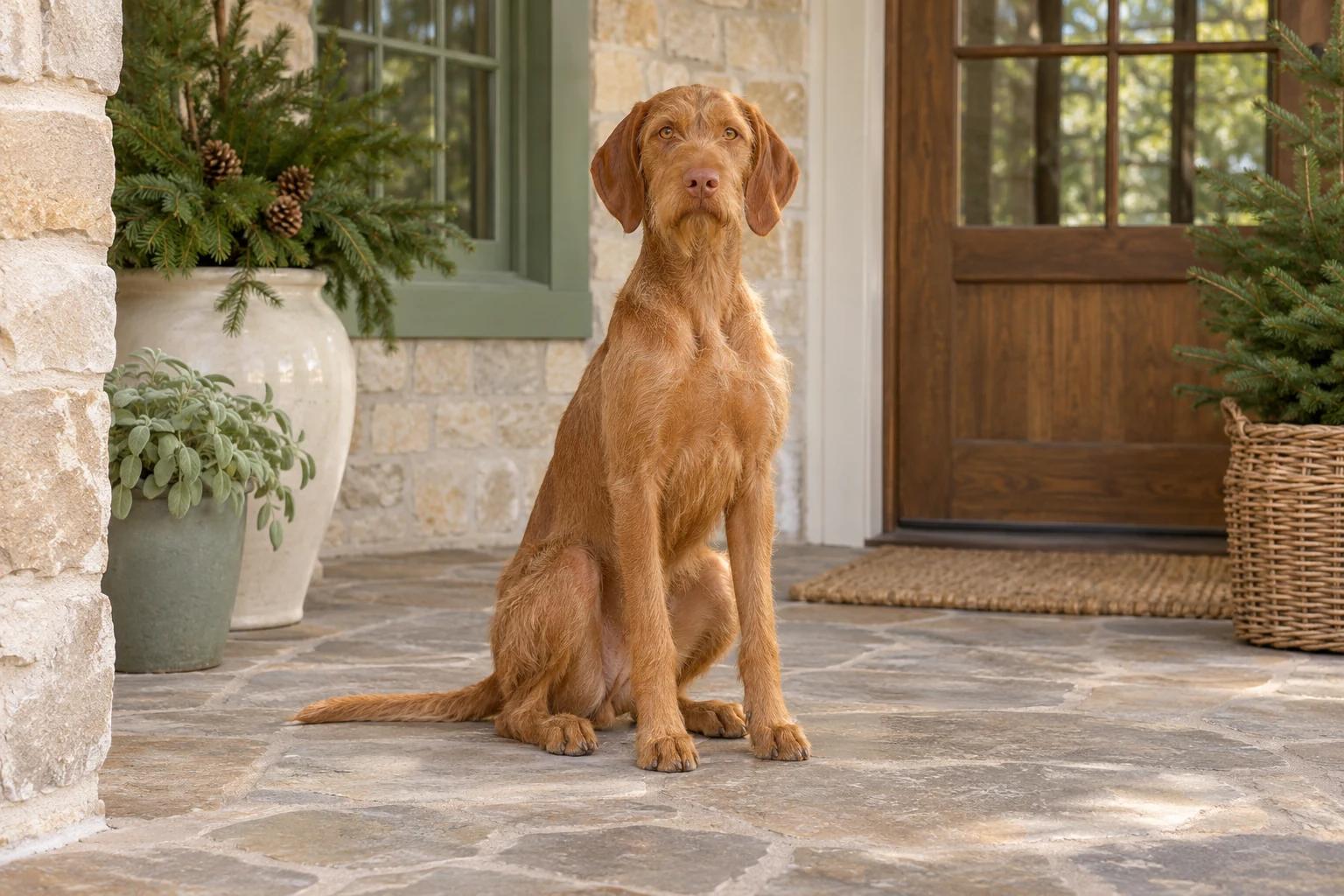
The Wirehaired Vizsla standard lists height ranges but explicitly gives overall balance and symmetry more importance than size alone. The largest dog is not the stated goal.
Read the explanation after the measurements
The FCI Wirehaired Vizsla standard lists heights at the withers of fifty-eight to sixty-four centimeters for males and fifty-four to sixty centimeters for females. It then emphasizes medium size, with overall balance and symmetry more important than measurement alone. The paragraph does not invite readers to seek the tallest possible dog.
Keep practical measurements separate from a ranking
When planning transport or equipment, ask for the individual dog’s current measurements and the date they were taken. Check the dimensions relevant to the item you are choosing. A breed-standard range cannot tell you whether a particular carrier or harness fits.
If comparing photographs, avoid ranking dogs by apparent height. Camera position, stance and the absence of a shared scale can make such comparisons misleading. Use actual records when size matters to a practical decision.
Do not turn the range into a puppy forecast
For a young dog, ask what is known about its development and family while keeping estimates separate from certainty. The standard describes a desired adult framework, not an individual growth prediction.
For an introduction, retain the source’s emphasis on proportion alongside the numbers. That makes the size information more faithful and useful than presenting the upper endpoint as an achievement or assuming that a measurement alone describes the whole dog.
Sources behind this article
Article source checked: October 20, 2026. Source checked 2026-10-20
Keep reading
Wirehaired Vizsla vs Pudelpointer
Read article →